
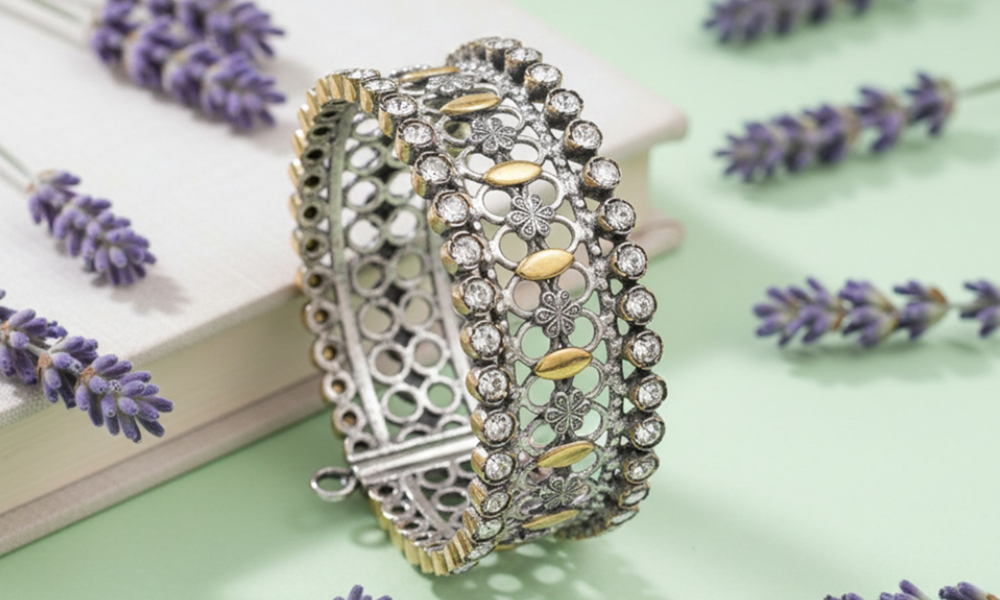
Driven by sharp rise in price, silver is enjoying a moment in India. From jewellery and wedding wear to décor and lifestyle products, demand remains resilient despite rising prices. As silver moves into the mainstream, the spotlight is now firmly on purity and the evolving role of hallmarking in building consumer trust.
Silver value has appreciated by nearly 125% in the last one year – from about ₹90,000 per kg in December 2024 to about ₹2,00,00 per kg as of mid-December 2025.
In India, while the tonnage demand for silver bars and coins has risen by nearly 21% year-on-year, demand for the fabrication of silver jewellery and silver-ware has dropped by nearly 11%, according to Metals Focus data.
This decline, however, is not indicative of waning interest in silver jewellery and wares, “on the contrary, the demand for silver products has held up despite a sharp appreciation in value,” Harshal Barot, senior research consultant at Metals Focus, points out. Even as silver’s price rises, it is still far more accessible than gold, enhancing its appeal as a versatile metal and as a store of value.
With gold prices more than doubling in the last two years, consumers are increasingly turning to silver as a credible and accessible alternative for jewellery. “Today’s silver and gold-plated silver jewellery rivals gold not just in design and finish but also in sophisticated retail presentation,” says Rahul Mehta. Managing Director, Silver Emporium, one of India biggest manufacturers of handcrafted Silver jewellery and silverware.
The shift in silver’s desirability is visible across segments; from everyday and fashion-led purchases among younger consumers to affluent buyers. Even bridal wear has seen an uptick in gold-plated silver jewellery, notes Mehta, “in weddings, where safety and portability of jewellery is a concern, consumers prefer to not carry their very expensive gold jewellery and instead opt for gold-plated silver bridal and wedding jewellery.”
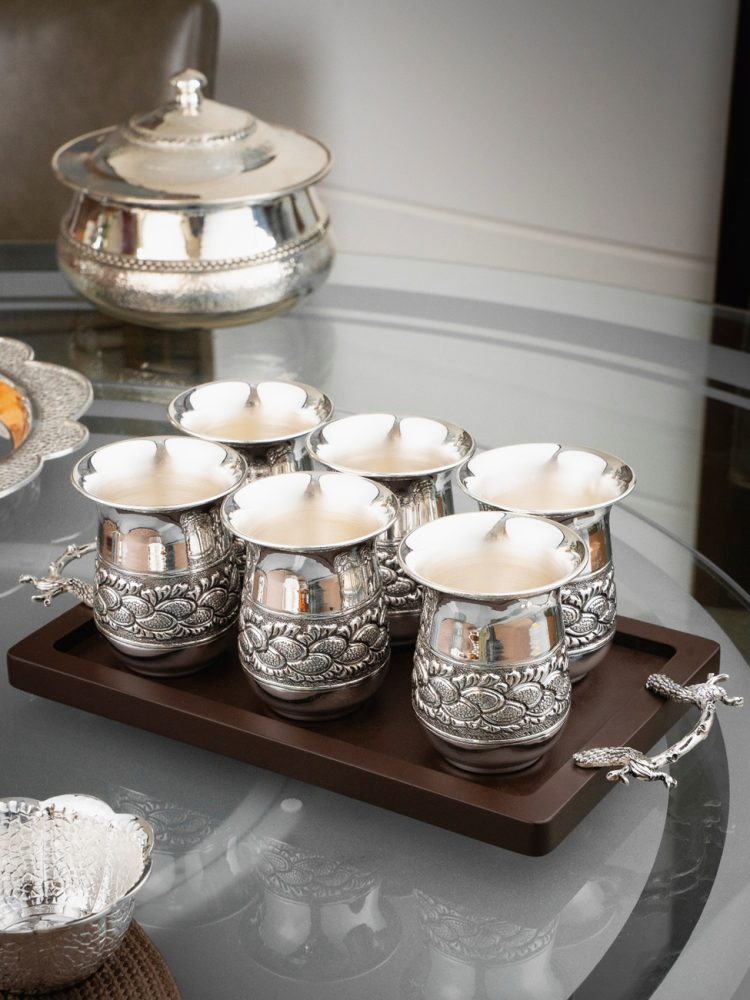
Silver’s demand is also being driven by rising household wealth in India that has pushed silver beyond cupboards into living spaces. Consumers are buying silver artefacts, dining ware, pooja-room essentials and statement decor pieces. Silver is increasingly viewed as cultural capital – valuable, visible and meaningful. “What was once relegated to gifting or storage is now being showcased in homes, reflecting a shift in attitudes towards ownership and display,” notes Krishna Goyal, Chairman & CEO of Dwarka Gems Ltd.
Diwali gifting volumes at Silver Emporium were up roughly 15–20% year-on-year despite silver prices rising. Growth is especially pronounced in small towns, signalling deep, broad-based demand rather than metro-led consumption alone.
Silver’s comeback follows years of scepticism after the 2011 crash, when prices halved after a big slump. In recent years, however, steady price gains have rebuilt confidence in its value, even amid daily volatility, explains Barot, “supported by not just jewellery but also with growing demand from EVs, solar and other industrial uses.”
Even for startup founders in the jewellery industry, silver offers a new route to the consumer market. Shyle, a Jaipur-based silver jewellery brand secured ₹70 lakhs funding in the India edition of Shark Tank, in 2025, due to its robust performance. Astha Katta Sirohiya and Radhesh Sirohiya founded Shyle in 2017 and chose silver for the jewellery “as the metal offers both cultural and commercial opportunities. It was better suited than gold for an online D2C venture,” says Astha Katta Sirohiya, who is also the creative head at Shyle.
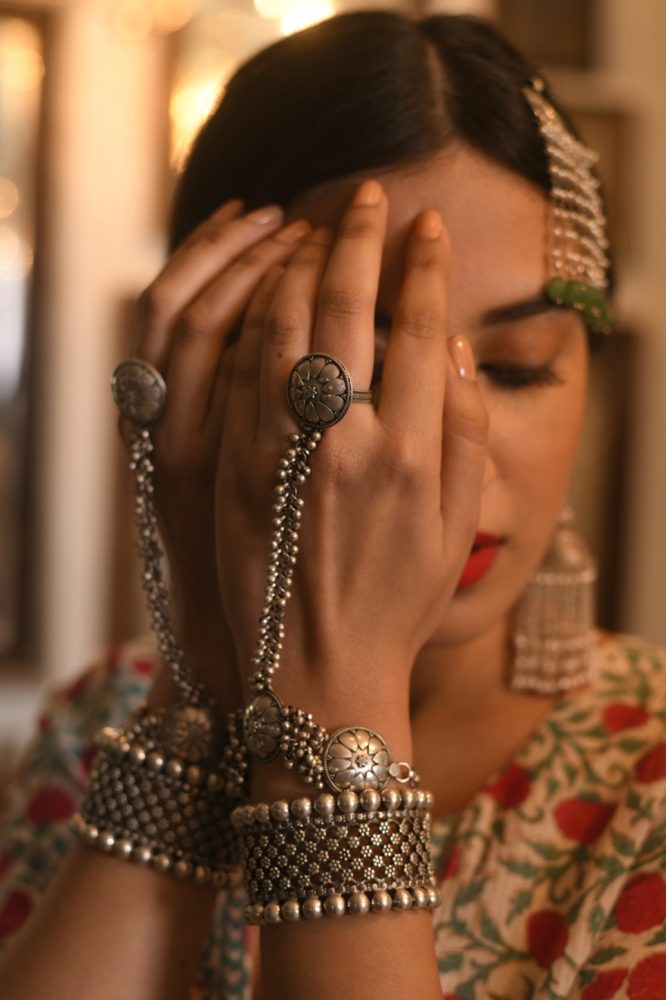
The brand has seen success because of its design experimentation and the acceptance of silver as a lifestyle and statement product. According to Astha, “Silver lends itself better to frequent wear, contemporary styling, especially among women aged 25+ and increasingly even younger buyers.” Shyle concentrates on silver-only designs for women, without the use of any stones. The brand has seen strongest demand come from metros such as Delhi, Mumbai, Bengaluru and Chennai, “where consumers prioritise design, finish and comfort overweight alone,” she reasons.
To aid silver’s momentum in the precious jewellery market, greater consumer awareness around purity and hallmarking is crucial. “Historically, silver jewellery has typically been made at 30–60% purity. Today, jewellery crafted in 92.5% silver is gaining traction. Higher-purity silver items are seeing fastest growth,” Barot informs.
Barot points out that mandatory hallmarking is necessary even in silver, for increased consumer confidence in the metal.
While hallmarking of silver remains voluntary, according to a report published by GJEPC, an HUID mark became compulsory for those silver pieces that were hallmarked from 1 September 2025, as per a mandate by the Bureau of Indian Standards (BIS). Since then, over 17 lakh silver articles were registered within just three months of its implementation, the report says.