
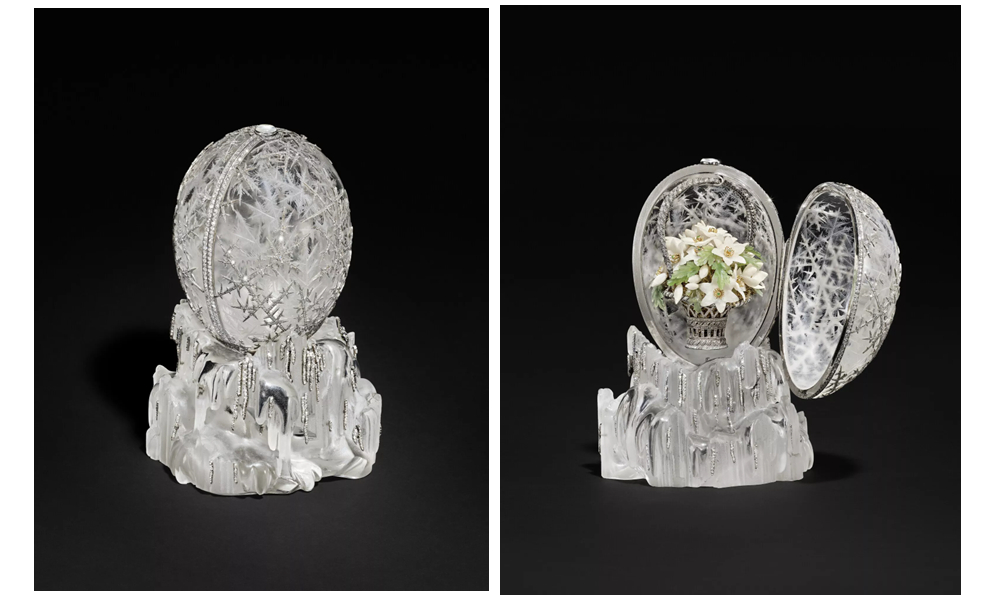
A world record $30.2 million price achieved by Christie’s in the sale of the Faberge Winter Egg underscores the value of provenance in luxury goods markets.
Christie’s sold the Faberge egg for £22.895 million in a flurry of bidding in London on December 2, the third time that the auction house had sold this historic objet d’art, each time netting an all-time high auction price for a work by Faberge.
The pre-sale estimate had been in excess of £20 million. The value of the Winter Egg was underpinned by its history, auction specialists said.
The Winter Egg was commissioned by Emperor Nicholas II as an Easter gift to his mother Dowager Empress Maria Feodorovna in 1913, the year of the 300th anniversary of the Romanov Dynasty.
The creative genius of Fabergé’s most celebrated female designer Alma Theresia Pihl – exquisitely executed by her uncle, work master Albert Holmström – makes it among the most lavish of Fabergé’s Imperial creations and widely regarded as one of the most original and artistically inventive Easter eggs that the house created for the Imperial family.
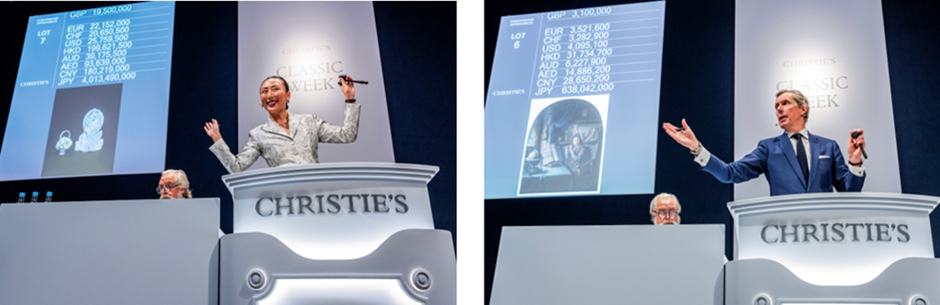
Believed lost for almost two decades, between 1975 and 1994, The Winter Egg has previously set the world record for a work by Fabergé not once but twice: when it was offered by Christie’s in 1994, upon being rediscovered, and again in 2002.
As the luxury auctions season came to a close in 2025, the markets for both ultra-rare objets d’art and high diamond jewellery appeared well-supported despite global economic uncertainties.
“The Winter Egg is widely considered to be the best Imperial Easter Egg created by Fabergé. With only a handful of Imperial Easter Eggs left in private collections, it offered an extremely rare opportunity for collectors to acquire a work of such calibre and importance,” said Margo Oganesian, Christie’s Head of Department, Fabergé and Russian Works of Art.
“Works like this rarely become available, and the record-breaking result shows that there is strong appreciation and demand for masterpieces,” she told Solitaire International.
The market for high diamond jewellery has also held up well, despite confusion among customers over natural and synthetic diamonds.
“The market situation for high diamond jewellery has many parallels to that of rare objets d’art in the luxury sphere, with signed pieces outperforming,” Angela Berden, Christie’s Head of Sale Magnificent Jewels Geneva, told Solitaire International.
She highlighted a few examples of outperforming signed diamond jewellery pieces in the Christie’s Magnificent Jewels auction in Geneva in November.
She referred to a Bulgari diamond Serpenti Tubolare necklace made in 2002 (lot 27), which sold for CHF 260,350 ($323,500), and a sensational Bulgari diamond necklace (lot 52), which garnered CHF 330,200 ($409,000).
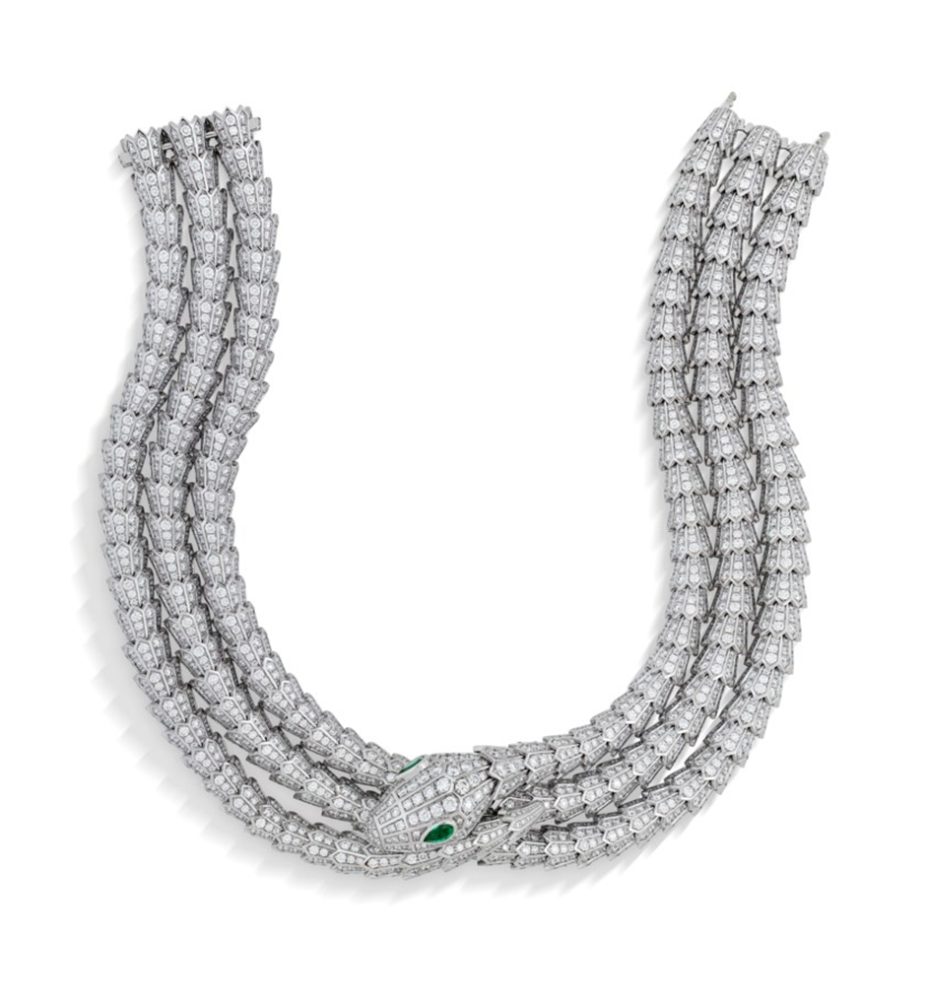
Speaking on the sidelines about the Geneva auctions, Christie’s specialist Leo Criaco noted robust demand for vintage Bulgari diamond jewellery pieces by collectors captivated by the instantly recognisable designs of the brand.
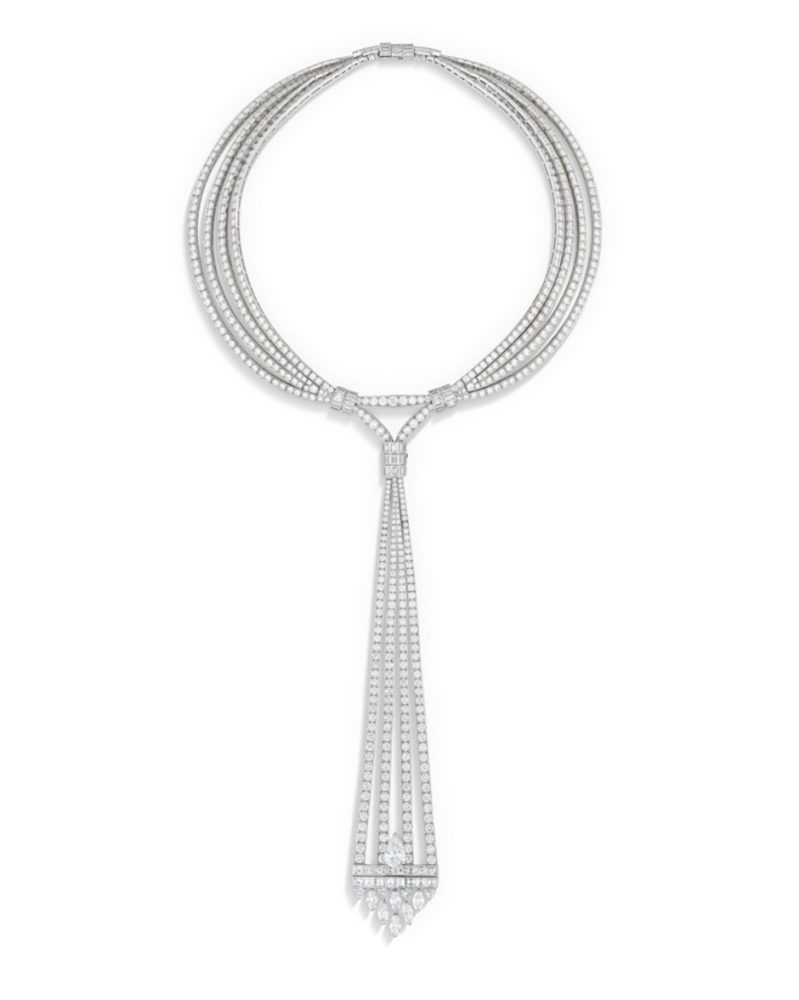
Berden said a Van Cleef & Arpels modern diamond Cravate Montaigne necklace selling for CHF 508,000 ($630,000), represented another example of the resilience of the signed, high diamond jewellery market in 2025.
According to Christie’s specialists, 2025 is seeing strong uptake of exceptional period jewellery, led by an Art Deco Lacloche bracelet, dating from 100 years ago and selling for CHF 673,100 ($834,600), and an exceptional Lalique bow brooch with detachable and articulated tassel, made between 1882-1899 by Rene Lalique for Tiffany & Co., selling for CHF 406,400 ($505000).
A Paulding Farnham Art Nouveau brooch centred around a demantoid garnet and coloured diamonds, made in 1901, sold for CHF 152,400 ($189,000).
Jewellery analysts talk of a growing interest in both antique and vintage jewellery because they can be seen as recycled pieces that are more sustainable than newly manufactured works.