
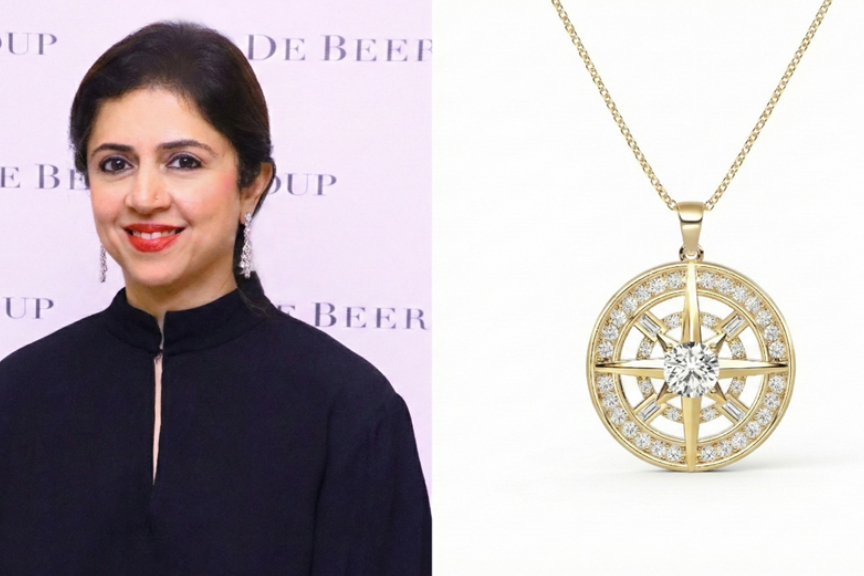
As INDRA gains ground across key jewellery markets, its influence is beginning to show at the retail counter. Shweta Harit, CEO Forevermark and Global SVP, De Beers Group, shares how the platform is driving adoption, building confidence among jewellers and reshaping the way natural diamonds are positioned for today’s self-purchasing consumer.
How would you describe the momentum behind the rollout of INDRA so far, and what markers signal that the platform is gaining real traction?
The momentum has been incredibly dynamic. We view INDRA not just as a platform, but as a movement to structure and empower the Indian natural diamond ecosystem. The most significant marker of traction is the enthusiastic response we’ve seen during our on-ground recruitment drives in cities like Bangalore, Pune, Indore, and Surat. We are seeing high engagement rates in our B2B trade events, but the real “proof” is in the adoption: retailers are actively downloading the assets and integrating them into their local marketing. When we see a single-store retailer in a Tier-2 city using our “Love, from Bestie” assets to talk to their customers in their local language, we know the platform is working.
Training seems central to INDRA, especially for generational jewellers transitioning from gold to diamonds. What gaps did you observe during the pilot phase, and how is the multilingual training module addressing them?
A major gap we identified was confidence. Many traditional jewellers are experts in gold, which is sold largely by weight and rate, but they felt intimidated by the storytelling and technical nuance required for natural diamonds. There was also a language barrier; the best global training was often accessible only in English.
Our training modules are designed to address this by meeting retailers where they are. We have started by introducing content in Hindi to break the immediate language barrier, with a roadmap to expand into nine regional languages. This initiative is about more than just translation; it is about removing the intimidation factor. Our vision is to facilitate a shift where, retailers transition from simply selling a product to sharing a narrative, ensuring they are fully prepared to articulate the 4Cs and the emotional value of natural diamonds to their customers.
The AI tool that converts product uploads into ready-to-use social media assets is positioned as a ‘magic element’. What patterns are you seeing in how retailers use it, and how do you expect it to shift their day-to-day marketing behaviour?
Our expectation is that this ‘magic element’ will bring speed and relevance to the retailer’s workflow. Historically, the lag between acquiring inventory and marketing it has been a pain point, with retailers relying on generic photos. This tool is built to change that, positioning them as active content creators.
This shifts their behaviour from passive to active. They no longer wait for customers to walk in; they are virtually reaching out to their community daily. It democratises high-quality marketing, allowing a mid-size retailer to look as polished and professional as a national chain on social media.
Seeing is believing for retailers hesitant to hold diamond inventory. How is INDRA helping overcome this hesitation in smaller or traditionally gold-dominant markets?
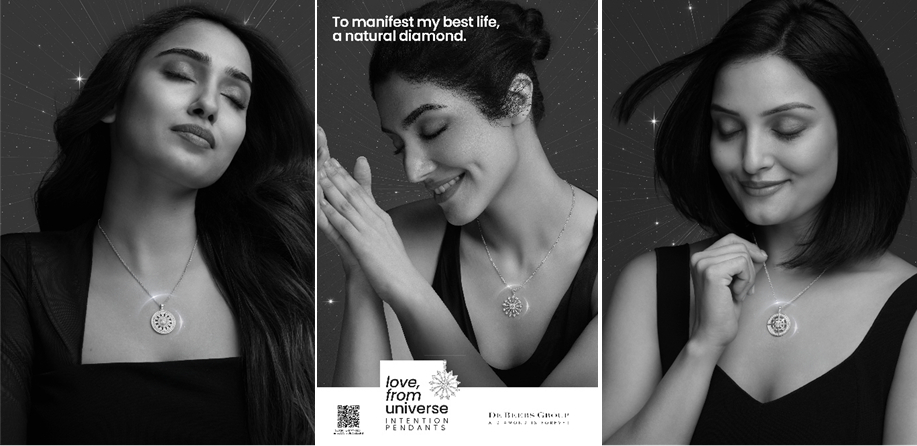
Retailers hesitate to stock inventory when they aren’t sure if it will sell. Through our 360-degree campaigns like Love, from Dad (Second Piercing), Love, from Bestie (Bestie Bracelets) and Love, from Universe (Intention Pendants), we are generating tangible consumer demand for specific, accessible categories.
When a retailer in a gold-dominant market sees young women coming in and specifically asking for an “Intention Pendant” or a “Bestie Bracelet” because they saw the campaign, that hesitation disappears. We are de-risking their entry into natural diamonds by proving that the demand exists beyond just weddings.
INDRA has been described as a three- to five-year journey rather than a single launch moment. What milestones define success in year one and two, and what challenges you expect as the network expands?
Year one is defined by Access and Recruitment, establishing the INDRA network, launching the digital platform, and getting early adopters on board in key Tier-2 hubs. Year two will be about Activation and Depth, ensuring that the retailers who joined are effectively using the training and marketing tools to drive sales growth.
As we expand, the challenge will be maintaining consistency of messaging while allowing for localisation. We need to ensure that the promise of “Natural Diamonds” remains premium and trustworthy, whether the consumer is in a metro or a small town. Supply chain reliability, ensuring retailers have access to the specific goods we are marketing will also be a key focus area.
The performance of the Second-Piercing campaign showed shifts in awareness, consideration, and even search behaviour. Which insights from that campaign influenced the Love, From Bestie launch?
The “Love, from Dad” second-piercing campaign taught us that consumers are hungry for “modern rituals” and jewellery that signifies a personal milestone rather than just a social obligation. We took this insight directly into “Love, from Bestie.” We realised that just as the father-daughter bond is emotional, so is the bond between friends. We moved the narrative from “coming of age” to “everyday appreciation.” The success of the former gave us the confidence to position natural diamonds as accessible, emotional gifts for friends, breaking the myth that diamonds are only for heavy wedding sets.
Since the Nagpur launch, what is the initial feedback from participating retailers on the support being provided under INDRA to help them reposition natural diamonds beyond occasion-led sales?
The feedback has been empowering. Retailers in markets like Nagpur are telling us that the “Love, from Universe” and “Bestie” assets allow them to have a different conversation with their customers. They are no longer just waiting for the wedding season.
They appreciate the “flexibility” of the assets, being able to add their own logos and local language makes them feel ownership over the campaign. They are seeing that when they showcase diamonds as symbols of ‘intention’ or ‘friendship,’ they attract a younger demographic that walks in to buy for themselves, not just for a marriage.
How is the mindset among Indian consumers evolving with respect to natural diamonds? Are younger, self-purchasing buyers significantly shaping this evolution?
Absolutely. The shift is fundamental. In 2025, we observed a powerful rise in self-purchase. Women are no longer waiting for a partner or a specific occasion to be gifted jewellery. They are buying natural diamonds to celebrate their own milestones like a promotion, financial independence, or simply personal style.
Younger buyers are driving a trend toward ‘everyday minimalism.’ They don’t want heavy pieces that sit in a locker; they want versatile, lightweight designs like our Intention Pendants, that are wearable art. They view diamonds as a means of self-expression and identity, which is a massive evolution from the traditional investment-only mindset.
What kind of consumer education do you intend to deploy to build confidence and clarity about natural diamonds?
Our approach to consumer education is rooted in storytelling rather than instruction. Through our campaigns, we are gently shifting the perception that diamonds are “too precious to wear” and reserved only for rare occasions.
Each campaign brings this philosophy to life in a different way. Love, from Dad presents the diamond as a lasting rite of passage that can be worn every day. Love, from Bestie focuses on accessibility, positioning diamonds as joyful, spontaneous expressions of friendship. Love, from Universe taps into a more personal narrative, framing diamonds as meaningful talismans tied to intention and self-belief.
By embedding education within relatable, emotional stories, we are breaking the “occasion-only” mindset and building confidence around natural diamonds as enduring pieces that seamlessly fit into everyday life.
What challenges do you foresee in scaling INDRA across India in terms of retailer adoption, consistency of messaging, supply reliability, and consumer acceptance?
Scaling a transformation of this magnitude across India’s diverse retail landscape naturally presents dynamic complexities. The primary task lies in harmonising the shift from traditional gold-centric practices to a modern, storytelling-led approach for natural diamonds, ensuring that the integrity and emotion of our narrative remain consistent whether in a metro or a Tier-2 market.
While synchronising widespread retailer adoption with supply chain readiness is an ongoing journey, the flexible infrastructure of INDRA is specifically designed to absorb these nuances, turning potential market fragmentation into a cohesive, trust-driven ecosystem.