
Diamond analyst Paul Zimnisky examines how provenance, traceability and transparency are quietly reinforcing the natural diamond industry’s case for rarity, value and relevance.
While the natural diamond industry has languished in a multi-year slump, the trade has quietly been making steady progress with potentially pivotal transparency initiatives.
The concept of universally providing consumers with provenance data (and related storylines) of natural diamonds could catalyse the product to the much-needed next stage of its evolution.
The whole natural diamond category arguably needs to become an independent “brand” of diamond amidst relentless competition from man-made stones – a scenario where natural diamonds cannot compete with fashion-jewellery-like lab-grown diamond (LGD) prices. The natural diamond product has to justify to consumers why it commands such a premium.
Transparency initiatives are presumably a paramount part of this equation.
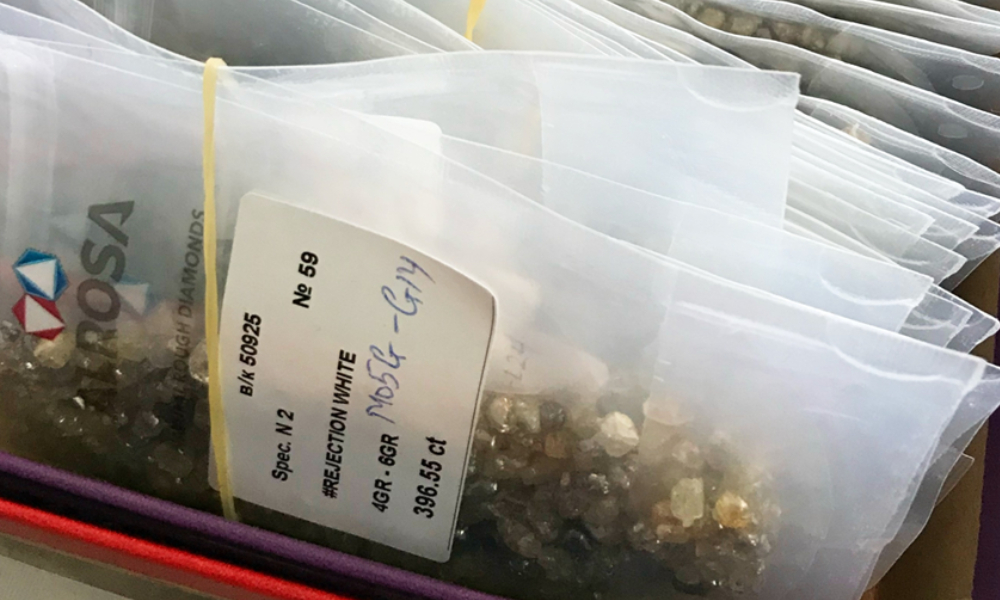
Providing not only what country a diamond originated from, but for example including an image of a stone in the rough, provides the basis to articulate to consumers that natural diamond is much more than a human-manufactured piece of carbon, it’s an extraordinary and rare relic of nature (that was formed billions of years ago and brought to the surface of earth by a volcano).
Especially with younger generations there is a need to explain the basic geology behind a natural diamond given that the “diamond” product has been so grossly commoditised, diluted and devalued over the last decade – young consumers have been told over and over the man-made diamonds are “identical” to the natural version.
At the moment, the industry really seems to be making breakthroughs in this area. For the 2025 holiday season, De Beers launched its “Origin” initiative with the aim to provide “seamless” blockchain-enabled provenance data “from source to store” on select goods 0.3-carat and larger. The collection also provides consumers with a proprietary “Natural Rarity Score” which quantifies the diamond’s implied rarity by benchmarking its size, colour, and clarity against De Beers’ own production base.
Signet Jewelers, North America’s largest jewelry retailer, leveraged Origin by debuting “Jared Storied Diamonds” in September 2025 – a collection that exclusively uses diamonds from Botswana. A 15-second commercial promoting the line titled “Storied Diamond Desert Sands of Eternity” had over 120 million views on YouTube as of early 2026.
In recent months, Chow Tai Fook, Greater China’s largest seller of diamonds, said that it is aiming to only sell “T-Mark” diamonds by 2029. As of April 2025, the proprietary natural diamond brand provides country of origin on all stones 0.08-carats and larger – effectively implying that almost all diamonds that Chow Tai Fook sells will be traceable by the end of the decade.

Tiffany & Co. was the first major player in the industry to offer its customers diamond souring information. In 2019, the company launched its “Diamond Source Initiative” providing the region or country of origin for every newly sourced, individually registered Tiffany diamond of 0.18-carat and larger. In 2020, the Initiative was expanded with the “Diamond Craft Journey” which added information on where the diamond was cut and polished.
However, it is worth noting that Russia remains the world’s largest producer of diamonds by volume. Prior to 2022, the nation’s largest miner, ALROSA, was actively engaged in advancing its own origin tracking technology, however, following Russia’s invasion in Ukraine, and subsequent Western sanctions, these initiatives have been effectively halted.
As such, aside from the humanitarian consequences, a resolution to the war could serve as a material positive development for the diamond industry. While much complexity clouds the predictability of a timeline, in the later part of 2025 Ukraine and Russia both publicly articulated “wants” that could serve as an initial framework for a peace deal.
Paul Zimnisky, CFA is an independent diamond industry analyst and consultant based in the New York metro area. For regular in-depth analysis and forecasts of the diamond industry please consider subscribing to his State of the Diamond Market, a leading monthly industry report; an index of previous editions can be found here. Also, listen to the Paul Zimnisky Diamond Analytics Podcast on Spotify or Apple Podcasts for exclusive full-length conversations with special guests from the gem and jewelry industry. Paul is a graduate of the University of Maryland’s Robert H. Smith School of Business with a B.S. in finance and he is a CFA charterholder. He can be followed on X @paulzimnisky and on YouTube @paulzimnisky.
Paul will be giving a keynote presentation at the Prospectors & Developers Association of Canada (PDAC) Convention in Toronto, Canada on March 2, 2026.
Disclosure: At the time of writing Paul Zimnisky held a long equity position in Brilliant Earth Group and Newmont Corp. Paul is an independent board member of Lipari Mining Ltd, a publicly-traded Canadian company with an operating diamond mine in Brazil and a development-stage asset in Angola. None of the above constitutes investment advice, please read full disclosure at www.paulzimnisky.com.
