
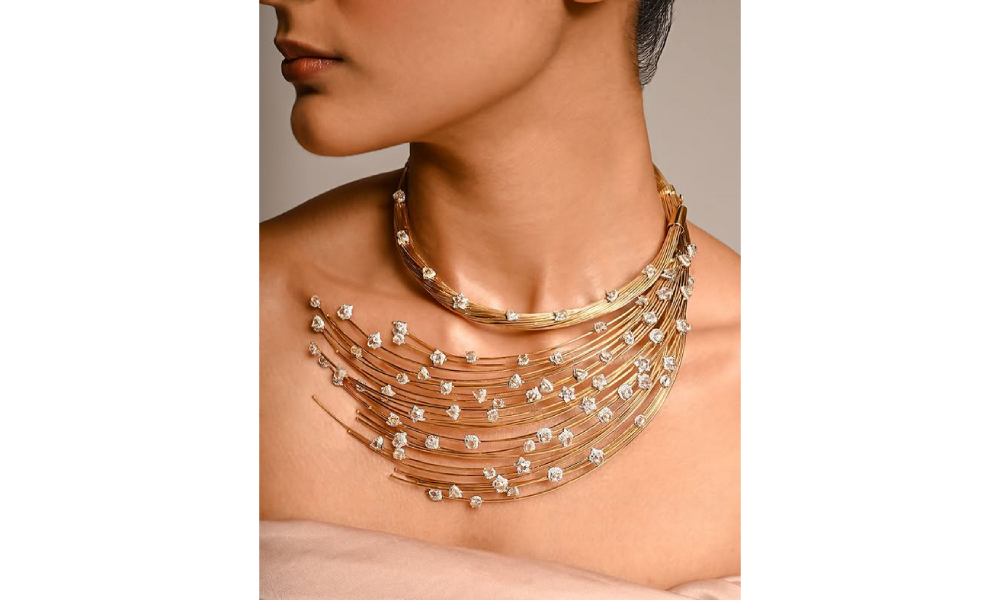
As gold prices continue their upward climb, the fine jewellery industry is responding with agility and creativity. From lower karatage gold (read 18- & 14-karat) and fancy diamond cuts to a renewed love for coloured gemstones, exhibitors at IIJS Bharat Signature 2026 reveal how evolving consumer sensibilities are reshaping design, pricing, and sourcing strategies—without compromising on craftsmanship or desirability. A Solitaire International round-up of the new calendar’s first show.
Rising gold prices have prompted exhibitors to scale down on karatage, with a visible shift towards 18-, 14- and 9-karat diamond-studded jewellery. At the same time, rose-cut, marquise, drop, and baguette diamonds sit firmly at the top of the popularity charts, emerging as clear favourites across collections.
Vintage and heirloom-inspired diamond jewellery continues to trend this season, reflecting a preference for timeless aesthetics, reaffirming their enduring emotional and investment value.
Crafts With a Modern Soul
Across collections showcased at the Select Club, craftsmanship remains deeply rooted in Indian heritage, infused with modern sensibilities. Sensuel Jewels by Chhaya Jain displayed a variety of handcrafted settings, leather cords, bird motifs, Victorian influences, flexible bracelets, convertible necklaces, and ear cuffs highlighting a design language that is both expressive and wearable.
“Many pieces take two to three months to create, with artisans preparing stones first and designing around them—a process that enhances harmony and uniqueness. While most necklaces are still crafted in 18-karat gold, bracelets and contemporary pieces are increasingly moving to 14-karat, striking a balance between aesthetics and affordability.
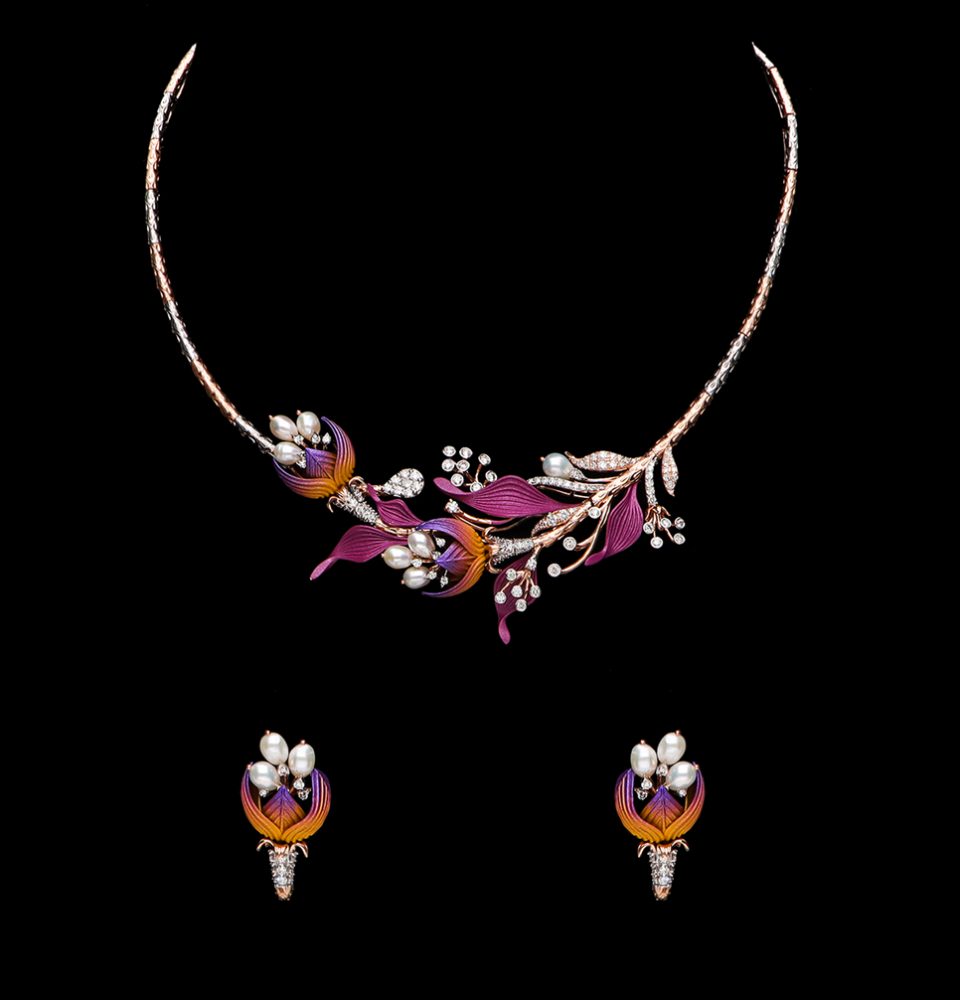
This season, Priti Bhatia, Founder & Design Head, Awesome Sparklers, has experimented extensively with rutile cords and vibrant colour palettes, moving beyond her signature butterfly motifs to introduce beeinspired elements. Then there are playful bead and panther motifs, seamlessly integrated with cords and gemstones—further reinforcing the brand’s signature blend of craftsmanship and contemporary sensibility.
Clarifying her approach to material use, Bhatia is quick to dispel the idea that lighter looking pieces mean less gold. “People come to me for my designs and craftsmanship,” she says. “Gold, for Indians, is an investment—if it doesn’t belong in jewellery, it doesn’t make sense. My philosophy has always been to use exactly as much metal as required, so the jewellery speaks for itself.”
Minimalism, for her, is about character, clarity of design, not cutting corners on value. Versatility is another key theme. Several necklaces are designed to be worn in multiple ways—up to three formats. A single piece can transition from a bold, front-facing statement for festive occasions to a lighter, more understated look for everyday wear. Parts of the same necklace can even be separated and styled as a bracelet, offering flexibility without compromising aesthetics.
At Sanskriti Jewels, innovation has taken centre stage. Nidhi Garodia, Head Designer and Co-partner, shared that the brand recently introduced Sikraya, a 9-karat jewellery line inspired by the iconic jaali work of Fatehpur Sikri, with price points starting at ₹1 lakh.
Diamonds paired with ceramic enamelling recreate the effect of light filtering through latticework. “The response has been amazing,” she says.
Another standout line features black polkis in open settings crafted in 14-karat gold, lending a distinctive edge and elevated design language to the collection.
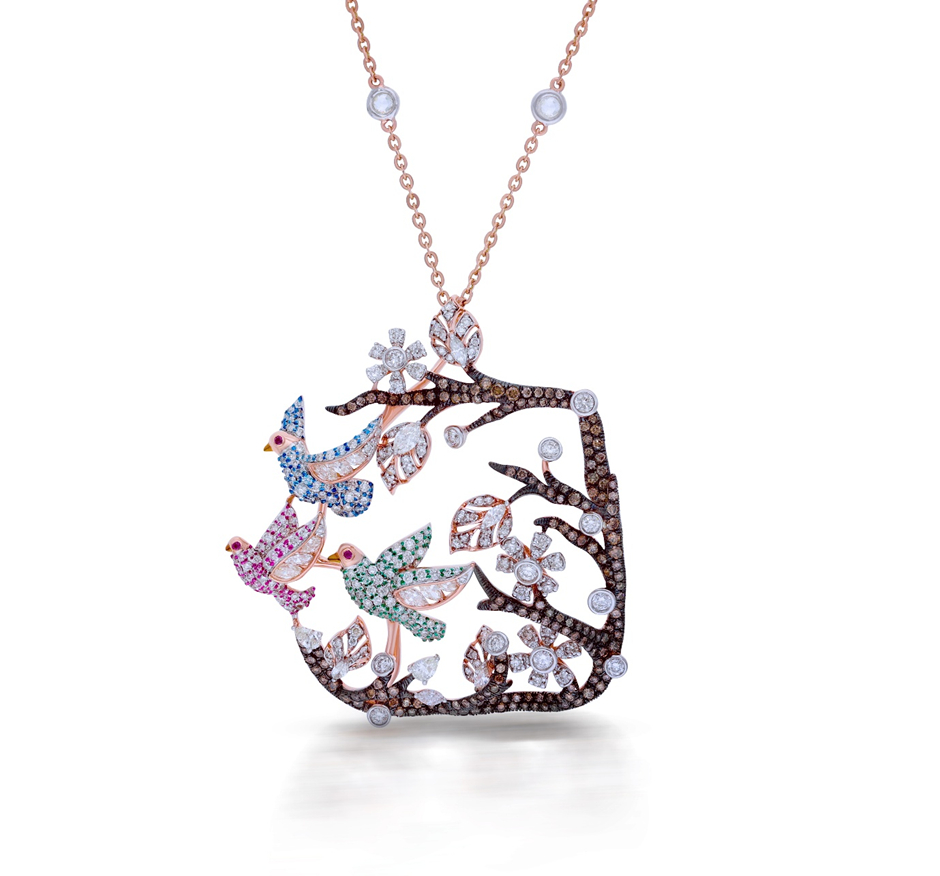
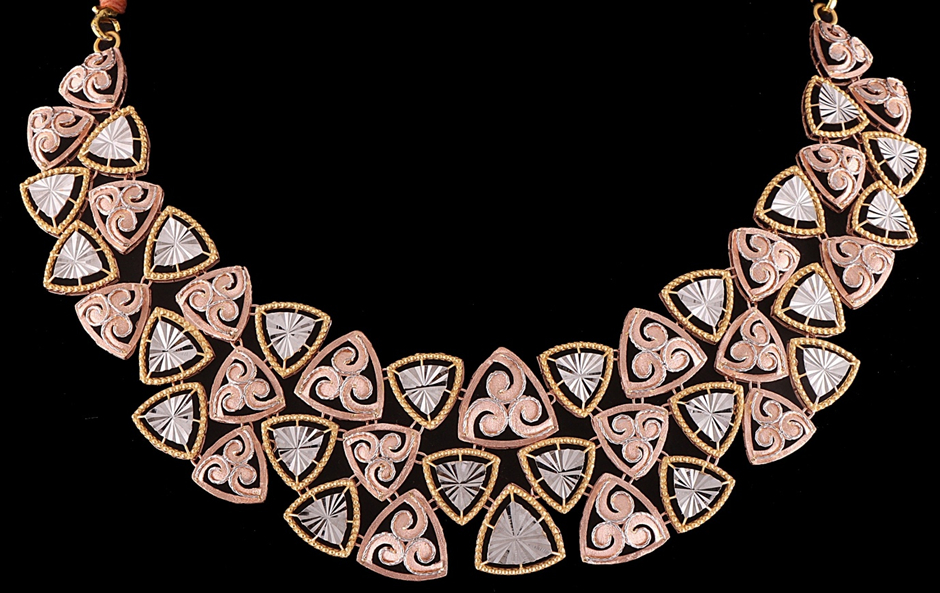
Durga Tulsyan, Director, T J Impex, informed that their Texture Collection in 14-karat gold crafted in warm rose toned gold, with satiny oval motifs, and brushed textures were a hit at the show. Each oval pattern is accentuated with a cluster of pavé-set diamonds, creating a refined contrast between the matte gold surface and radiant sparkle.
Diamond Hold Firm
Rishi Punamiya, Partner, Raj Diamonds stated that the response to high-end, lightweight diamond jewellery has been exceptionally strong. Buyers are appreciating the craftsmanship, flexibility, and refined finishing—reminiscent of legacy luxury aesthetics. Orders have been robust despite lower footfalls. At retail, these pieces range from ₹50 lakh to ₹1.5 crore, using a mix of diamond qualities tailored to regional preferences. While the South prefers higher-quality diamonds, North and Central India lean towards mid to lower ranges.
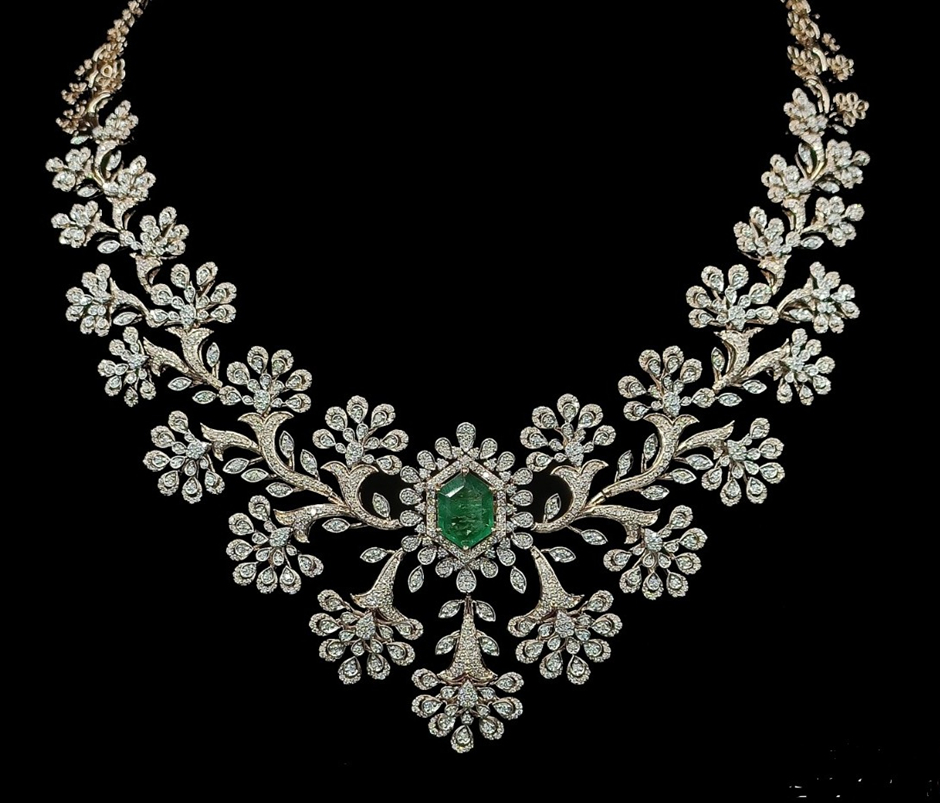
“A key shift has been the move to 14-karat gold for designer jewellery, making high-end pieces more affordable. The gold value saving is nearly 33%, allowing manufacturers to optimise inventory and scale collections. Demand has come from South India (Bengaluru, Hyderabad, Tamil Nadu), as well as Pune, Madhya Pradesh, Gujarat, and corporate buyers looking for premium signature pieces. Despite lighter footfalls, strong product storytelling continues to convert serious buyers.”
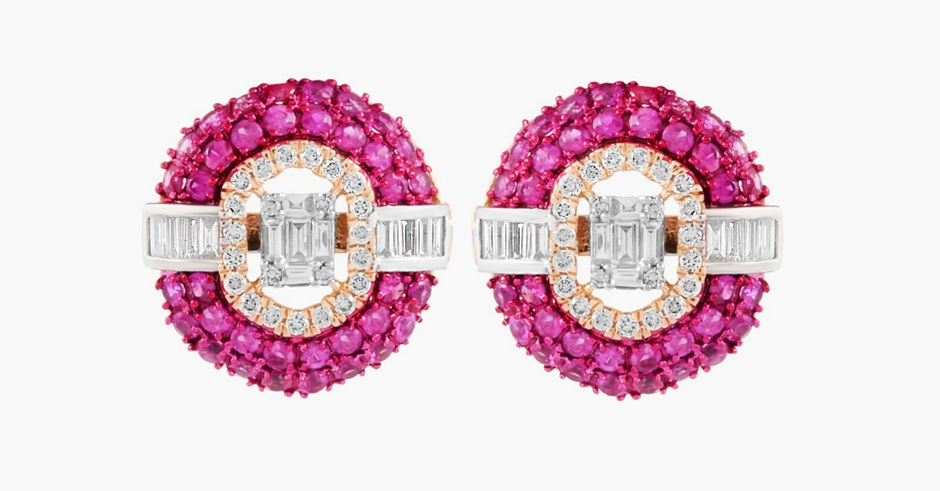
Sushama Kalzunkar Sawant, PD & Merchandising Head, KP Sanghvi, stated, “Small-format jewellery clearly outperformed. Products under 2–3 grams, especially rings and earrings, saw strong traction. In necklaces, lighter diamond weights were preferred—sets below 2 carats moved well, with under 0.75 carats emerging as the sweet spot. Another notable shift was the increased use of coloured gemstones alongside diamonds, adding value and visual interest without escalating costs.
Gold Demand Stable
Many exhibitors noted that buyers are coming in with well-defined lists and precise requirements. Impulse buying has reduced significantly, but this has brought a positive change—payments are timely; inventory cycles are healthier, and purchases are calculated.
Clients now know exactly what weight, product range, and quantities they need, often buying 40, 60, or 80 pairs instead of large speculative volumes. This cautious yet focused approach is seen as sustainable and beneficial for both manufacturers and retailers.
Innovation in 3D technology has been another key driver of change. Initially limited to small pieces such as rings and earrings, 3D manufacturing has now expanded into bridal jewellery, achieving significant weight reduction—up to 40% compared to traditional designs.
Mehta Gold has unveiled Mehta Air that represents a true technological breakthrough driven by innovation. Sandeep Mehta, Managing Director, revealed, “Just as in the aviation industry—where every screw in an aircraft weighing thousands of kilograms is engineered through intensive R&D to reduce weight without compromising strength—we recognized that jewellery manufacturing lacked focused research on metal thickness optimization and structural strength in gold. We invested decisively in this vision, and within one year achieved up to 50% weight reduction in the same designs, while retaining identical detailing, durability, and craftsmanship.
Our intent is clear: to support our customers amid rising gold prices by offering affordable jewellery with better spread, uncompromised 22kt purity, and highly intricate designs, redefining value without sacrificing quality.”
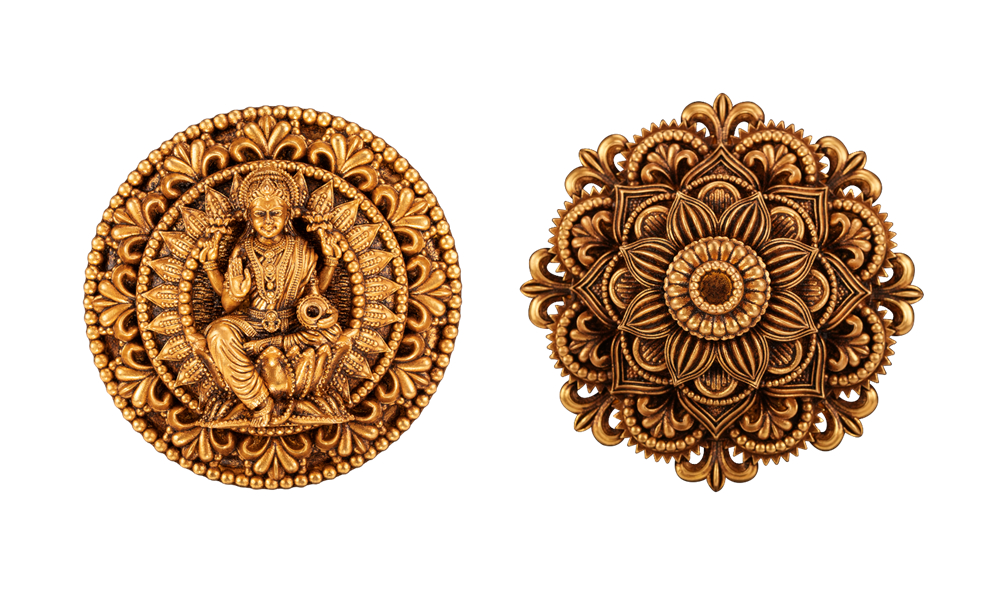
Pankaj Kodnani, Founder Director, Krown Jewels revealed that despite conversations around 18-karat gold, the emotional and cultural pull of 22-karat remains dominant in the Indian market—particularly driven by South India. Even when designs are offered in 18-karat, buyers often ask for them to be recreated in 22-karat. The attachment to 22-karat jewellery remains strong, irrespective of price volatility.
Krown’s light, feathery, embroidery-like designs rely heavily on skilled assembly-line craftsmanship rather than simple casting. Multiple components—cast elements, die-cut forms, and laser-welded wires—come together in complex constructions that demand high artisanal skill. This category has demand across regions, though certain styles lean more towards southern markets. Influences of kundan and polki, popularised by leading designers, have also broadened appeal. The brand positions this jewellery as strong value-for-money despite its complexity.
Kodnani said, “On the export front, markets like the Middle East, Singapore, Malaysia, and Southeast Asia remain important, though current demand is subdued due to sharp gold price volatility. Footfalls are softer, negotiations tougher, and buyers are cautious. The CEPA pact has eased trade with Dubai, improving cash flow and logistics, but price competition remains intense.
“Dubai continues to outperform as a market and acts as a gateway to others, including Southeast Asia via Singapore. However, awareness around newer CEPA-enabled markets is still limited, with jewellers largely associating it only with the Middle East. Saudi Arabia remains challenging due to high duties and indirect procurement through Dubai, which erodes margins. While interest exists, direct trade barriers continue to restrict meaningful engagement.
Harshal Umrania, Director, Samyak Lifestyles Pvt. Ltd., said, “Considering global gold prices, the exhibition exceeded expectations. Both 22- and 18-karat jewellery performed well. Our focus has been on modernising designs through filigree, jaali work, CAD-CAM, and technology-led processes, targeting younger consumers. Weight reduction of 12–15% has been achieved, and heavier 22-karat designs have been successfully adapted into 18-karat, offering dual benefits of price and design efficiency. The show also helped us attract new clients, making it a productive outing overall.”
First-time exhibitor, Shree Manikumar Jewellers, Imphal, Manipur, displayed a stunning handmade Manipuri jewellery, deeply rooted in the cultural history of Manipur, with each piece reflecting local motifs, and traditions. The designs are inspired by natural elements such as flowers, insects, and indigenous forms like the Shiroy lily, making them distinctly different from other Indian jewellery styles. With a manufacturing unit supported by around 500 local goldsmiths, every piece is handcrafted using techniques such as filigree and other traditional crafts, where individual components are made separately and then assembled.
The jewellery is primarily crafted in 24-karat gold, admired globally for its rich yellow hue, and has received strong demand not only across Indian regions such as Kolkata, Mumbai, Punjab, Patna, and Uttar Pradesh, but also internationally from countries including Germany, Australia, and the Middle East.
Sandeep Karel of Spark Jewellers, noted that they got a good response during the show. Specialising in lightweight jewellery made with casting, they got many queries from the south, north and east India.
In order to stay cost-effective, they also use paper casting which has helped them reduce the metal weight by nearly 40%. “Buyers are warming up to the idea of 18-kt purity.”
In essence, the IIJS Bharat Signature highlighted a few trends: lighter gold, electroformed jewels to lend a bigger look; strong design thinking; coloured gemstones and natural diamonds shaping a new chapter in fine jewellery. Exhibitors are responding to market realities while staying true to craftsmanship and luxury.
Silver Showings
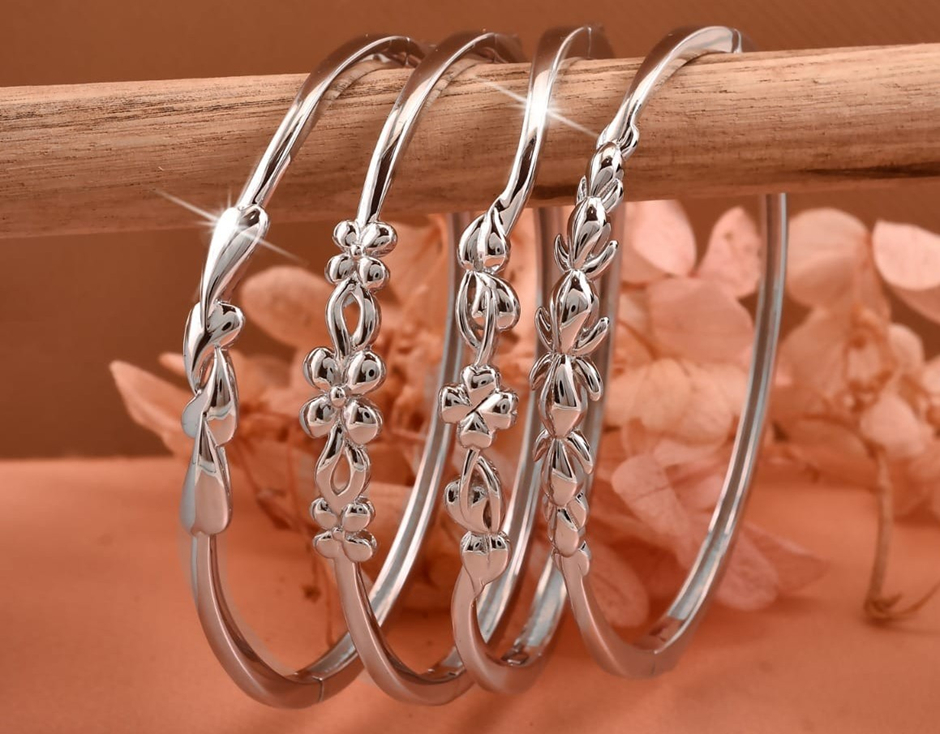
Manohar Baradiya, Owner, Anmol Palace – The Silver Hub, Chennai, shared that the brand received strong enquiries from the USA, Sri Lanka, Bahrain, and Canada for its lightweight, minimalistic jewellery. Emphasising silver’s growing potential, he said, “The future of silver is very bright. With prices rising sharply, just as buyers are scaling down gold from 22- to 18- and 14-karat, we are likely to see a similar shift in silver as well—from 925 purity to 75% or 80% purity.”
Laxman, spokesperson for Gunjan Jewels Pvt. Ltd., said the show performed above average for the company. Their latest Sohvii and Shankhin daily-wear collections, enhanced with pearls, were well received by visitors. He added that participation through their other vertical, Prima Art—featuring silver and gold photo frames—also added value, noting, “Being part of IIJS gives us strong brand recall and a visible brand presence among visitors.”