
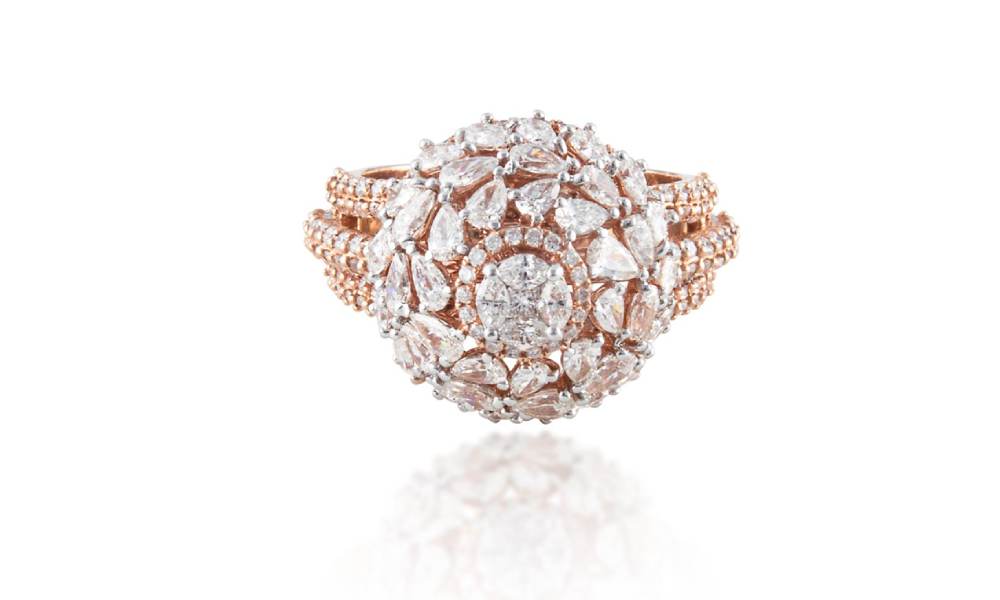
Illusion setting has emerged as one of the most sought-after design choices among diamond jewellery buyers today. It’s easy to see why—this clever technique gives the impression of a larger solitaire at a fraction of the cost, offering more bang for one’s buck.
The concept itself is straightforward yet remarkably effective. By clustering smaller diamonds in a precise arrangement and pairing them with smart metalwork, jewellers create the look of a single, larger stone. A polished reflective plate—often called a tikli plate in India—plays a key role by bouncing light back through the diamonds, amplifying brilliance. From a distance, the eye perceives one bold, unified gem, making the setting an instant favourite for anyone seeking maximum sparkle.
Ramit Kapur, Managing Director, GSI India, Mumbai, stated, “In India, illusion settings gained prominence as consumers became more design aware, and open to innovative methods that offered the look of high-value jewellery at an accessible price point. Over time, the technique has become especially popular among younger buyers who appreciate statement pieces that balance aesthetics with practicality.”
Throwing light on the origins of the illusion setting, Suresh Krishnan, Vice President – Sales, PNG Jewellers, said that in the mid nineteenth century, French jeweller Oscar Massin pioneered the idea of using metalwork to enhance the perceived size and brilliance of diamonds. His concept involved placing a small diamond on a polished reflective plate, with faceted grooves that extended the stone’s light performance.
“In India, this plate is commonly known as a tikli plate. Tiny micro prongs rise directly from the plate to hold the stone, creating a seamless appearance that resembles one unified, larger diamond,” Krishnan said, adding, “While Western jewellery embraced the method early on, in India, the initial experiments surfaced in the 1990s through export houses and jewellery designers. The early 2000s marked a turning point. Brides wanted jewellery that looked grand without the commitment of expensive solitaires. The illusion setting answered that need perfectly, blending affordability with glamour and design flexibility.”
The popularity of illusion setting rose around 2000 onwards, according to Raghav Dhir, Director at Dhirsons Jewellers Pvt Ltd. “During this time, customers in Delhi began looking for smarter, value-driven alternatives to large solitaires without compromising on appearance. Today, the illusion setting continues to be a preferred choice for clients who prioritise aesthetics, value, and smart buying.”
For retailers and designers, the setting has opened up new creative ground. Prerna Khurana, Managing Director of Khurana Jewellery House, notes how closely the trend aligns with customer expectations today. “In recent years, we’ve noticed a significant shift among buyers, who are looking for pieces that make a statement, offering both striking visual impact and true value. Illusion-set diamonds offer a wonderful solution for this need… What I love most is seeing how our clients respond to these designs—they are drawn not just to the sparkle, but to the elegance, the wearability, and the thoughtfulness that goes into every piece.” She adds that illusion settings also give designers the freedom to experiment with proportions, silhouettes, and detailing—allowing the jewellery to feel “modern, meaningful, and unforgettable.”
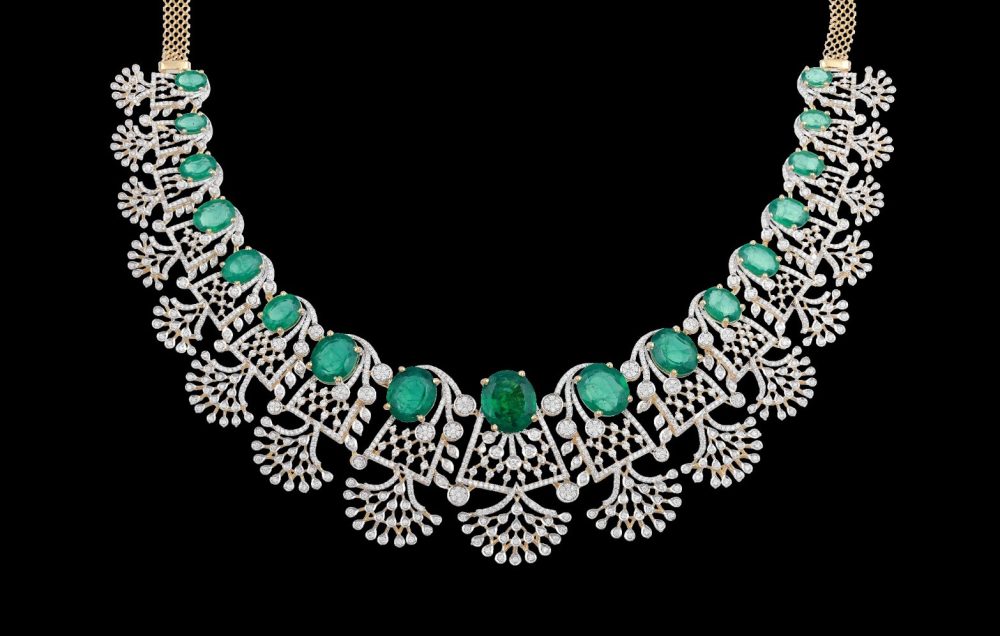
Cost remains one of the strongest advantages of illusion-set pieces. Suresh Krishnan explains its appeal in solitaire-inspired designs. “In percentage terms, jewellery crafted with an illusion setting can be between 50% and 80% less expensive than a piece featuring an actual solitaire of the same ‘apparent’ size. It delivers the grandeur of a solitaire while staying firmly within an accessible price bracket.”
Yet in some product categories, the price difference remains modest. Vikas Kataria, Promoter of DP Abhushan Ltd., says, “Illusion setting jewellery is usually only about 5% to 7% more expensive, as the price remains quite close to that of smaller diamonds.”
Today, illusion settings for diamonds are found across categories … engagement rings, bridal bangles, cocktail rings, and daily wear jewellery. Their enduring appeal lies in their balance of beauty, boldness, and smart pricing, making them a natural choice for young couples and style-conscious buyers.
In essence, the illusion setting proves that luxury doesn’t always need to come with a hefty price tag. Sometimes, all it takes is thoughtful craftsmanship and a brilliant design concept to work magic.