

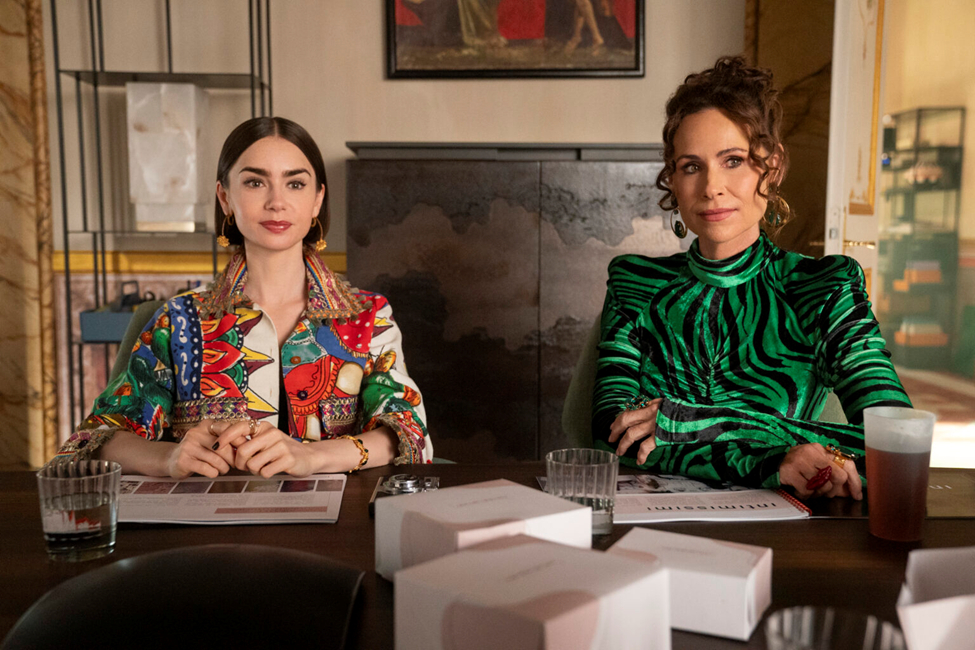
If you’re crushing over the gold structured earrings Emily Cooper is strutting across Italy in the new season of Emily in Paris, don’t look for a Roman hallmark! The jewellery is not Italian. It’s a creation by Ridhi Asrani, an Indian jewellery designer who launched her eponymous label in Hyderabad in 2020. Before making it to Emily’s wardrobe, Ridhi’s pieces were already a hit, seen on the cast of another popular series, And Just Like That. Both the shows are produced by award-winning producer Darren Star best known for the super hit comedy-drama Sex and the City. So how did Asrani, a complete industry outsider, become a preferred jeweller for Hollywood’s most coveted wardrobes? Ridhi Asrani recounts her efforts to engage with designers and the resultant success, in an interview with Shilpa Dhamija.
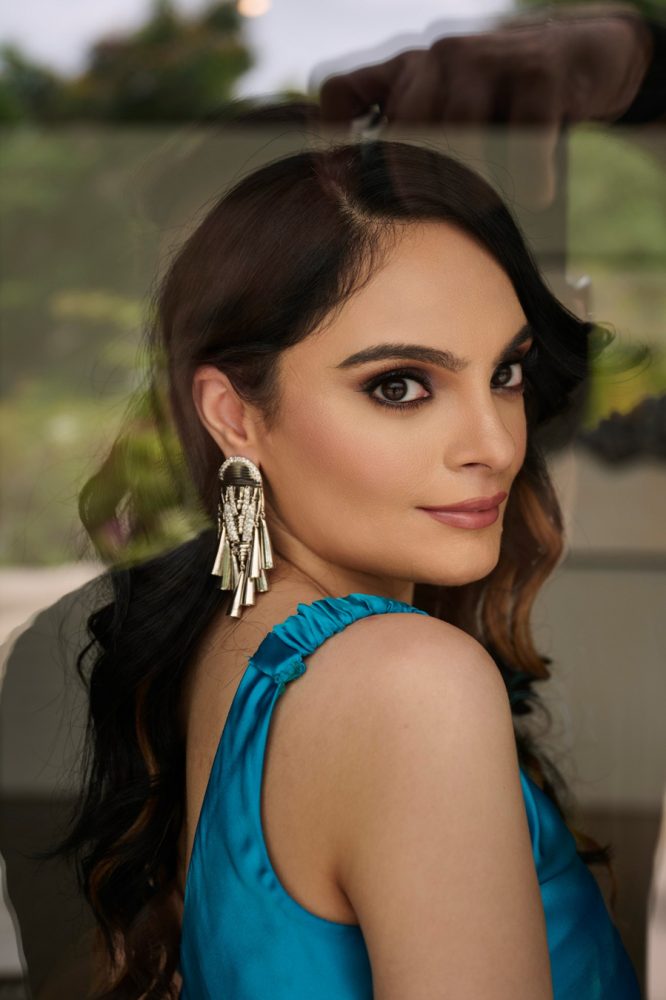
Ridhi Asrani’s work lies outside the conventional categories of luxury or fine jewellery. Crafted in brass and finished with silver or gold vermeil, her creations have earned repeated selection by award-winning Hollywood TV designers—not for the value of the metal, but for the assurance of her craft. Her clear understanding of aesthetics, and professional demeanour have become the winning formula that led her to be valued by one of the best production houses in the world.
How did you get the costume designers to see and feature your jewellery on Emily in Paris?
Communication with them began organically and not through high-priced PR pitches. It started with a heartfelt letter I wrote to the costume designers of And Just Like That series, simply praising their representation of Indian couture in one of their episodes. I didn’t even include a lookbook of my work, I just mentioned that I am a jewellery designer and added my Instagram handle. To my pleasant surprise, they replied, requesting my designs for a character on And Just Like That, and that’s how my stint with Hollywood began. Since the same production house created Emily in Paris, my collaboration there was a natural continuation of the relationship I had already built with the team.
How would you describe your experience working with Marylin Fitoussi, the award-winning costume designer of Emily in Paris?
Working with costume designers in Hollywood differs fundamentally from traditional celebrity stylists as the former prioritises the narrative and emotional arc of a character. They are driven by visual impact and authenticity, not trend lists or logos. Working with Marylin Fitoussi was less transactional and more creative and thus satisfying.
Do costume designers commission pieces or select from your existing collection? Does the fact that your jewellery is made of brass and not gold influence their decision?
Sometimes they request bespoke pieces, but in my case the designers found what they needed, within my existing collections. I was requested to send a wide variety with a pre-condition that may or may not be featured in the show, but that is okay, as this is normal industry procedure. Final decisions on whether my piece makes it to the show or not, are made during final costume fittings and then after the final show editing.
Material doesn’t limit the choice of show designers. Costume teams look for pieces that speak visually and emotionally. For them, the story a jewellery piece tells is more important than whether it is made of solid gold or plated brass. Designers tend to source from every corner: flea markets, vintage finds, or independent makers. So, the focus is always on the look, not just the brand or price tag.
Does visibility on such global shows translate into tangible commercial benefits or sales?
Screen visibility functions more as a publicity tool rather than a direct sales driver. It doesn’t always lead to immediate, measurable sales, and shouldn’t be judged on that metric alone. Instead, these publicity moments expand awareness, especially internationally. After And Just Like That, I received interest from unexpected demographics, such as people in their sixties, from countries as geographically and culturally diverse as Australia and the UAE.
The impact of OTT visibility creates curiosity, and long-term brand positioning. Sometimes, my pieces that weren’t even on screen become bestsellers because the spotlight made the brand discoverable.
When your work gains international visibility, how do you prepare your e-commerce and logistics for a potential surge in global orders?
When the first time we were featured in And Just Like That, I didn’t have a proper plan to fulfill sizable international orders. Early exposure and the resulting mistakes forced me to quickly master international logistics. I had to ramp up production capacity and establish clear communication regarding delivery timelines with customers worldwide. I learnt that when that level of visibility hits, the goal should be to ensure that the sudden rush translates into timely communication and thus lasting brand trust.
On your e-commerce website, you have mentioned the name of the artisans who have made your jewellery. Why is it important for you to credit your value chain?
Transparency around craft resonates deeply, especially internationally. Customers respond when they understand the journey of a piece from concept to creation. Acknowledging the hands that make the work isn’t just ethical, it enriches the narrative of the brand. Craftsmanship should be celebrated at every level, not just commoditized.
What according to you are the reasons driving the international appetite for Indian craftsmanship?
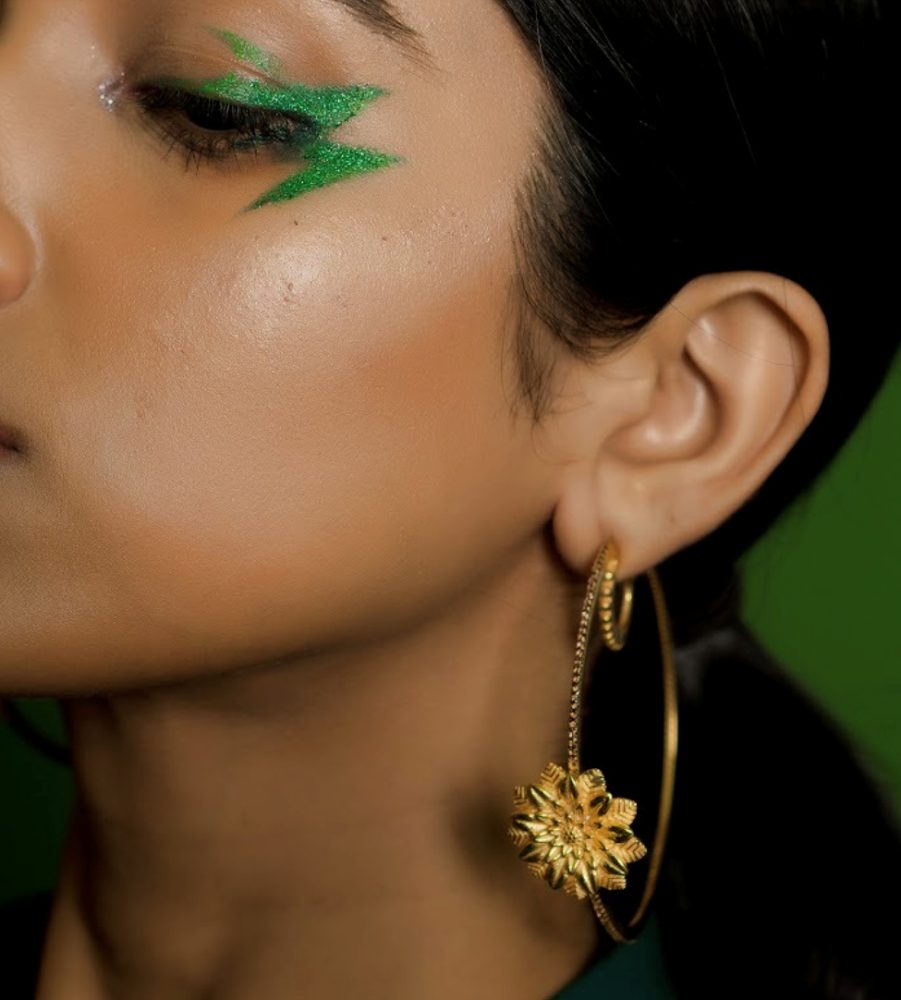
Multiple forces are converging to drive interest in fine craftsmanship and that is what India is good at. With digital connectivity, art and culture are transcending borders faster than ever. Indian creatives have a global footprint; there’s representation in fashion, film, and pop culture, everywhere. This expanding visibility is naturally creating curiosity and acceptance. When influential figures consciously wear or promote South Asian designers, it opens doors for others to follow.
Moreover, the global meaning of luxury is being redefined. Traditional Western notions of luxury were once tied to exclusivity and big price tags. With globalisation, luxury is now also associated with craftsmanship, intention, and storytelling; the same qualities that are grounded in Indian design and artisanal heritage.