
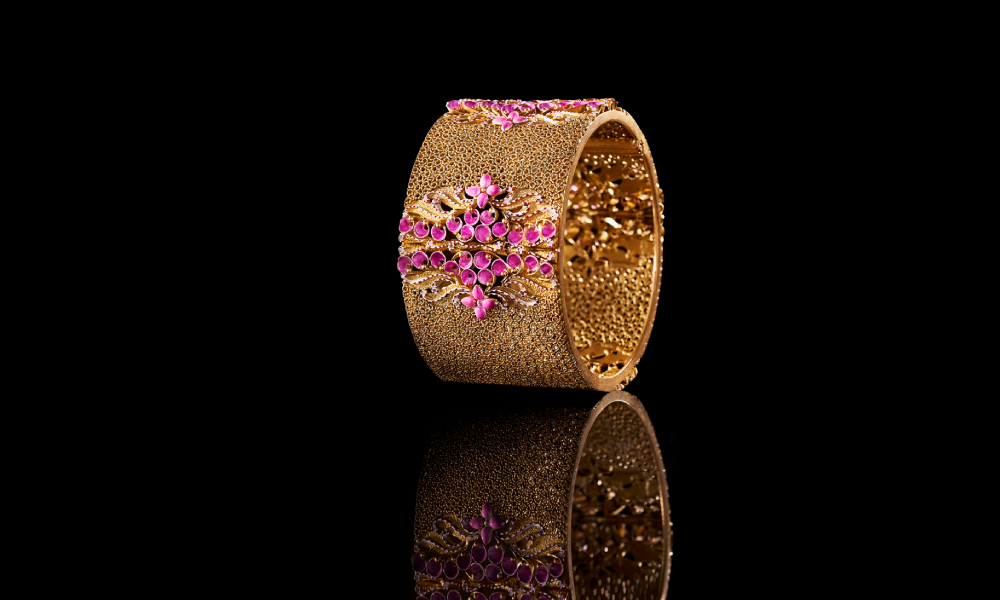
This year’s IIJS Bharat Signature theme, Art Forms of India, focused on the country’s masterful craft traditions and the way they continue to shape modern jewellery design.
One such art form was filigree—a delicate craft of hand-twisted silver or gold wire, incorporated into both traditional and contemporary designs. The Crafts Pavilion in Hall 4 at BEC, Mumbai, showcased four prominent crafts of India. Here is the first in the series.
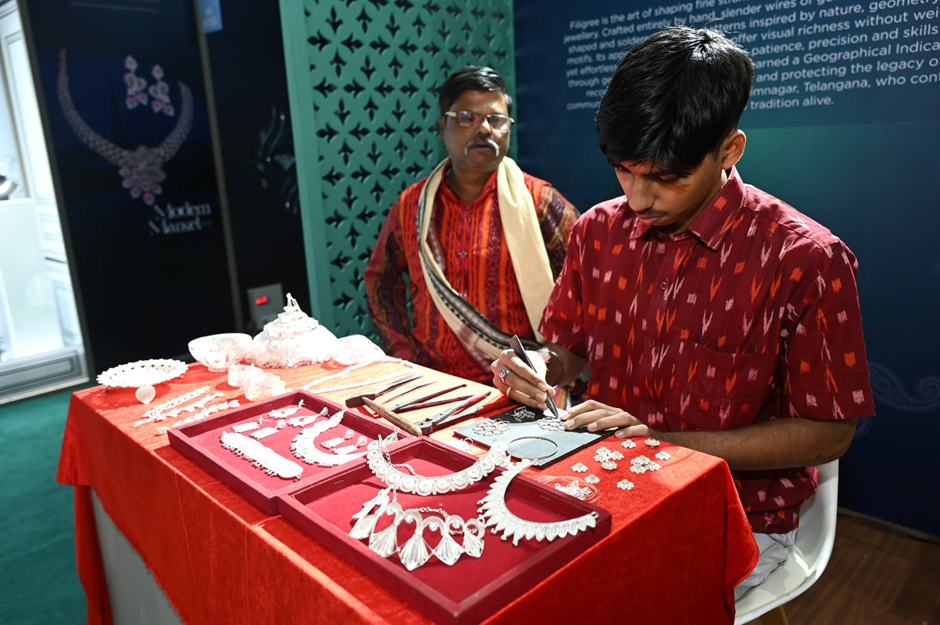
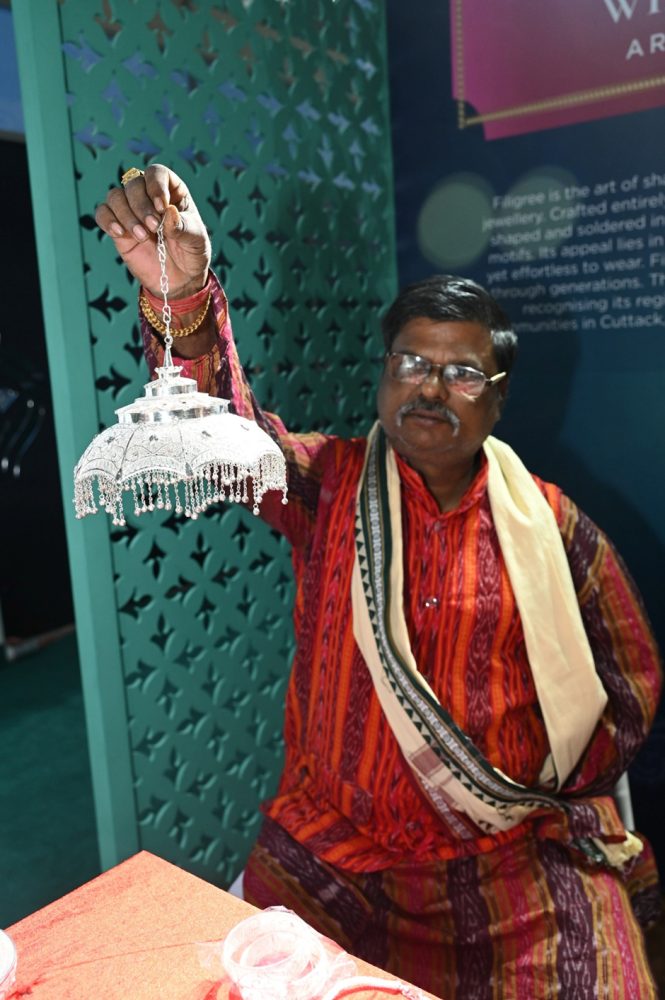
Visitors were curious and happy to witness a live demonstration by master craftsman and National Award winner Pankaj Kumar Sahoo, who has been practising this art for decades. Sahoo hails from Cuttack, Odisha, a city renowned for its centuries-old tradition of intricate silver craftsmanship. With over 35 years of hands-on experience, his work reflects exceptional finesse, patience, and a deep understanding of this delicate art form. Trained from a young age, Sahoo has devoted his life to preserving and advancing the legacy of Cuttack silver filigree.
Through his enterprise, Upahar Silver Filigree, he has created finely detailed jewellery and artefacts that balance heritage techniques with contemporary appeal. His creations are known for their lightness, precision, and enduring elegance, making them relevant to modern tastes while remaining rooted in tradition. Beyond craftsmanship, Pankaj trains younger artisans, including his son, Moti Sahoo, who was present at the show, and continues to represent Indian artisanal mastery on respected platforms, carrying forward the art form that requires dedication, discipline, and excellence.
More about filigree
The fine art of filigree, best identified as lacy, metal wirework, is one of the major crafts used in traditional and modern jewellery lines.
Filigree, derived from Latin, ‘filum’ (thread) and ‘granum’ (grain), involves thin twisted metal wires of gold, silver or brass to create delicate designs by braiding, coiling or soldering, often introducing small bead-like granulations in a mesh pattern.
With roots in ancient civilizations — filigree-like metalwork was practiced as early as 3000 BC, and reached high refinement in Greek and Etruscan work between the 6th and 3rd centuries BC.
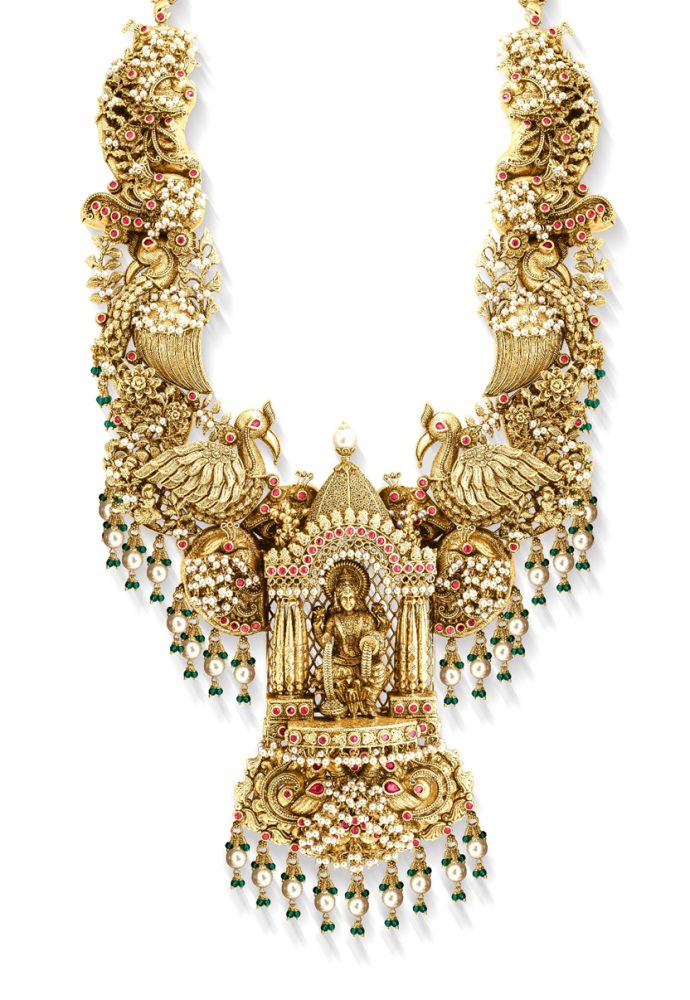
Dating back to the 6th century BC, the craft was practised in Greece and Etruria, and later widely all over the world, including Italy, Egypt, India, and Armenia.
Silver or gold bars are melted and poured into a mould to convert them into rods, which are then placed into wire drawing machines with small openings that bring out fine wires. Since silver is ductile, one gram of metal can create approximately a kilometre long wire.
The labour-intensive technique involves crimping, curling, and spiralling wires, which are then soldered by karigars onto a design, thus creating gauzy patterns. The soldered
piece is heated to fuse the joints properly, followed by polishing and lacquering.
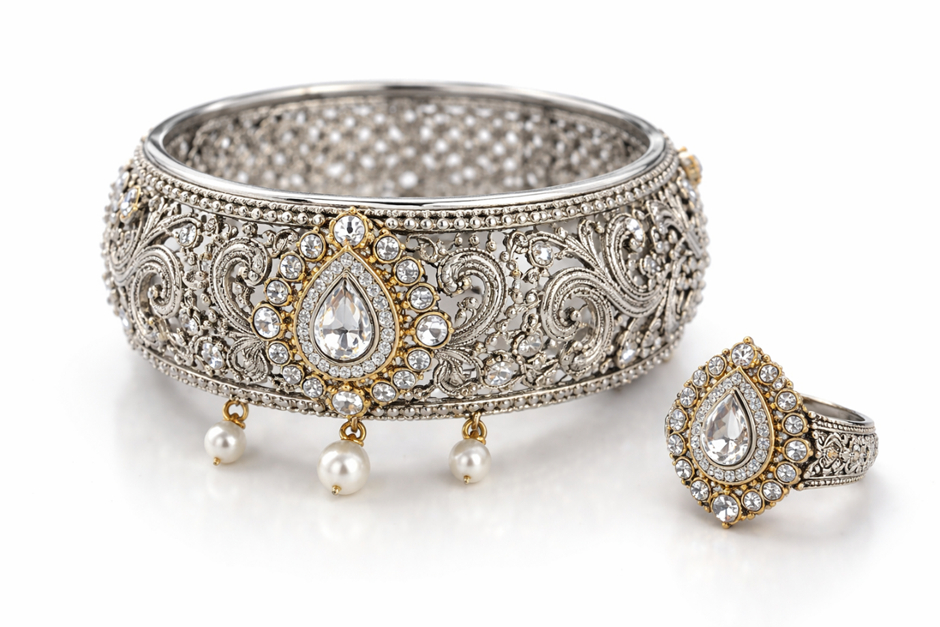
Some of the historical filigree centres are the ‘silver city,’ Cuttack in Odisha, known for its tarkashi style, and Oaxaca, Mexico, for filigrana.
As recently as March 2024, Cuttack’s unique art form, ‘Rupa Tarakashi’, received the Geographical Indication GI tag for the art practised there since the 12th-13th century. In the local Odia language, “tara” means wire and “kasi” means to design, which accurately describes the intricate process of creating silver filigree.
Cuttack artisans engage in silver filigree work, producing detailed jewellery for women and men. Most motifs are nature inspired, and jewellery for women includes necklaces, brooches, earrings, anklets, hair ornaments, bangles, bracelets and more, while for men, it consists of tiepins, cufflinks and kurta buttons.
Silver filigreed items constitute a huge chunk of the export pie from Odisha. Other than jewellery, artisans also make common household filigreed cutlery, elaborate showpieces, and objets d’art such as rose water sprinklers, jewellery boxes, temple replicas, chariots, horses and elephants.
The Cuttack filigree work is characterised by extremely fine silver wires curled into spirals, creepers, flowers, especially the rose, and latticework.
Another important filigree centre is Karimnagar in Telangana, where craftsmen opt for motifs of leaves and coiled tendrils, geometric, airy forms, and a slightly sturdier structure. Way back in 2007, Karimnagar silver filigree received Geographical Indication (GI) status, granting it intellectual property rights protection. The area is popular for its filigreed perfume containers, paan daans, and ornate mirrors that are widely traded.
Gold filigree work was practised in Kutch and parts of Saurashtra, influenced by both local artisans and Middle Eastern traders.
Their work often blends filigree with enamelling and naqashi. Portuguese influence brought refined European filigree techniques to Goa, and the region became known for delicate, openwork gold and silver filigree for ceremonial jewellery and church objects.
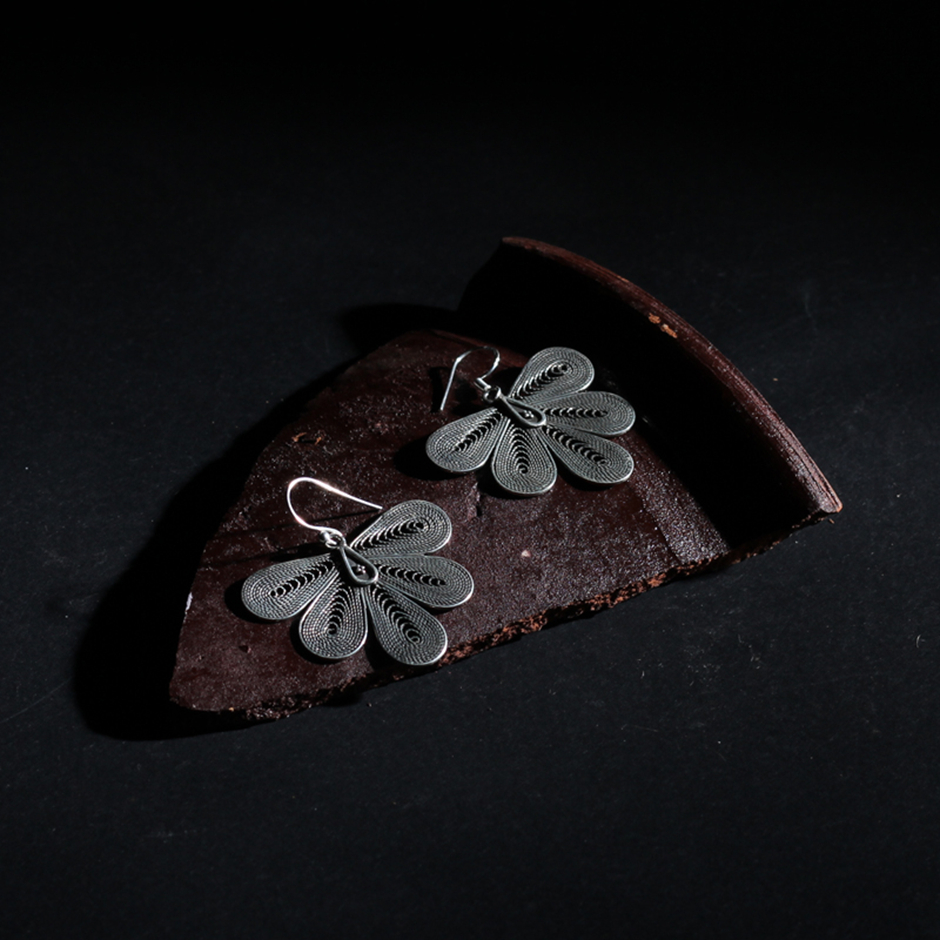
Filigreed elements find their way into high-end jewellery pieces crafted in gold and even platinum, set with fine coloured gemstones. The pieces are lightweight, sometimes big in form, but require remarkable skill to craft.
In recent times, designers have revived filigree in contemporary jewellery, merging traditional wirework with modern and minimalist silhouettes.
It’s a perfect craft to achieve a balance between light weight, given that there is an unprecedented price spike in precious metals, while keeping the costs under control.
It remains one of India’s most poetic crafts — airy, intricate, and deeply rooted in history — yet flexible enough to adapt to today’s style language.