
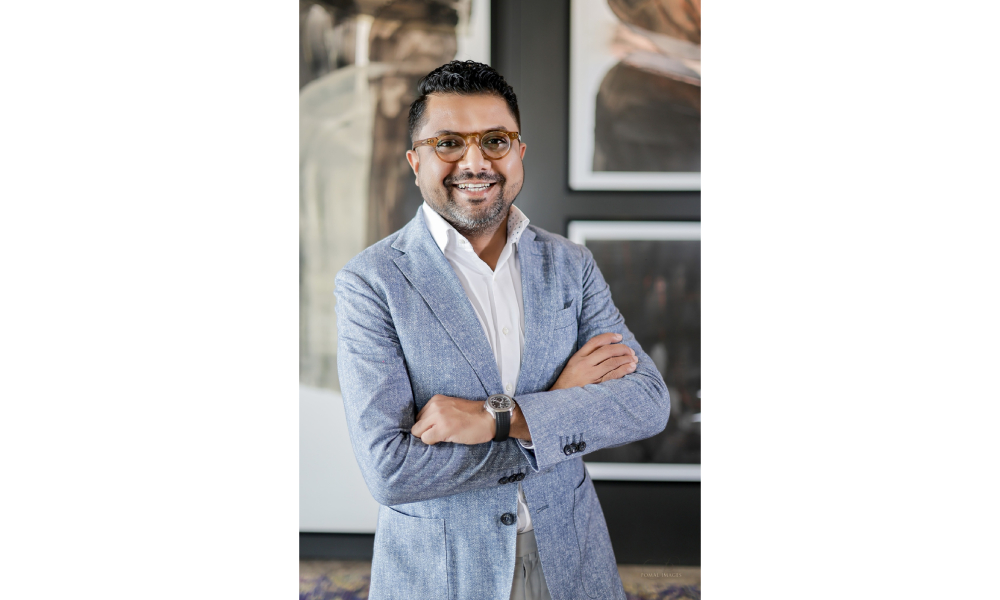
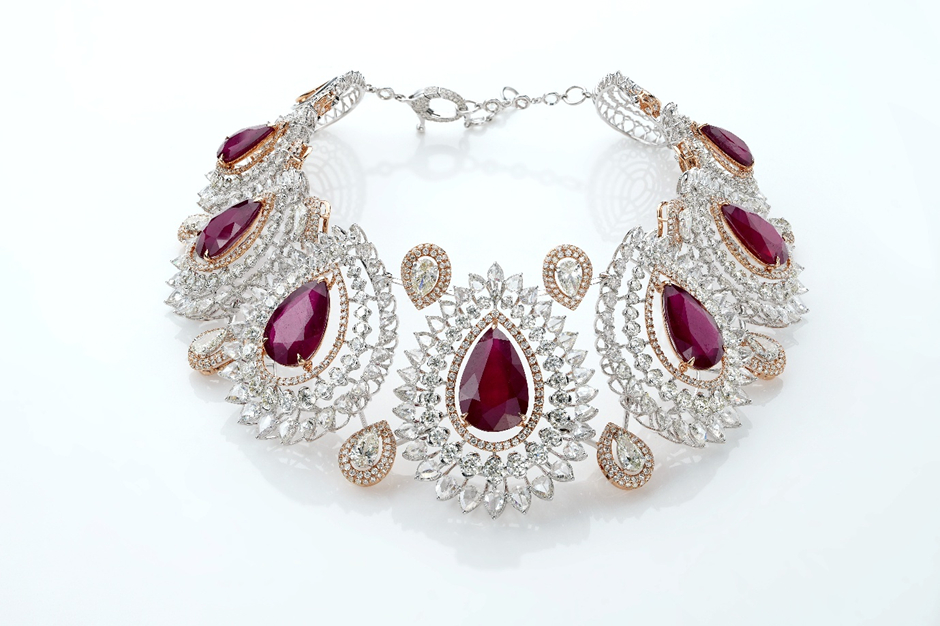
BINOY SHAH, Director, House of BNM Pvt. Ltd., is a revolutionary at heart who has scripted a new business-to-business model and rewritten the language of design. His strength lies in bringing a bold, refreshing sensibility to fine jewellery – the silhouettes aren’t just inventive, they elicit an emotion of pure delight. They don’t simply turn heads — they linger with you long after.
Today, BNM operates nearly 60 store-in-store boutiques across select independent showrooms in India and the Middle East, each carrying an exclusive curation with no two boutiques repeating the same design.
Shah has been quietly working his way up, letting his work speak and choosing slow luxury over speed. His confidence comes from the self-assurance that unique ideas, executed with exceptional finishing, will always find their audience — a belief that has consistently paid off.
The secret behind his success? Staying low profile, trusting his razor-sharp vision, following his chosen path with discipline, and steadily reshaping the B2B landscape.
In his first magazine interview ever, Binoy Shah opens up about his creative process, his business instincts, and the tough early years that taught him the value of steadfast determination.
Early Years & Challenges
Binoy Shah joined his father, Rajen Shah, and brother, Malav Shah, in their family business of diamond manufacturing in 2004–05. But a year after learning the craft in Surat, he gave up as the work felt too monotonous. Instead, he tried his hand at jewellery manufacturing and decided to start from scratch. He walked into Zaveri Bazaar, sat with karigars, asked endless questions, and learned how diamond jewellery was made for different markets across the country.
What followed was a long, difficult grind: he started off travelling across South India with bags of diamond jewellery, navigating trust issues, dealing with retailers who preferred making everything in-house, and struggling with payments, logistics, and long journeys by train or bus—always guarding his goods and often going without meals. He worked out of his home for over a year, showing designs in his living room, calling karigars home, and slowly building trust one client at a time. Retailers tested him, markets were tough, and selling jewellery was still looked down upon.
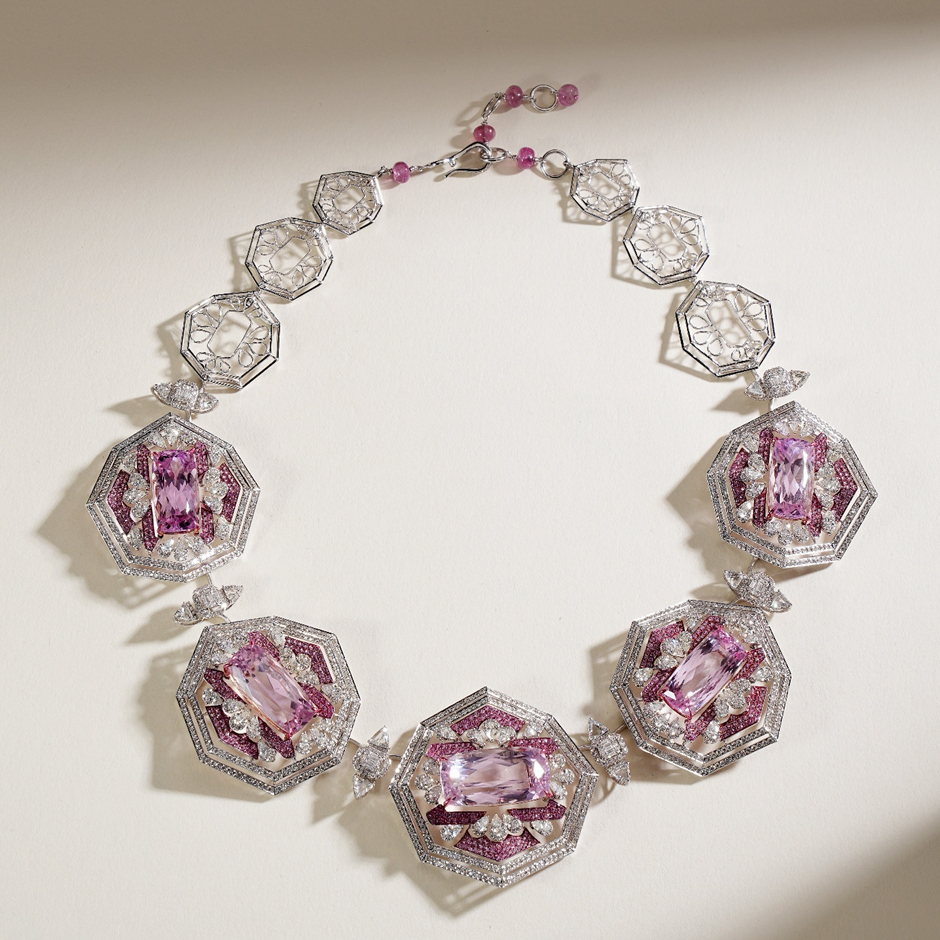
But Shah stayed focused and refused to undercut prices or compromise on design. Over time, his commitment to exclusivity— never repeating designs in the same city— earned him loyalty. Word of mouth brought in bigger names, and the same clients who initially doubted him began to seek him out. The struggle was long, but worthwhile. It shaped the clarity, confidence, and resilience that now define the way he runs and grows his brand.
His Guiding Principles
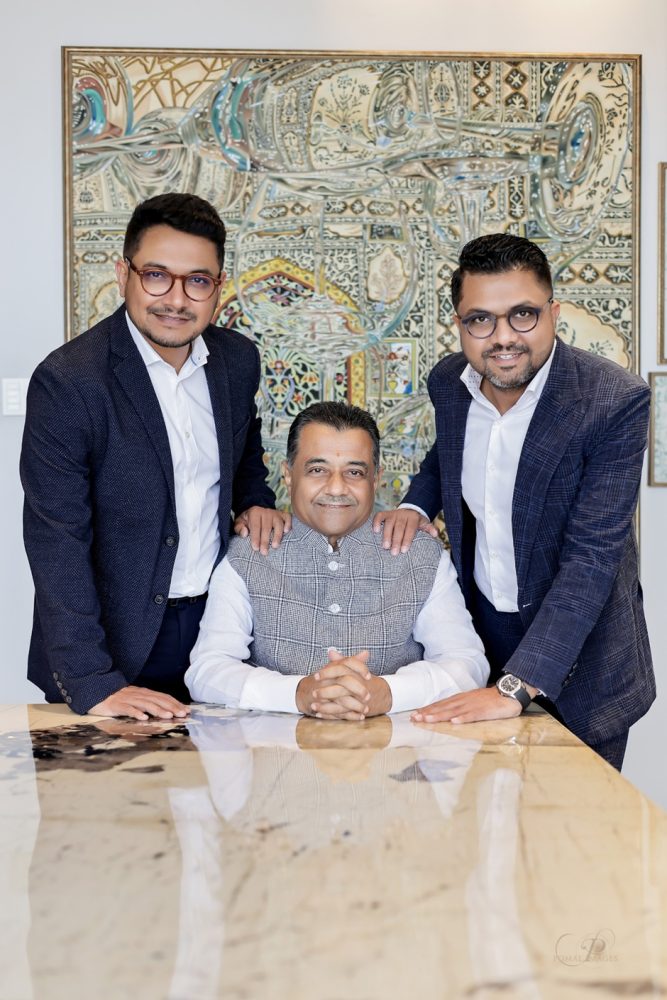
Shah attributes the success of the House of BNM to his father. “My dad’s reputation, and the way he raised us to value ethics and principles, gave us a solid footing,” he says. Both he and his brother Malav continue to follow those early lessons. Behind the scenes, Malav has been the steady backbone of the company, steering finances, overseeing diamond procurement, and managing all legal affairs with clarity, allowing Shah to devote himself fully to creating collections and moving the brand forward.
The early challenges also contributed to shaping his business philosophy. “My focus was never on chasing higher margins but on building work that justifies its cost — through production quality, design effort, and genuine creativity,” Shah recalls.
For Shah, strengthening bonds with existing clients mattered more than constantly adding new ones. He sees each client relationship as a long-term partnership. “It takes years to understand each other and grow together. You can’t sell today and expect loyalty tomorrow,” he says. “To build real volume, you need to understand the brand, get close to the retailer, and find ways to improve their store inventory and ambience.”
When the trend of high-end private boutiques began in India, he made it clear to his retailers that a boutique only works if it carries a unified design language. Picking a few pieces from different manufacturers defeats the purpose. Many of his clients understood this, and today he enjoys a rare level of trust — nearly 60 store-in-store boutiques across Indian cities carry only his products under their banner.
Such is the level of trust he has earned that most clients simply give budgets and trust him to deliver rare jewels.
Shah positions himself as the retailers’ backbone, someone who thinks ahead for them. “This trust,” he says, “is the foundation of my business.”
The Designer
Shah has a natural eye for beauty and a refined aesthetic that surprised even him when he discovered it. An avid follower of paintings from different eras, he is currently obsessed with the renovation of old architectural buildings in Italy using new formats. “I am interested in seeing how they blend old with the new,” he says excitedly.
As head designer, he briefs the team on concepts, checks the rough sketches, and gives final directions to the team. “I intentionally keep my team away from industry influence. For the past 12 years, I have often taken my designers or salespeople to visit art exhibitions, browse carpets, saris, architecture, nature — anything but jewellery — to generate different ideas.”
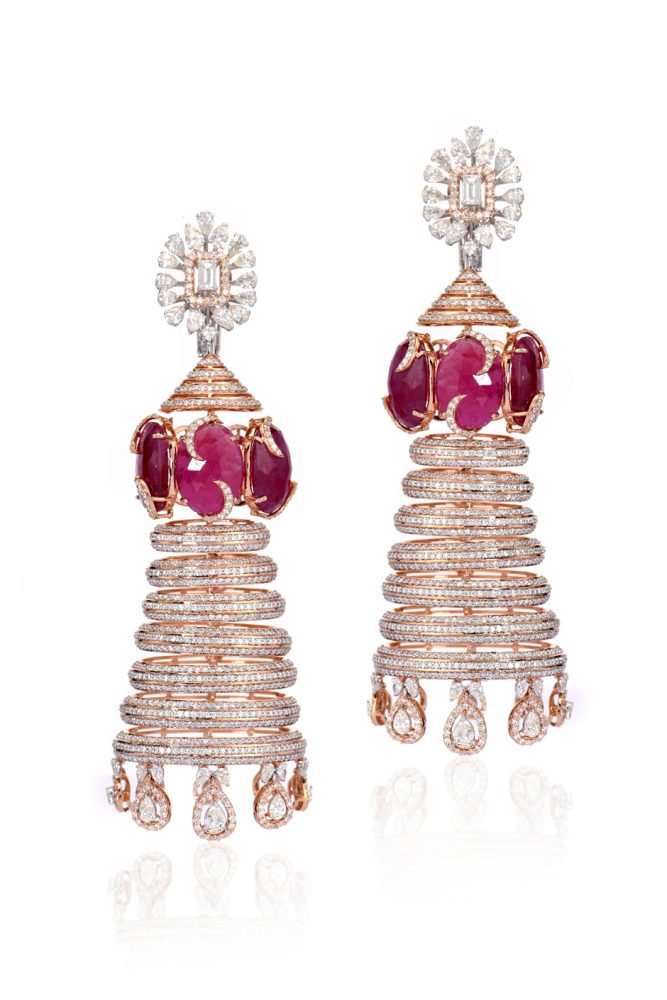
Inside his own office, Internet access is restricted for the design team, not as punishment, but to force them to think beyond social media feeds. Mobile phones are not allowed on the work floor, except basic phones kept for emergencies. For him, innovation comes from imagination, not shortcuts. “If I give them access, their minds will run to reference images. I want them to build from scratch.”
Strong research remains his core strength. If a designer presents something uninspired or even vaguely copied, he pushes them to rethink. “I have an uncanny ability to spot designs – and can spot anything that resembles patterns already in the market. I guess it’s an instinct that has been nurtured over years of training the eye.”
Shaping the Retail Future
His facility near Opera House, Mumbai, now spans 60,000 sq ft and employs about 1,600 people. Of his entire inventory, around 20% of his creations go to jewellery chain stores; though it’s mass market, he insists on offering something different from their inventory. Competing purely on price doesn’t interest him. “My pitch is simple — if you want distinctiveness, come to us, but understand that creativity carries value.” The rest consists of one-off pieces or thematic collections which find pride of place in special boutiques for his retail partners.
Shah often urges his clients to travel, observe global brands, and understand how presentation, ambience, storytelling, and display shape consumer perception.
“I often encourage them to treat at least a small percentage of their inventory as a marketing investment,” Shah says, adding, “A standout, difficult-to-sell piece can still make a customer feel they’re in the right store, even if they eventually buy something simple.” This philosophy has helped many of his clients shift their mindset from pure sales to long-term brand perception. “Originality may not sell immediately, but it sets the tone for future sales,” Shah notes.
Citing an example of a well-known family jeweller in northern India who was facing sliding sales, he recalls how he convinced them that younger buyers seek boutique-style intimacy rather than traditional large stores. They trusted his vision, and started a 600–700 sq ft in-store boutique; the fresh identity and curated inventory drew a new wave of young brides —and once they saw the designer collection, it attracted footfalls even to the counters of their main store. That success led to the boutique’s expansion, and sales rose even in their parent showroom. “The jeweller is planning to open a boutique in the south soon,” Shah adds with a tinge of pride.
Behind the scenes, Binoy has spent years training Indian karigars to match foreign standards, so that pieces produced are on par with international quality. This, he believes, is India’s real strength—the skill of the artisans, once given the right direction.
Vision for Tomorrow
Shah strongly believes that manufacturers need to stop diversifying their inventory indiscriminately. “If one keeps diversifying, how will the buyer trust you for the next 20 years? Specialisation builds relationships; confusion kills them,” he shares.
The younger generation of jewellers, he says, must step out of their comfort zones. Studying what others are selling and copying the market will only keep new entrants stuck in the crowd. True growth lies in innovation, not imitation.
Shah dispels the myth that creativity is tied to high price; it is purely about design. He feels that the success of South Korean cars is based on that principle – high design doesn’t mean high pricing.
Jewellery, he insists, is not a plug-and-play business. It needs a personal vision, the way couturiers shape their houses. “It’s not Parle-G that you set up and let the team run. Your involvement at every level of the creation is what makes it work.”
In a landscape crowded with sameness, his story is a reminder that staying original, even when it’s difficult, is what sets a brand apart.