
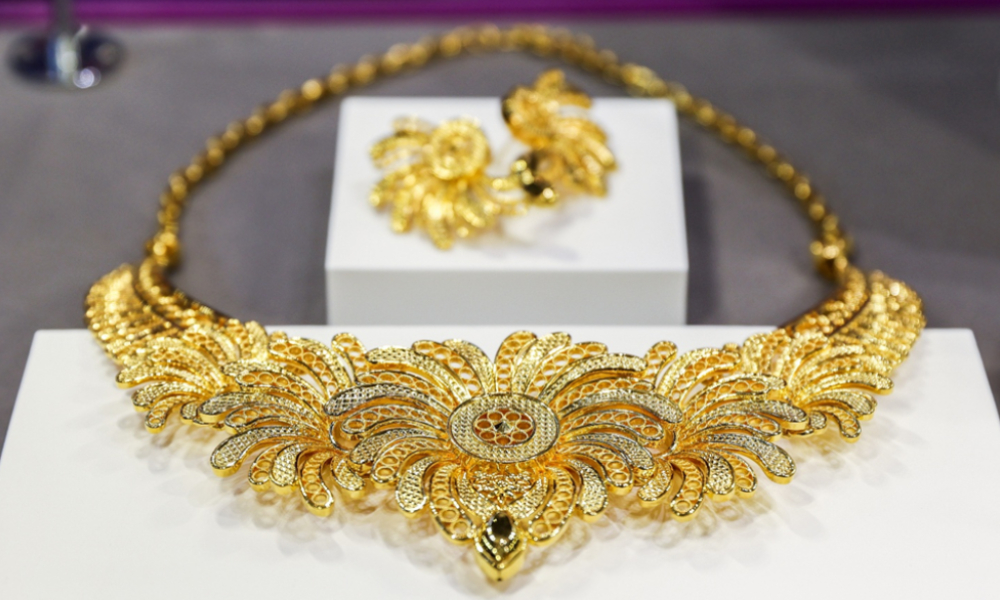
Gold prices have already reached significant highs. However, its future outlook remains unpredictable due to persistent market volatility driven by anticipated course correction and geo-political crisis. As uncertainties prevail, how is the gold jewellery industry pivoting to sustain demand? In China, the World Gold Council is championing its Hard Pure Gold initiative to leverage evolving consumer preferences, and investment sentiments that are dominating the gold market.
In an interview with Roland Wang, CEO of World Gold Council China, at the HK international jewellery show, Shilpa Dhamija explores the strategic merits of Hard Pure Gold jewellery in current market scenarios.
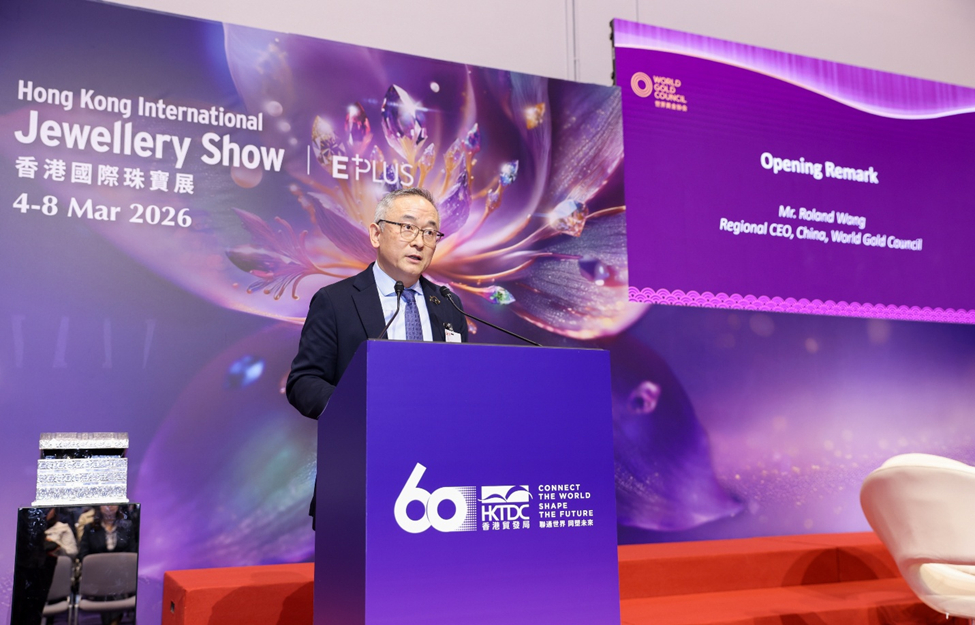
Recently at the Hong Kong International Jewellery show, the World Gold Council – China hosted a special Hard Pure Gold jewellery pavilion in collaboration with 10 Chinese gold jewellery manufacturers to show how gold with purity of at least 990% can be moulded into fine jewellery. To achieve this, manufacturers in China use advanced processes such as electroforming and lost-wax casting to deliver gold hardness that allow superior wear resistance and gem setting stability. Hard pure gold jewellery can also be made lighter with hollow forming techniques for value conscious buyers. Aesthetically, it can be given a brighter look to achieve lustre comparable to 18-karat gold.
Pure gold jewellery with purity between 995 and 999.9 have long been manufactured in China. So why promote Hard Pure Gold jewellery now?
Gold is already the largest jewellery category in China. We are now focusing on Hard Pure Gold by adding the word ‘hard’ in front of pure gold to clearly convey its benefits.
Pure gold jewellery in China has a 99% purity standard, but it traditionally faced two limitations: softness, which restricted design innovation, and weight, as pure gold jewellery tends to be heavy.
About four to five years ago, manufacturers introduced technology that makes pure gold harder, producing jewellery that is stronger, lighter, and brighter, often resembling 18-karat gold while retaining high purity.
At the beginning there was no proper unified name for this category. Different companies used different marketing names. So, we collected information from the marketplace and recognised that this category had strong potential, especially among younger consumers.
Because of that, we brought the whole industry together to create an official industry standard, so that everyone clearly understands what ‘hard’ means and how this type of gold should be produced properly. That industry standard was officially introduced last May (2025) and has been widely promoted.
What makes demand for Hard Pure Gold jewellery stand out?
Several researches have indicated that Hard Pure Gold jewellery is the fastest growing category in the gold segment in Greater China and it can play a major role in attracting new consumers.
Our independent World Gold Council surveys, as well as a collaborative retail survey conducted with a leading local publication that covered over 500 jewellery shops also indicate that this is the fastest-growing category.
We have noticed great interest from younger consumers, aged 20 to 35. Traditionally, in China the main target audience for pure gold jewellery has been middle-aged women, usually between about 30 and 50 years old. Younger consumers have shown less interest in traditional pure gold products.
About 15 years ago, the industry introduced 18-karat gold jewellery to try to attract younger and more fashion-oriented consumers. But this segment didn’t gain much interest and currently accounts for roughly 5% of the market.
However, when the new hard pure gold category appeared, both retailers and manufacturers noted rising demand from younger consumers. That was one of the most exciting signals for us, and it strengthened our confidence in the category.
Additionally, given the current high gold price environment, pure gold provides an ideal product solution for the industry.
With gold prices at record highs, how can higher-karat Hard Pure Gold jewellery attract buyers?
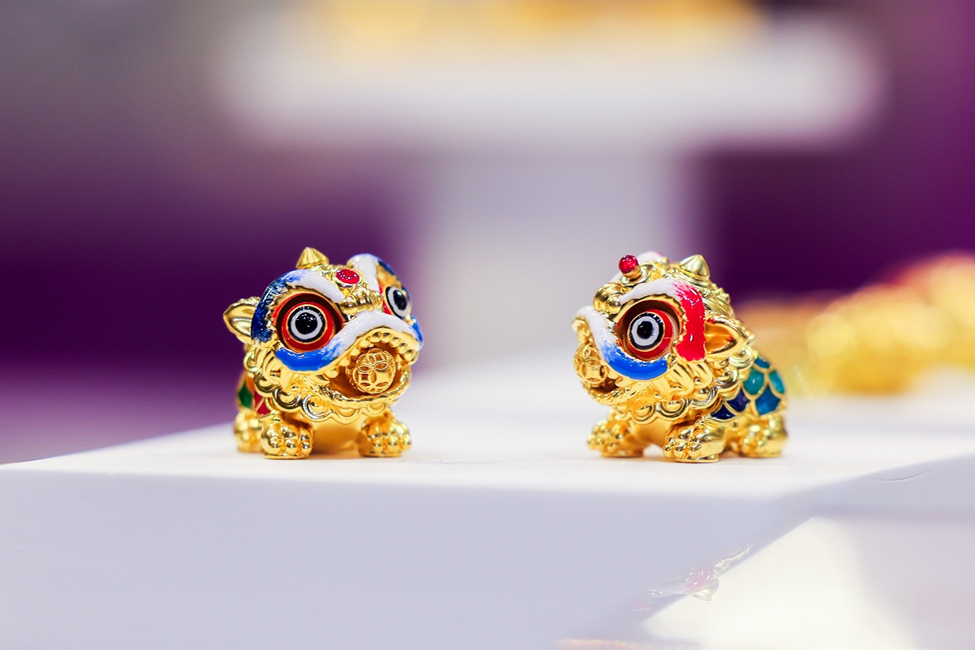
One solution is to reduce the weight of products, and that can be easily achieved with Hard Pure Gold technology. Manufacturers in China are able to produce jewellery that looks quite substantial but weighs as little as 1.5 grams.
Reducing the weight lowers the entry price, making it easier for younger consumers to start buying gold jewellery. At the same time, the product still contains high-purity gold, so the intrinsic value remains intact.
In China, we are also seeing increased trade-in activity with consumers bringing their old jewellery to exchange for new designs. Some view this as negative for jewellery consumption, but actually it encourages more frequent purchases. Consumers still desire modern designs, but due to high prices, many prefer to trade in older pieces when buying new ones.
Gold jewellery is valuable, but it is not always perceived as a luxury product because it is widely available. Can Hard Pure Gold jewellery be positioned as a luxury product?
That is a fair point. Many people buy pure gold jewellery, so the exclusivity factor can sometimes be limited.
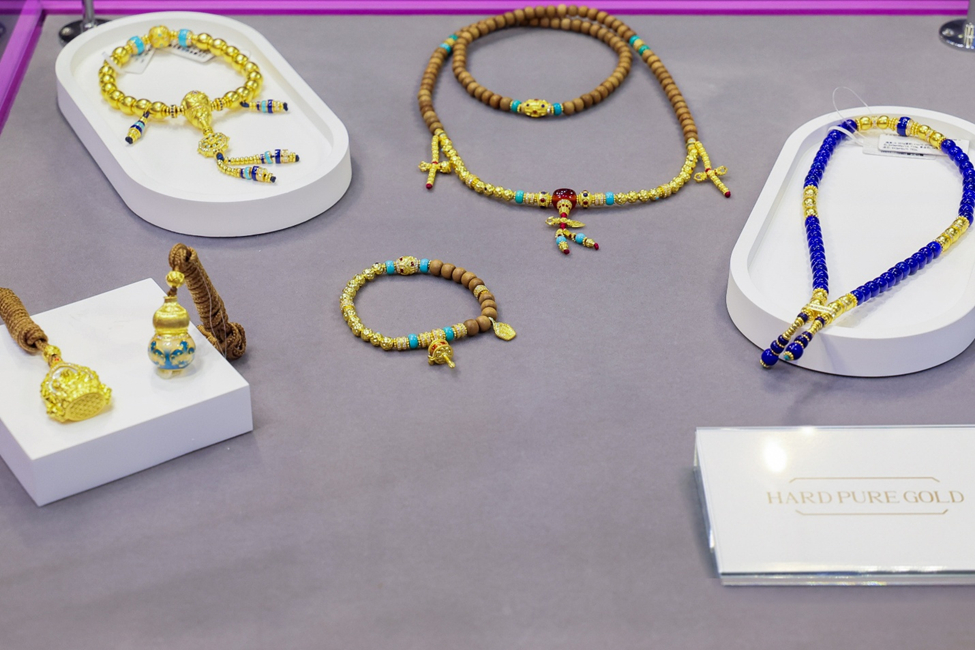
However, the market is evolving. For example, there is a relatively new Chinese brand called Laopu Gold. They are positioning pure gold jewellery in a luxury context, by combining the right elements: design, craftsmanship, cultural heritage, technology, and customer experience, which is changing perceptions in the marketplace. Established brands such as Chow Tai Fook have also started introducing high-end collections.
Chinese consumers, especially younger buyers, are becoming less drawn to international luxury brands and increasingly seeking local labels and distinctive products that help them stand out.
Hard pure gold technology helps support this trend because it allows more design innovation and customisation.