
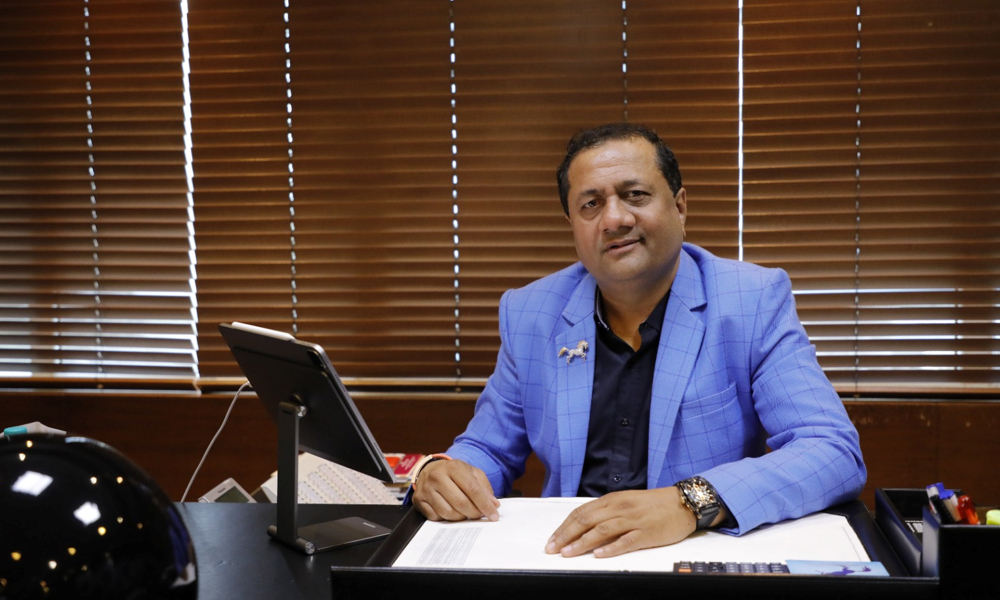
After several years of correction, the natural diamond industry is beginning to find firmer footing. Dinesh Lakhani, Managing Director of Kiran Gems, believes the recovery will be measured rather than dramatic, driven by disciplined supply, and responsible manufacturing. He explains why the industry’s future lies in creating value, not volume.
After three difficult years, do you believe the natural diamond industry is approaching a turning point? What gives you confidence?
The industry is moving towards a better phase. Recovery will take time, but the market is becoming healthier. Over the last three years, every part of the industry has become more disciplined. Inventory is improving, production is more balanced and businesses are focusing on long-term sustainability rather than short-term gains.
What gives me confidence is that the appeal of natural diamonds has never changed. They continue to mark life’s most important moments, and that emotional connection remains very strong.
At Kiran Gems, we work closely with customers across global markets, and we are seeing confidence gradually return. Recovery may be steady rather than fast, but the direction is certainly positive.
With mine supply shrinking, has the industry finally accepted that the future will be smaller in volume but healthier in value?
The industry is gradually recognising that future growth cannot be driven by volume alone. Natural diamonds are a finite resource, and that makes responsible production and disciplined supply more important than ever.
The focus now must be on building a healthier market where supply, demand and consumer confidence move together. Better inventory management, responsible manufacturing and stronger retail demand will create a more stable industry for everyone across the value chain.
Natural diamonds have always been valued because of their rarity. As supply becomes more disciplined, that rarity becomes an even greater strength. The opportunity ahead is not to produce more diamonds, but to reinforce their value and ensure consumers continue to see them as a symbol of rarity, emotion and lasting significance.
Many miners are reducing production. How has the shift away from smaller goods and melee affected your manufacturing strategy?
Reduced mine production has made manufacturers more selective. Every rough purchase has to make commercial sense, and every manufacturing decision has to be supported by demand.
At Kiran Gems, we focus on producing what the market needs rather than manufacturing for volume. We carefully plan our assortments, improve yield through technology and maintain the quality our customers expect.
Our approach has always been simple. Manufacture responsibly, stay close to the market and create value for customers.
Which categories offer the strongest prospects today: larger stones, premium makes, branded jewellery or niche segments?
Each category has its own opportunity, but the strongest demand is where customers clearly see value. Larger stones and premium makes continue to perform well because they highlight the rarity and beauty of natural diamonds.
Bridal jewellery remains one of the most resilient segments because it is driven by emotion and tradition. Branded jewellery is also growing as consumers look for trust, design and transparency.
For manufacturers, the priority is to support these segments with consistent quality and reliable supply.
China’s importance has diminished significantly. Which markets do you expect to drive growth over the next decade?
Growth over the next decade will come from a more balanced mix of markets. The United States will continue to be the largest market for natural diamonds, while India is becoming an increasingly important consumer market, supported by rising incomes and a strong jewellery culture.
China also remains an important market. While demand slowed over the past few years, recent signs of recovery are encouraging, and we are beginning to see confidence improve. As consumer sentiment strengthens, China has the potential to become an important growth market once again.
The Middle East and Southeast Asia will continue to offer significant opportunities as luxury consumption grows. Building demand across multiple markets will create a stronger and more resilient industry.
How important is domestic demand to the long-term stability of India’s diamond industry?
Domestic demand is becoming increasingly important. India is already the world’s leading manufacturing centre, and a growing consumer market adds another layer of strength to the industry.
As incomes rise and younger consumers enter the market, demand for natural diamond jewellery will continue to increase. That benefits the entire value chain, from manufacturers and retailers to designers and exporters.
A strong domestic market will complement exports and make the industry more resilient over the long term.
What will the natural diamond business look like in 2030 compared with today?
By 2030, the natural diamond industry will be more disciplined, more transparent and more customer focused. Success will depend less on volume and more on creating lasting value.
Consumers will expect greater transparency around sourcing and authenticity, while technology will continue to improve manufacturing and efficiency. At the same time, the emotional value of natural diamonds will remain unchanged.
The companies that succeed will be those that continue investing in quality, innovation and long-term customer relationships. Those fundamentals will define the future of our industry.
Key Takeaways
- Steady recovery: The natural diamond industry is stabilising through disciplined supply, healthier inventories and stronger market fundamentals.
- Value over volume: Scarcity will strengthen natural diamonds’ appeal, making value creation—not production growth—the industry’s defining strategy.
- Demand-driven manufacturing: Manufacturers are producing to market demand, using technology and disciplined sourcing to maximise efficiency and quality.
- Broader growth engines: The US, India, a recovering China, the Middle East and Southeast Asia will collectively drive long-term demand, with India’s domestic market becoming increasingly important.
Trust will shape the future: By 2030, transparency, responsible sourcing, innovation and enduring consumer trust will be the key drivers of success.
“Natural diamonds have stood the test of time because they are rare, authentic and deeply emotional. Our responsibility is not just to manufacture them, but to protect their value, strengthen consumer confidence and leave the industry stronger for the next generation.”