
Meet the jewellery artist whose creations seem to dance to their own rhythm—pirouetting, whirling, twirling and spinning in distinctly feminine, fluid and seductive forms… Jewels that showcase extraordinary feats of craftsmanship.
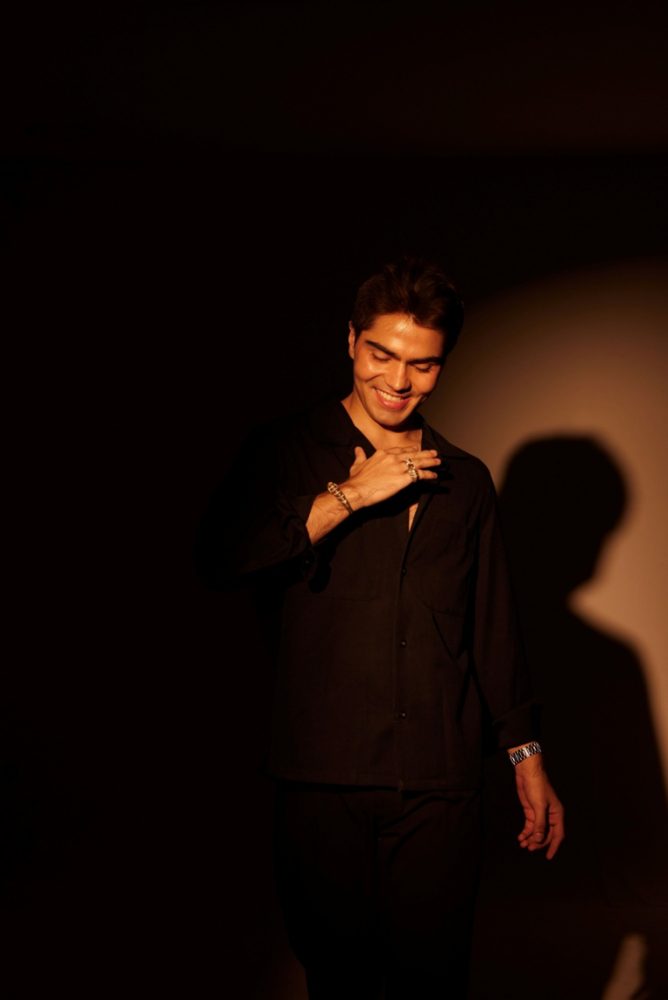
Culture, dance, joie de vivre and the exuberant carnival spirit of Barranquilla, Colombia, all find expression in his offbeat creations that have made waves across the jewellery world. The award-winning Sebastián Plah, Founder & Creative Director of PLAH, is an artist whose creative journey has taken him through several avenues, including a stint in the fashion world. His sartorial flair has carried forward into his jewels, crafted in titanium, gold and diamonds.
A passionate dancer and violinist, Plah draws inspiration from rhythm, movement, energy and the vibrancy of his culture. These artistic influences converge in his creations, which are ultimately an expression of his life philosophy: that jewellery, much like music and dance, should stir the senses, uplift the spirit and celebrate the joy of being alive.
Tell us about your childhood in Barranquilla. Were there any early experiences, people or cultural influences that planted the seeds of creativity in your mind?
Barranquilla profoundly shaped the person and designer I am today.
I am deeply inspired by colour, by vibrant energy, by people, by joy, and especially by that ability to face life with optimism. That has always been one of my greatest driving forces, and the city where I come from embodies all of those qualities.
Growing up surrounded by our culture, our dances, Carnival, and an extraordinary sea of colours, textures, flavours and music taught me to experience the world through the senses and through emotion.
My mother also has had an enormous influence on me. She is a very feminine Barranquillera woman who has always loved colour. I remember seeing her dress, combine colours fearlessly and make everything she did feel considered and beautiful. Watching her taught me that elegance and self-expression do not have to be opposites.
Some of that same sensitivity lives in my jewellery today. It is something very personal that began in Barranquilla, yet somehow it has allowed me to connect with women from various parts of the world.
Before jewellery entered the picture, what were your passions growing up?
As a child and teenager, I was always fascinated by art and by making things with my hands. I could sit for hours creating something simply because it had value for me.
I preferred crafts, dancing, singing, collecting small objects and creating miniature things. I had an obsession of making tiny books. I would construct them myself, design their covers and carefully work on every little detail. I collected them almost as though they were treasures even though they were only made from paper.
As I grew older, that fascination expanded into fashion. Fashion became an escape and a form of expression. I was fascinated by the designers in Europe and by the possibility of creating entire worlds through clothing. I followed runway shows, became involved with fashion events in my city and was constantly looking towards what felt new and avant-garde.
Then, around age 14, I began working with jewellery, and I realised that what often fascinated me most about fashion were the smallest details: the buttons, the embroidery, the embellishments. I wanted to take those details and incorporate them into jewels.
That was the beginning of an entirely new universe for me.
What first attracted you to jewellery as a creative medium?
What captivated me most about jewellery was its ability to become eternal.
A jewel becomes precious because we choose to make it precious. We give it meaning through the way we wear it, through the memories attached to it and through what it represents to us. Its value goes far beyond the material itself.
Jewellery can become a direct reflection of personality and identity, and I knew very early that I wanted to create pieces capable of representing the identities of different women.
I was fascinated by the possibility of understanding a universal, non-verbal language that could connect people. Eventually, jewellery became that language for me.
We all have a need to express ourselves and affirm our individuality. Jewellery has this extraordinary capacity to do exactly that while also retaining its appeal through time.
There are endless gemstones, endless stories and endless details that can exist within a jewel. And I think the moment we recognise something as precious, not only because of its intrinsic value but because of its emotional value, it immediately becomes an object of desire.
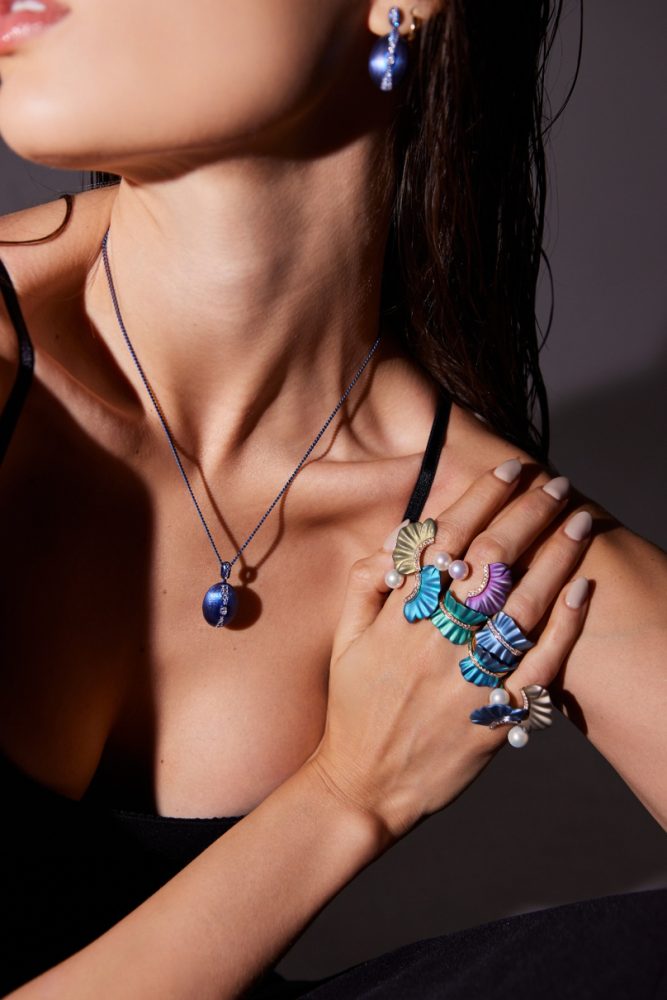
Barranquilla is famous for its vibrant Carnival, a four-day festival recognised by UNESCO as Intangible Cultural Heritage. How do rhythm, energy and celebration gracefully find their way into your jewellery? What are the challenges you face, especially since you work with titanium and gold?
Movement, for me, goes far beyond seeing a pendant or an element physically swinging from a piece of jewellery.
Movement is a way of understanding life.
It represents evolution, growth, change and the constant desire to move forward. I see movement everywhere. I see it in dance, in the ocean, in flowers as they bloom, and in the way people evolve.
Growth and movement are inseparable to me.
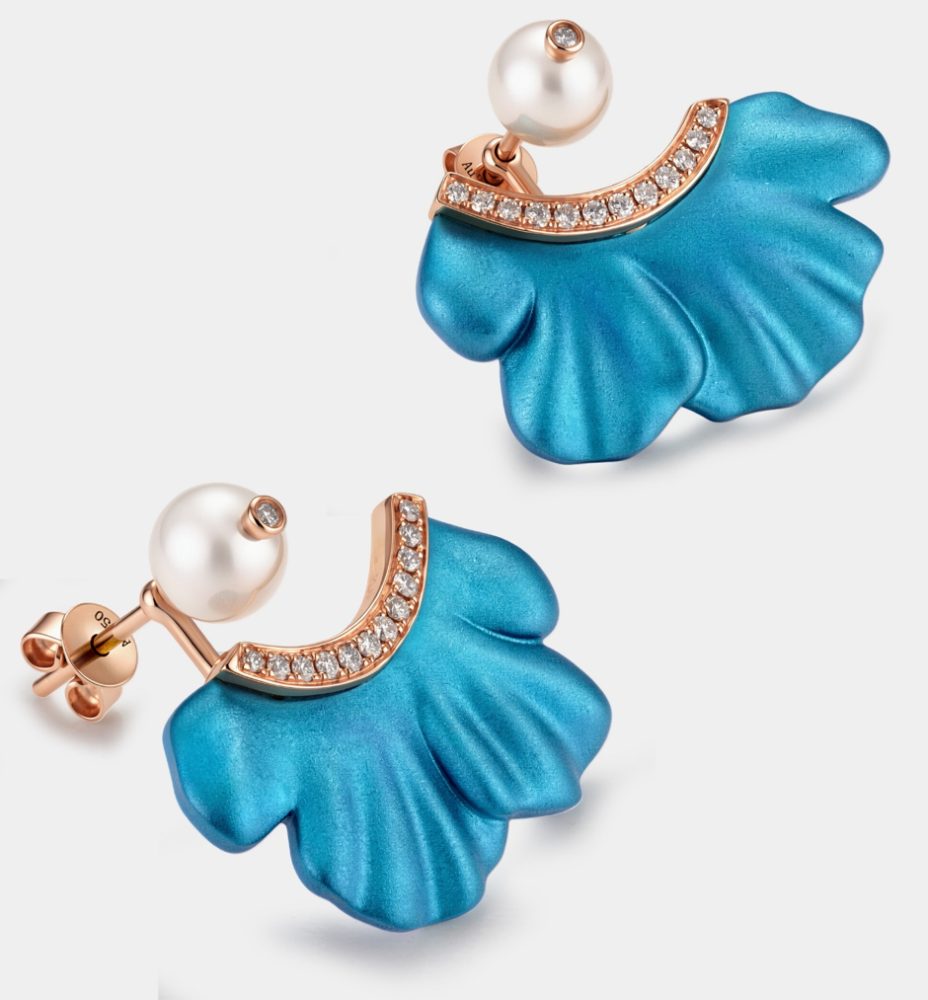
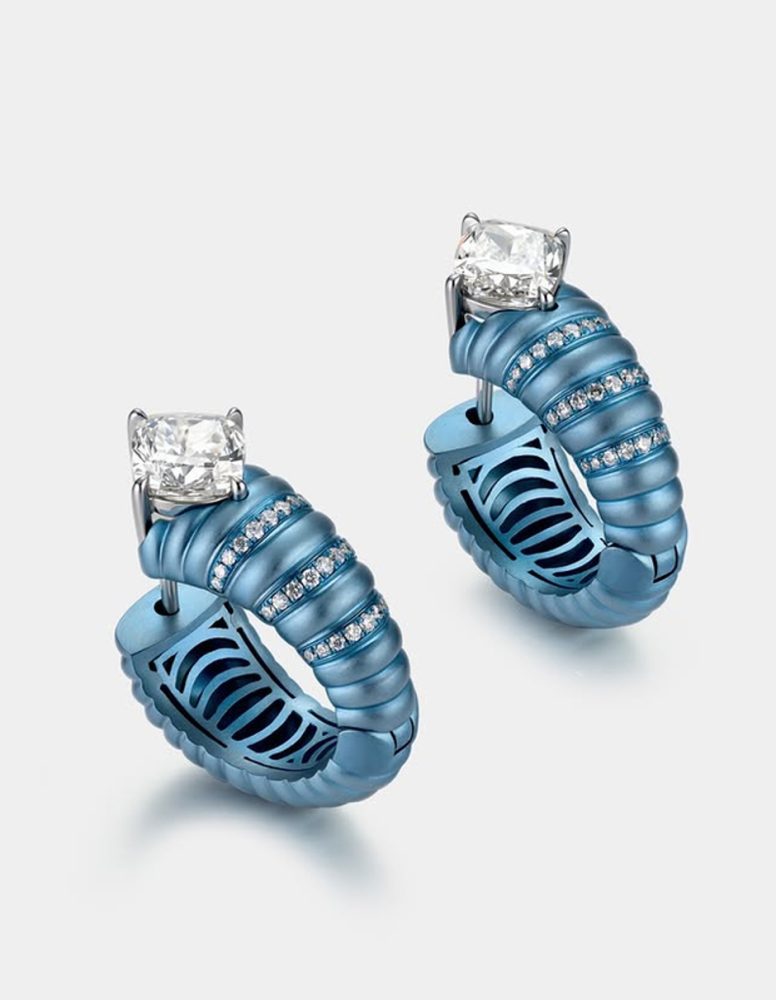
That philosophy naturally translated into the way I began working with titanium. Its lightness allows me to create pieces that almost feel like a second skin. I create folds and volumes that can resemble silk resting over a finger, a hand, for instance.
Colour then becomes another expression of individuality. Each person has something that distinguishes them, and I believe that colour can become part of that personal language.
You have built a distinctive identity by combining art, engineering and craftsmanship. Which aspect of the creative process excites you the most?
The most exciting moment for me is when I finally connect with an idea emotionally.
At the beginning, everything is abstract. There are feelings, impressions and fragments of ideas. Then suddenly something clicks, and that emotion becomes a piece I can actually visualise in my mind.
That is usually when obsession begins.
I start imagining the story around it, the woman who could wear it, her emotions and the world that the piece belongs to. I also begin asking questions and listening to how other people perceive the emotion or idea I am trying to express.
Some of my strongest designs have emerged from that process.
My ability to observe people and understand their feelings is a form of empathy that has become fundamental to the way I design. Through jewellery, I try to take something intangible and emotional and give it a physical form that can remain close to someone for a very long time.
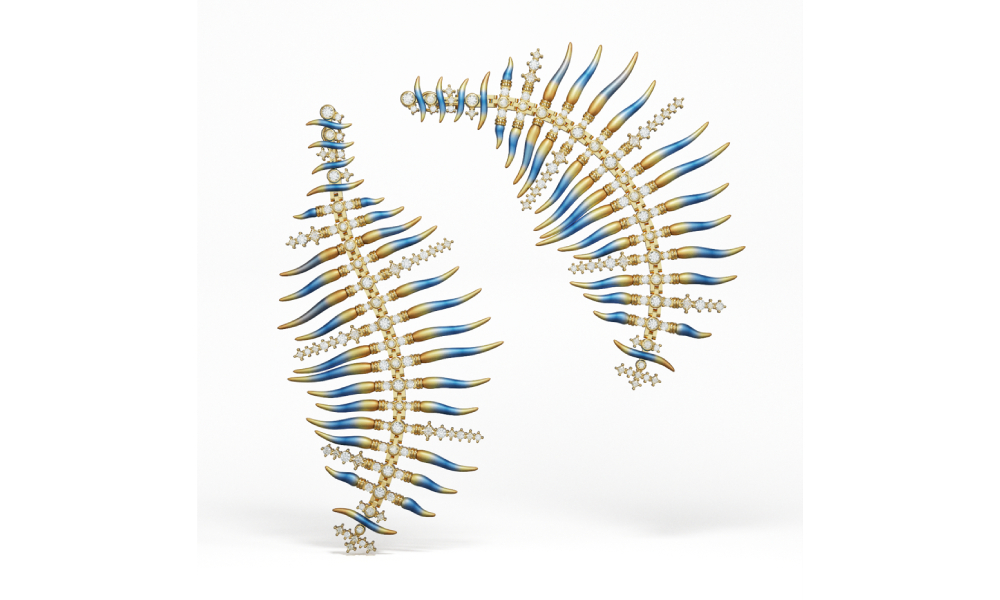
One of the most difficult pieces I have ever developed was the Guacamaya earrings, from my first collection. That collection came from an enormous amount of research and became the seed of the project that eventually evolved into PLAH.
Achieving the way those earrings dance, the articulation of the structure, and the graduated colours that create a sense of constant expansion and almost kinetic movement required a great deal of development.
For me, that piece marks the beginning of the creative path I am still exploring today.
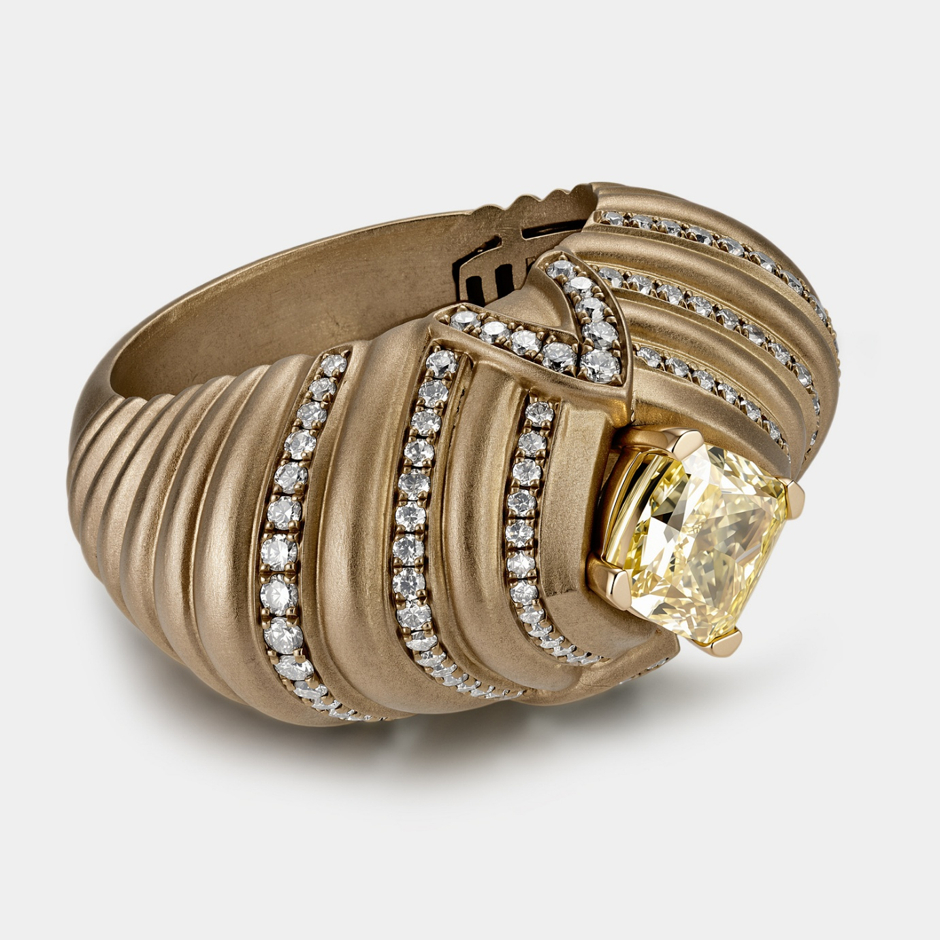
Do you begin with a gemstone, a material, a story, or a form? What typically serves as the starting point for a new collection?
It changes with every collection, but most often the starting point is an emotion connected to a person.
Sometimes it is an imagined woman I want to create a jewel for. Sometimes it is a feeling or a sensation that I need to understand through design.
Ethereal Rhythms, for instance, was an incredibly emotional collection. It came from an entire ocean of feelings that I wanted to interpret from within myself and from the people around me. It emerged from a desire for expansion, growth and a deeper connection with my own identity.
At the same time, I realised that those emotions were not mine alone. They could also belong to millions of women.
My most recent collection, Rumba, approaches movement from another perspective. It is more playful, and came from the desire to express the same philosophy of movement in a simpler and more immediate way, allowing it to connect with a broader group of women.
But sometimes a gemstone can completely reverse the process.
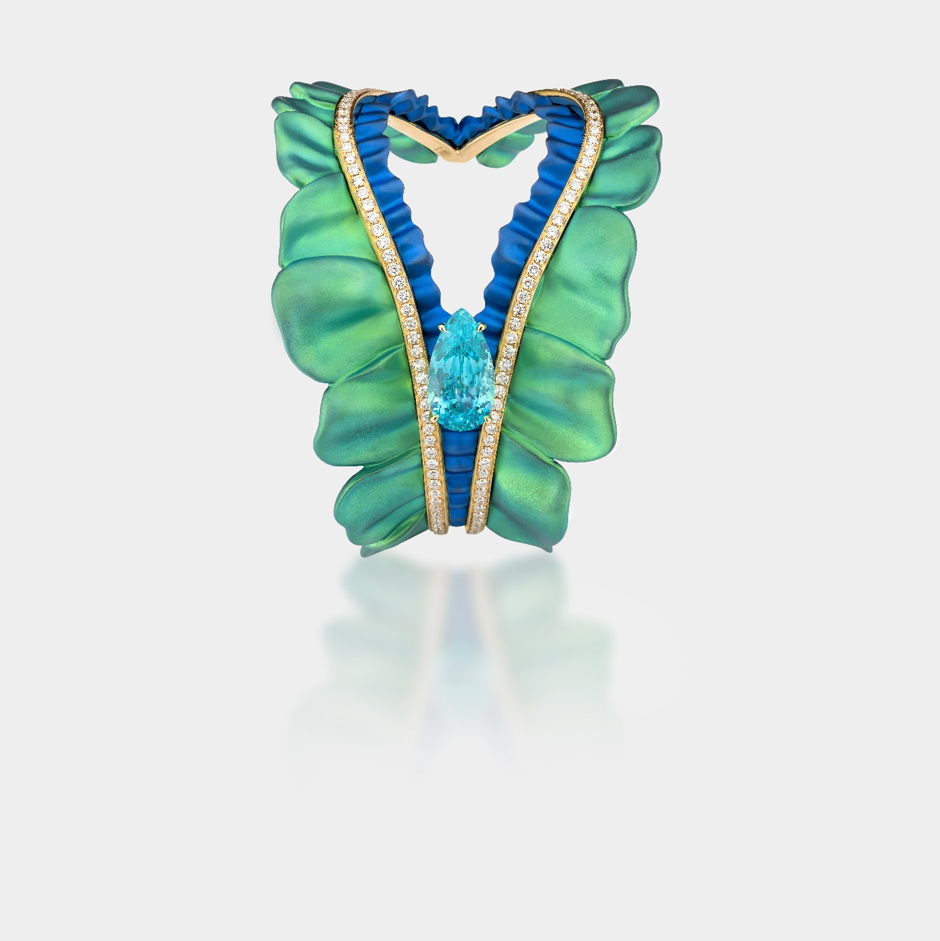
My Carnivora bracelet, for example, began with an extraordinary Paraiba tourmaline. The personality of that stone was so powerful that I began imagining a story around it, and the entire design developed from there.
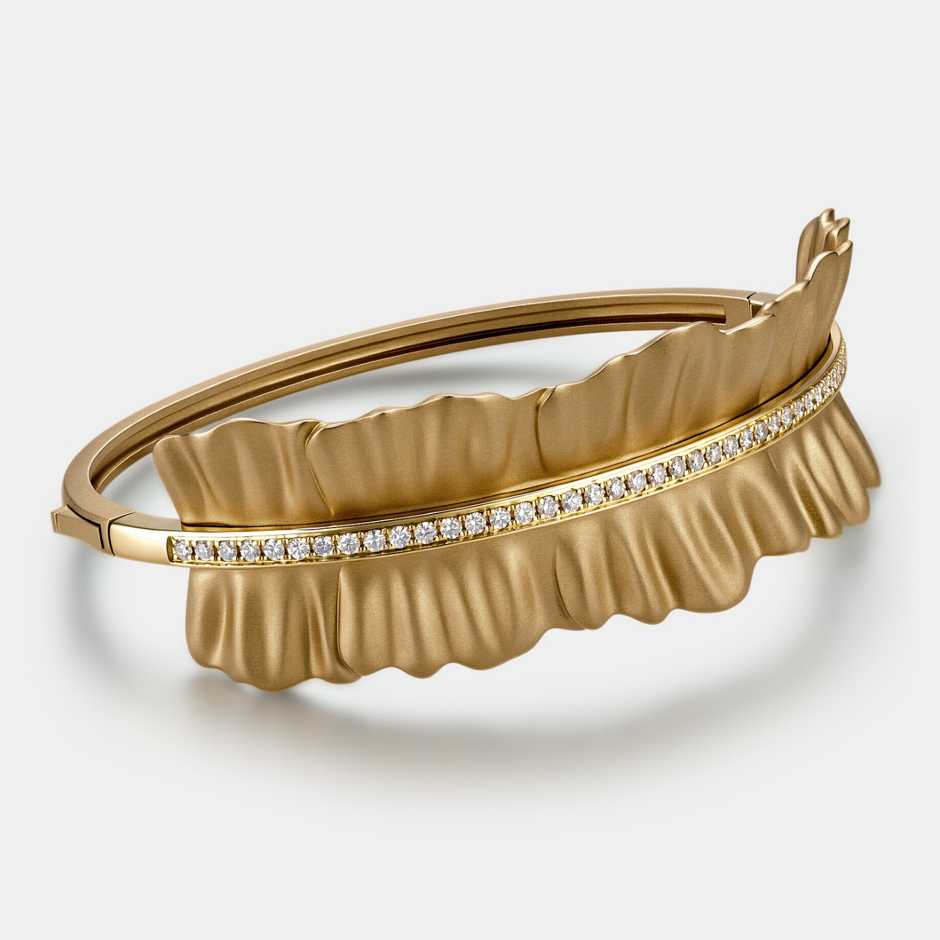
When designing pieces inspired by movement, do you study dancers, natural forms, or physical motion itself?
The Guacamaya earrings are a particularly good example of how I research movement.
They were inspired by the dances of the Carnival of Barranquilla and by observing the energy generated by the dancers themselves. I began abstracting those compositions and studying the lines, the gestures and the sense of expression within that movement.
I then translated those elements into forms that could communicate a feeling of freedom.
You can see that particularly in the skeleton of the earrings, in their lines, in the way the elements are articulated and, in the way, the entire composition moves.
That research became a starting point for many of the forms that continue to appear in my work today.
The silk-like volumes I use also come partly from observing the skirts of women dancing cumbia. I was fascinated by the way those skirts created enormous volumes in motion and by how those similar shapes could transform into blossoming flowers. I am interested in those unexpected visual connections.
I observe them, abstract them and eventually translate them into a language that can exist as jewellery.
When people look at a Sebastian Plah creation, what is the one emotion or feeling you hope they experience?
I want them to feel alive.
I want there to be emotion, happiness, attraction and seduction.
A Sebastian Plah piece is sensual. It is joyful. It communicates with you, almost as though it were winking at you.
When a woman wears one of my pieces, I want it to remind her of her femininity, her sensitivity, her desires and her own power.
I want it to awaken a desire to live. To go out … To go to the beach. To fall in love. To kiss. To dream.
For me, jewellery should not simply decorate someone. It should make them feel something.
If you had not become a jewellery designer, would you have pursued dance or another performance art?
I love dance, and I am fascinated by every form of expression. I would probably been connected with entertainment, movement, music or the body. I am certain I would still have found my way into the arts.
Music was also part of my upbringing. My father is a musician, I grew up as the son of a musician, and I played the violin myself. I also danced throughout school and was even the Carnival King at my school.
All of those experiences allowed me to develop an attraction to rhythm, performance and expression long before I understood how they would eventually become connected to my work.
You are a rising star, and your work has been acclaimed and admired across the globe. What is the feeling like and what does the future hold?
The future of my brand is about continuing to connect with more women around the world.
One of the things I love most about my work is witnessing that connection in person. Sometimes a woman who has never met me before will come to me at a fair and want to hug me because she fell in love with one of my pieces.
The fact that an object can create that kind of emotional connection between two people is extraordinary to me.
Through my work, I have already had the privilege of connecting with women across Asia, the United States, South America, Europe, Australia and the Middle East.
They come from completely diverse cultures, yet I often recognise the same spirit in them. They have a vibrant energy. They wear the pieces proudly as expressions of who they are.
For me, that can become one of the most beautiful legacies of my work.
So the future means more opportunities to present my work, and a greater ability to create these connections across cultures.
And I very much hope India can become part of that story.
Your concluding thoughts…
I would like to use this final space to speak about Colombia and about the families affected by the recent earthquake. At a moment like this, I think deeply about the hopes of my country and about the responsibility I feel to support Colombian talent, dreams and people however I can.
I want my work to represent, with pride, something that I associate very strongly with being Colombian: resilience. The ability to persevere, to rebuild what has been destroyed, and to continue believing in what can still be created.
As my own career and platform grow, I hope to find meaningful ways to use my art to support people who have been affected and to contribute to that process of rebuilding.
For me, representing Colombia has never been only about aesthetic references. It is also about carrying with me the strength, hope and determination of the people I come from.