
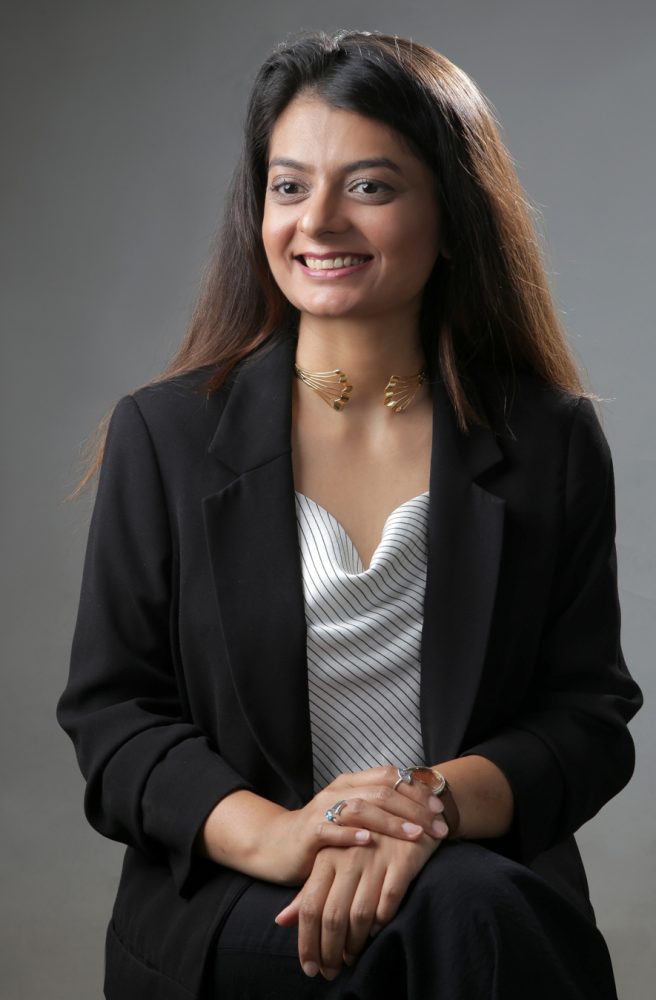
Tithi Goel, Founder and Creative Director, Mareeci, brings a decade of experience across jewellery and fashion, having worked with brands including Zoya and Raghavendra Rathore. An alumna of NIFT Gandhinagar and SCAD Savannah, Georgia, she founded Mareeci in 2022 to explore conceptual, story-led jewellery. Designed in her Gurugram studio and handcrafted in Jaipur, the label spans 925 sterling silver and bespoke fine jewellery, bringing together symbolism, nature and personal narratives.
When did you realise that you wanted to pursue jewellery design?
I have always been obsessed with jewellery. I’m a maker at heart, and I’ve been creating pieces since I was a child. Swarovski stores were my heaven; the sparkle made me feel like I was inside a fairytale.
In Class 11, I took a professional jewellery-making workshop and fell completely in love with the craft. When I showed my pieces to classmates, they started asking me to make more so they could buy them. It gave me an adrenaline rush, and that was the moment I knew I wanted to do this for the rest of my life.
You began your career working with Zoya and Raghavendra Rathore, and later collaborated with brands, including Outhouse and Nykaa. Having moved from designing for other brands to building your own label, what has been the biggest learning curve?
Over ten years in the industry, every experience has taught me something.
My first mentor was Namrata Kishor at Swarnmandir Jewels, who manufactured for leading designers. From her, I learned costing, the back-and-forth of production, and the technical challenges a vendor faces in bringing a designer’s vision to life. That understanding still guides how I manufacture today.
Zoya was my golden door. My mentor, Sangeeta Dewan, taught me the art of storytelling and how to translate abstract ideas into jewellery. Zoya also taught me about the business of luxury: costing and profit margins in fine jewellery, strict quality-control standards, luxury customer experiences and more. Above all, Titan showed me that trust is built inside and out: fairness and respect for every employee, and honest, transparent selling for every customer. That is the culture I am building at Mareeci.
The Rhea Kapoor x Pipa Bella by Nykaa Fashion collection was one of the most challenging and fulfilling projects of my career. Rhea has an extraordinary instinct for what’s next and designing under her guidance taught me to think like a stylist. That shaped my journey in fashion jewellery.
The biggest learning curve has been marrying business with design. While designing for other brands, I followed a brief and focused mostly on the creative. Running my own label, I’m doing a million things at once. When I design, I have to consciously quiet everything else (sales, margins, marketing) and protect that creative space. It isn’t easy, but it has made me a far more complete designer.
The story still comes first for me. What has changed is that I now ask how that story will live in someone’s life. Will it move them emotionally? Can they style it in many ways, wear it every day, or gift it to someone they love? Is it priced so the right people can own it? It’s no longer enough to deliver a beautiful collection; I want to give them their bestseller. For me, a design isn’t successful until it’s worn and loved.
What prompted you to launch Mareeci in 2022?
When I launched, there were several fine jewellery brands, but very few demi-fine labels offering conceptual, story-led pieces at accessible price points. Mareeci began in that space, with brass, silver, fine gemstones and a story behind every piece. I’d describe Mareeci as conceptual jewellery.
The name Mareeci means “ray of light” in Sanskrit. I wanted a name that sounded global but had Indian roots. The meaning felt just right, because jewellery is all about light.
Mareeci was first conceptualised during my time at SCAD in Savannah and launched in 2022: a brand dreamt up abroad, rooted in India, and handcrafted in Jaipur.
How do you translate an abstract idea or emotion into a tangible piece of jewellery?
Designing is a spiritual and intuitive journey for me. I need to become the story, so I have to relate to it personally. My new collection, Nox, draws inspiration from the stories and philosophies of Shiva. It began with the idea of the warrior and protector within each of us, and the thought that we sometimes recognise the divine in others because we each carry a part of it within ourselves.
As I explored the concept, Shiva’s philosophies began to connect with my own: Shiv-Shakti, the union of consciousness and energy; the Tandava and its circle of fire; mortality; and maya, or illusion. These ideas came together naturally to form the foundation of the collection. The mood boards and visual language follow before actual design explorations.
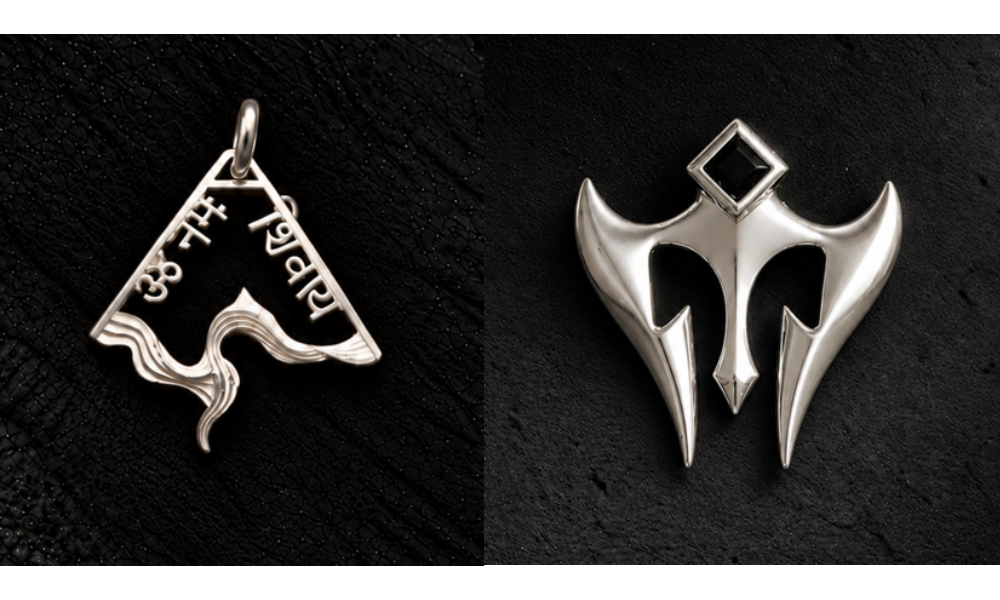
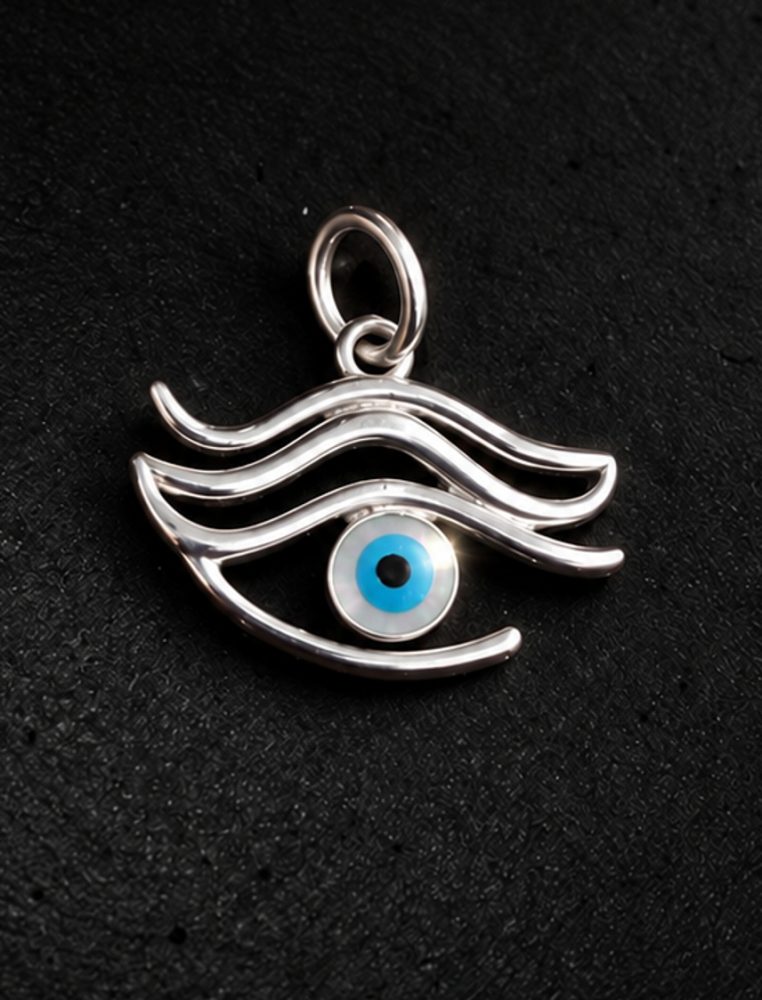
Signature pieces from Nox include the Shiv-Shakti pendant, inspired by the union of consciousness (a snow-clad mountain) and energy (an organic, flowing river); Second Sight, which explores intuition and inner vision; and Sentinel, a symbol of the warrior and protector within us.
Over the years, my collections have explored themes from biodiversity and extinction to empowerment. I launch one major collection a year, with smaller, more commercial capsules throughout the year.
You work across both fine and demi-fine jewellery. How does your design approach change when working with gold and gemstones for fine jewellery, as opposed to sterling silver and gold-plated finishes for demi-fine pieces?
With gold and gemstones, my approach is classic and considered. Fine jewellery is about heirloom value: the stone leads, the proportions must be timeless, and each piece is made to be passed down. Because it’s bespoke, it is also personal, shaped around the client’s brief.
Sterling silver, including our gold-plated pieces, gives me far more creative freedom to be experimental and sculptural; and take bigger conceptual risks.
Silver must be produced in larger batches, takes much longer, and needs meticulous finishing to meet fine-jewellery standards. Maintaining consistent quality, applying anti-tarnish coatings, and helping customers understand that real silver naturally darkens over time are all part of the craft.
Silver is enjoying renewed popularity. What is driving this shift, and how is Mareeci leveraging silver’s creative versatility to develop one-off designs?
Silver has always been my favourite metal to work with. It is malleable, affordable, and takes on different finishes. It can also be passed down as an heirloom.
With gold prices surging, silver is gaining recognition as a premium fine jewellery material. Today’s customers are aware and aesthetically savvy, and I want to create pieces they connect with. A piece can preserve a memory, hold a love, or quietly remind someone of their own strength. I have always been an explorer at heart, drawn to the contemporary and the unexpected. Now I’m learning to marry that with versatility, so my new collections feel just as right on an ordinary Tuesday as on a special day.
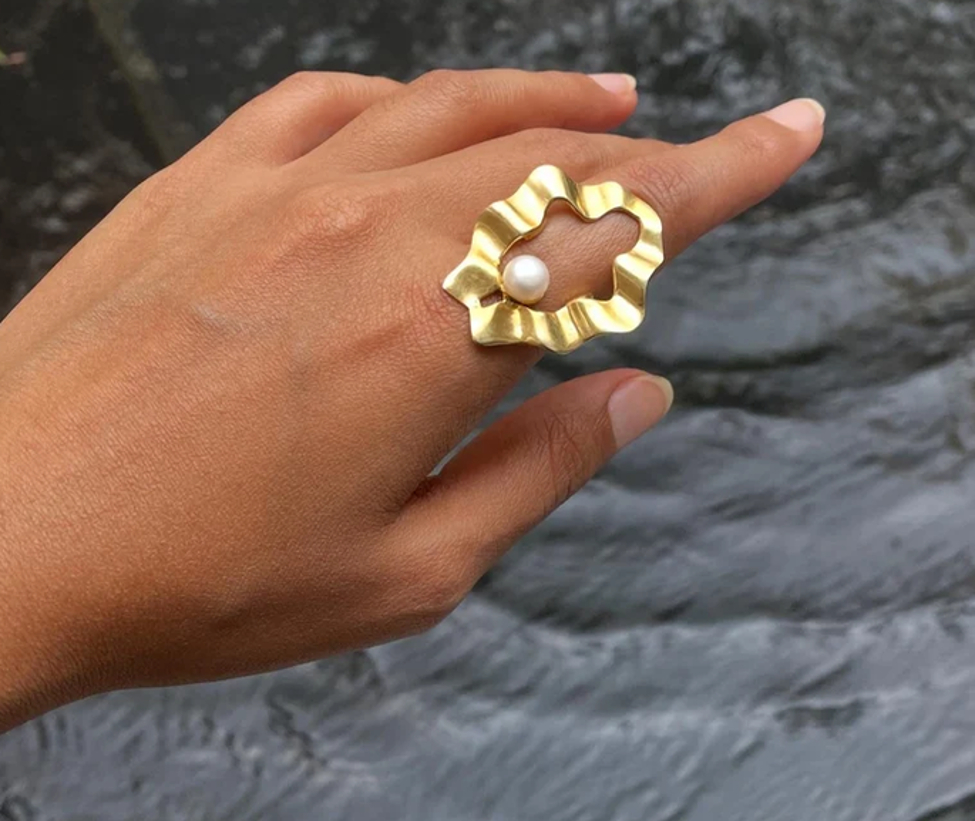
Demi-fine jewellery is often positioned as an accessible alternative to fine jewellery. How do you balance price, material quality, durability and design individuality without compromising on the experience of owning a well-designed piece?
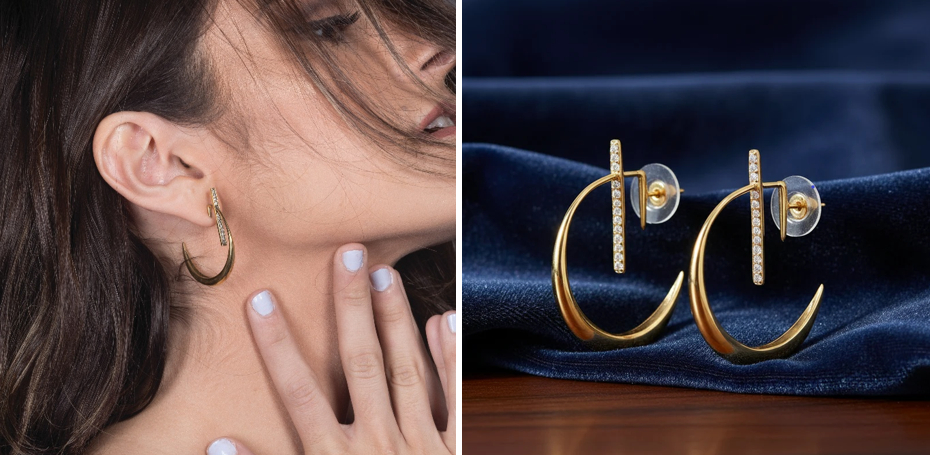
If I wouldn’t wear something myself, I won’t sell it. Every piece is handcrafted by karigars I have worked with for over 10 years, using nickel- and lead-free metals that meet European export standards, and only real gemstones, never plastic. Our plating is thick and anti-tarnish, and we offer replating, because giving jewellery a second life is more sustainable than replacing it. Every silver piece is stamped 925, comes with a certificate of authenticity, and goes through surprise quality checks.
This costs me nearly three times more than conventional nickel-based plating, but I don’t keep separate stock for India and export. I balance it by cutting avoidable costs and spending only what is really needed on marketing. I put the same love into designing a thousand-rupee piece as a crore-rupee piece, because everyone deserves good design. My measure of success is customers who keep coming back.
What’s the future of demi-fine jewellery
I feel strongly about the dilution of the term “demi-fine”. True demi-fine jewellery is sterling silver or another base metal finished with a thick micron layer of gold, often set with genuine gemstones.
Today, the term has become a catch-all marketing label, applied even to gold-toned pieces that fall far short of that standard, and it is steadily losing credibility with customers. I’d love to see our industry take a clear, shared definition, so that demi-fine can stand for the quality it was meant to represent.
That is a big part of why Mareeci has moved towards 925 sterling silver. It is a valued metal and made to last.
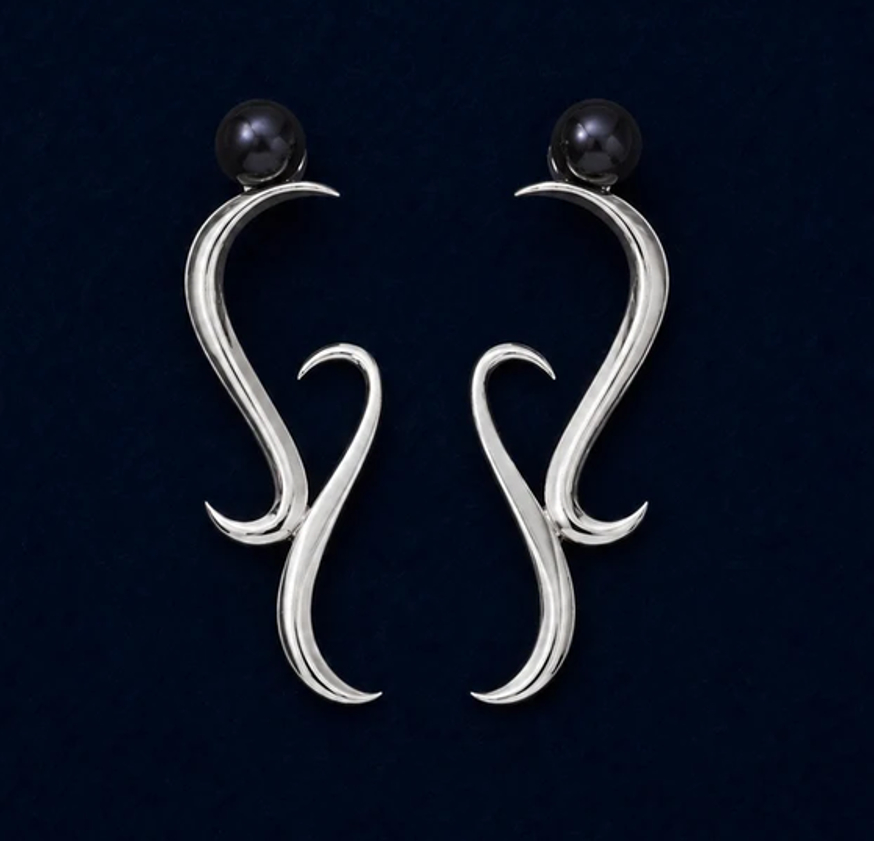
As Mareeci evolves, what directions are you keen to explore next?
I’m currently exploring gender-neutral and men’s jewellery, which has untapped potential. Creativity comes naturally to me in women’s wear. Men’s jewellery is more challenging because there are fewer looks and placements to experiment with, and that’s what makes it interesting.
Mareeci is primarily an e-commerce brand, available on our own website, Myntra and Eternz, and stocked at prestigious multi-designer stores such as Ogaan and Verandah, alongside curated pop-ups. At my design studio in Gurgaon, I create bespoke gold and diamond jewellery by appointment, in person or virtually, taking each client from first sketch to finished piece. We ship worldwide, with the USA and Dubai as our strongest international markets.
We are open to wholesale and export partnerships with select boutiques, concept stores and international retailers who share our values around quality and storytelling.
How has your definition of success changed?
My idea of “making it” has changed many times. Early on, I’d have made it the day Sonam Kapoor wore my jewellery. Then I went on to work with her incredibly talented sister, Rhea Kapoor.
The goalpost moved again. I thought I had made it when my designs started getting copied. Then a piece I designed for a client took on a life of its own. It gained so much organic popularity that it was worn by several Bollywood celebrities, and soon many brands were making their own versions of it. It was surreal and validating.
Each milestone felt huge until I reached it … Today, success for me is building a responsible business; creating value for my customers and making work that cuts through an oversaturated industry.