
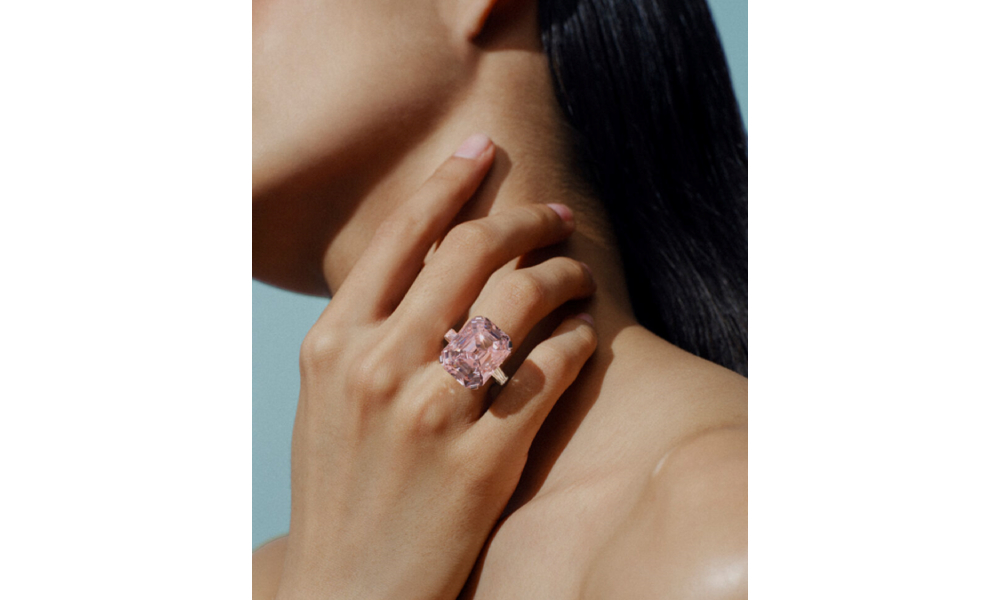
Christie’s netted $14.8 million, comfortably within estimate, for its sale of the “Bulgari Pink”, a remarkable 24-carat fancy intense pink diamond that may have originated in India.
The Bulgari Pink, an exceptionally rare Type IIa diamond, was the top lot in Christie’s Magnificent Jewels sale in Geneva on November 10, a twice-yearly auction in the Swiss city that offers extremely rare jewellery and gemstones to collectors.
The diamond has had a remarkable journey: it may have originated millennia ago in India’s Golconda region, the source of some of the world’s most celebrated diamonds.
The consignor’s family had acquired the diamond in India in the 1950s. Later the Roman jeweller Bulgari set the pink gemstone into a ring, which was showcased in a pink box in a large, protected glass case, and admired by the collectors who attended the private preview at the Four Seasons Hotel des Bergues in Geneva before the sale.
“These magical stones often find a home. We’re delighted with the result,” Max Fawcett, Christie’s Global Head of Jewellery, who was the auctioneer in the sale, told Solitaire immediately after the event.
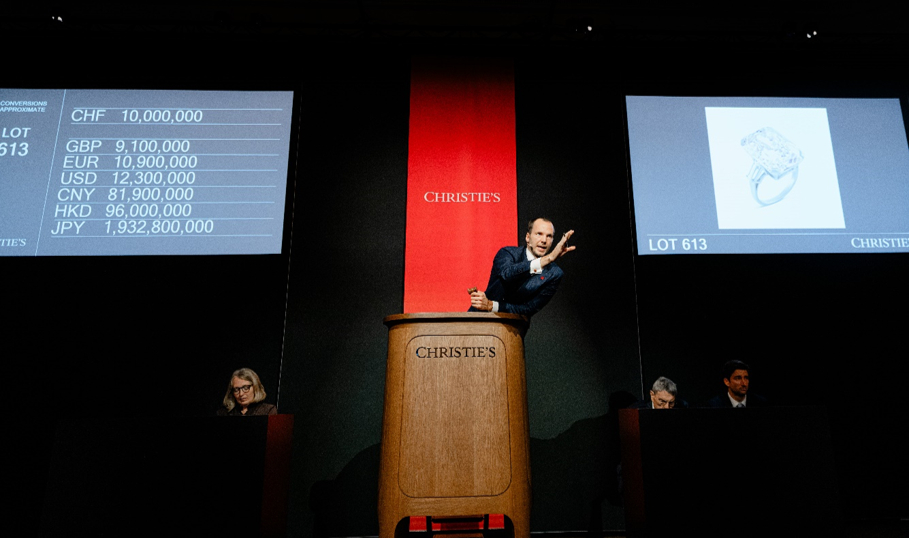
Despite concerns over the global economic outlook due to conflicts, inflation and tariffs, the demand for collectable high jewellery as a store of value, remains remarkably resilient.
The world’s leading auction houses, such as Christie’s, Sotheby’s and Phillips, stage high-value jewellery auctions in cities such as Geneva, Hong Kong and New York, offering some of the world’s rarest jewellery and gemstones to collectors looking to diversify their portfolios of assets.
The AI boom, surging stock markets and high energy prices, have generated new wealth, some of which is being channelled into rare collectables, from high jewellery to art and classic cars.
Most of the other lots in the Christie’s Magnificent and Exceptional Jewels sales found buyers in line with or above their pre-sale estimates, with extremely rare coloured gemstones, such as untreated larger sapphires, emeralds, rubies and spinels, as well as signed jewellery, outperforming.
Among the sapphires, standout performers included Kashmir, Burmese and Ceylon sapphires, due to their extremely tight supply and great beauty.
Kashmir sapphires were mainly mined in a short period of time, in the 1880s.
Items by Cartier, Van Cleef & Arpels, and Bulgari, which are all known for the high quality of their craftsmanship and for the inclusion of precious materials, achieved standout results, notably those from the ever popular Art Deco period.
Sotheby’s Royal and Nobel Jewels sale in Geneva on November 11, was a “white glove” sale, meaning that all of the lots were sold, including the top lot, the Romanov Sapphire, possibly a Mughal sapphire that made its way into the Imperial Russian Crown Jewels. After an intensive round of bidding, it sold for around $4.9 million, more than twice its upper estimate.
The success of the Sotheby’s Royal and Noble Jewels sale, underscored the vital importance of provenance in determining the value of pieces of high jewellery, with links to royal or aristocratic ownership highly revered in the market.
Both the Bulgari Pink and the Romanov Sapphire had exceptional stories.
Christie’s created a video around the Bulgari Pink to tell its story from its origins in Golconda to its mounting by Bulgari, associated with the glamorous Dolce Vita period of Italian history.
The auction houses conduct scrupulous research into their storied lots.
The Romanov Sapphire was documented as having been worn by Dowager Empress Maria Feodorovna at the Winter Ball in St Petersburg in 1903, and appeared in the Soviet dispersal sales in the 1920s following the Russian Revolution.
Selected highlights of the Christie’s Magnificent Jewels sale in Geneva on November 10:
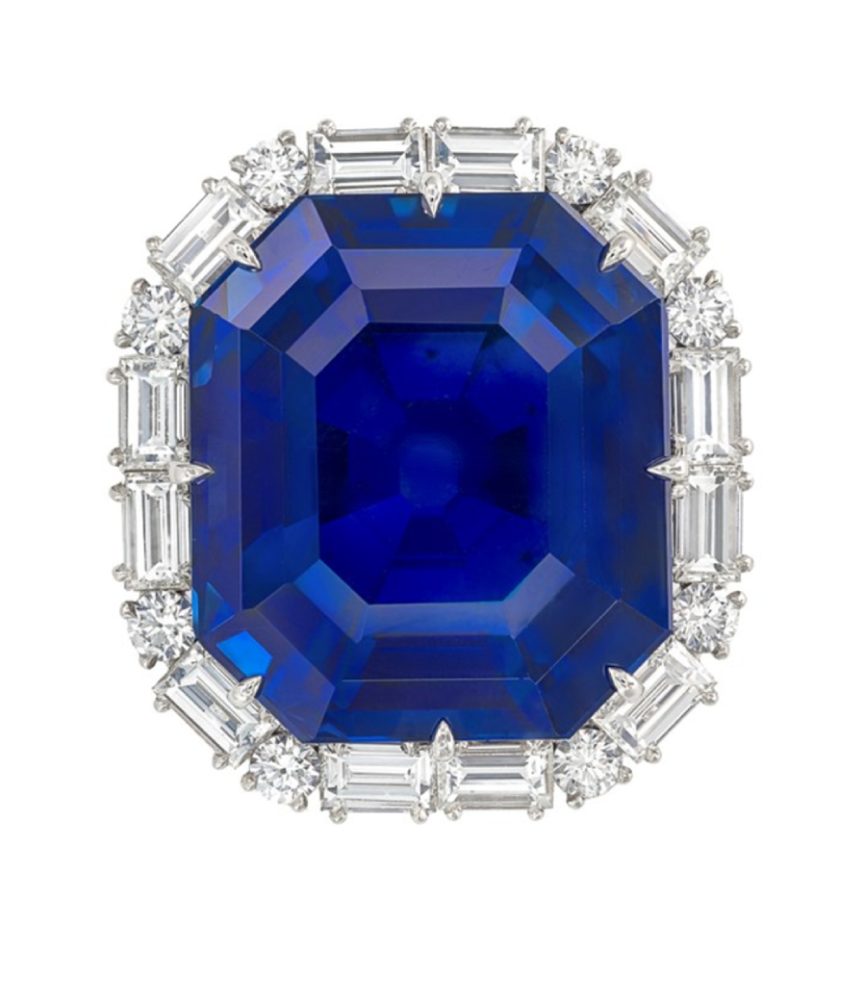
An important sapphire and diamond pendant/brooch, est. $393,360 – $596,000. Price realised $1.91 million.
The octagonal-shaped sapphire weighing 54.76 carats, and baguette-cut and round diamonds are set in 18-karat white gold. The pendant may be worn as a clip-brooch. Images courtesy of Christie’s
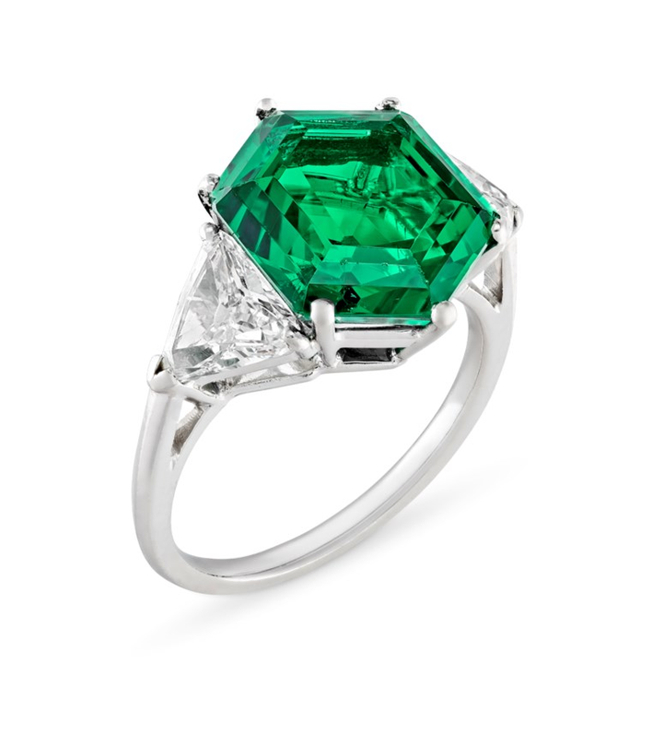
The platinum ring focuses on a 5.39-carat hexagonal-shaped emerald flanked by triangular-shaped diamonds. Images courtesy of Christie’s
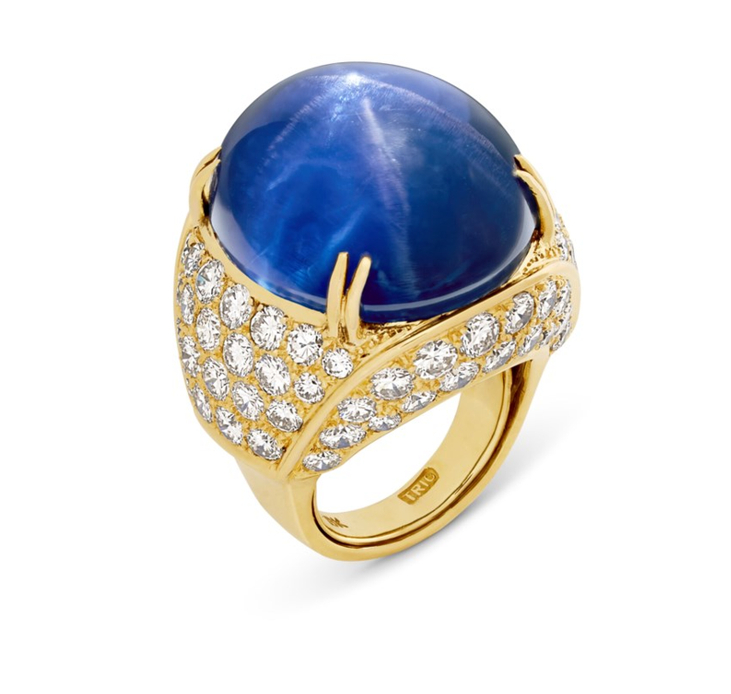
The 18k yellow gold, signed Trio, features a cabochon star sapphire and round diamonds. Images courtesy of Christie’s