
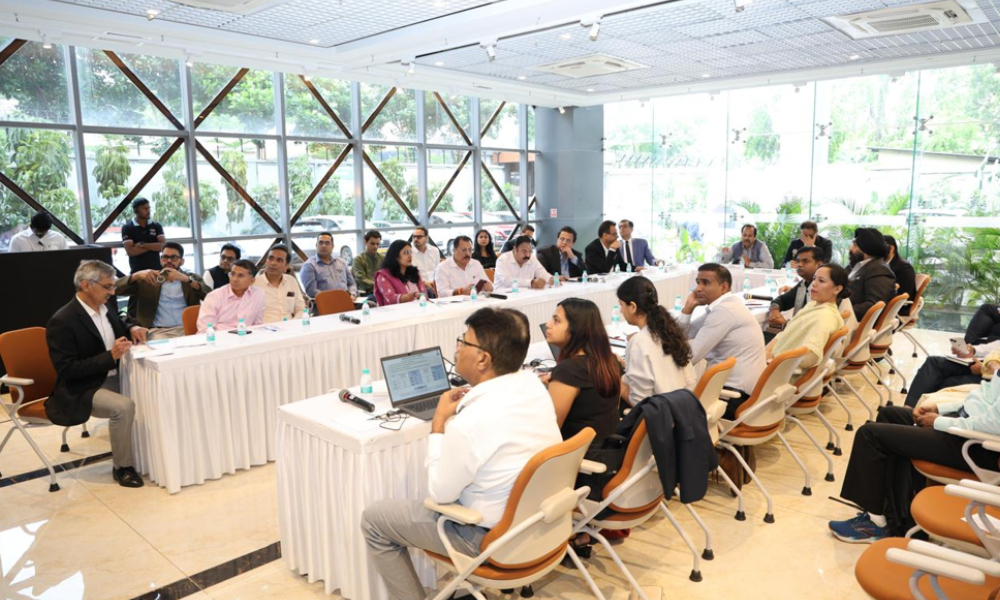
The Chintan Shivir’s five breakout missions focused on Global Market Access, MSME Scale-Up, Export-Import Fast Track, Crafted by India, and Next-Generation Talent & Design, setting out a roadmap to expand markets, strengthen MSMEs, streamline trade, build India’s global jewellery identity and develop the talent needed to support the sector’s USD 100 billion export ambition.
The Chintan Shivir – 2040 Roadmap for Gems & Jewellery, convened by the Department of Commerce in association with the Gem & Jewellery Export Promotion Council (GJEPC) on 19 August in Mumbai, placed five priority missions at the centre of India’s strategy to raise gems and jewellery exports from USD 28 billion in 2025-26 to USD 100 billion by 2040. The roadmap projects the sector contributing 1.2% of India’s GDP and 14% of the country’s merchandise exports by 2040.
Guided by the leadership of Shri Piyush Goyal, Hon’ble Minister of Commerce & Industry, the Chintan Shivir focused on value addition, with particular emphasis on finished, design-led and branded jewellery, stronger manufacturing capabilities, wider market access and positioning “Crafted in India” jewellery as a globally recognised proposition.
The five breakout missions were intended as brainstorming sessions to identify priority interventions and actionable measures. They addressed different parts of the value chain: Global Market Access, MSME Scale-Up, Export-Import Fast Track, Crafted by India, and Next-Generation Talent & Design. Each session was chaired by senior Government officials, with the discussions aimed at translating the USD 100 billion ambition into specific interventions.
“Innovation, design and global branding”
Shri Rajesh Agrawal, Commerce Secretary, Government of India, said the real catalyst for taking the sector from around USD 29 billion to USD 100 billion lies in building an ecosystem driven by innovation, global design leadership and trust. He highlighted India’s 5 million skilled craftspeople as its key strength and called for greater wealth creation through design, innovation and global branding.
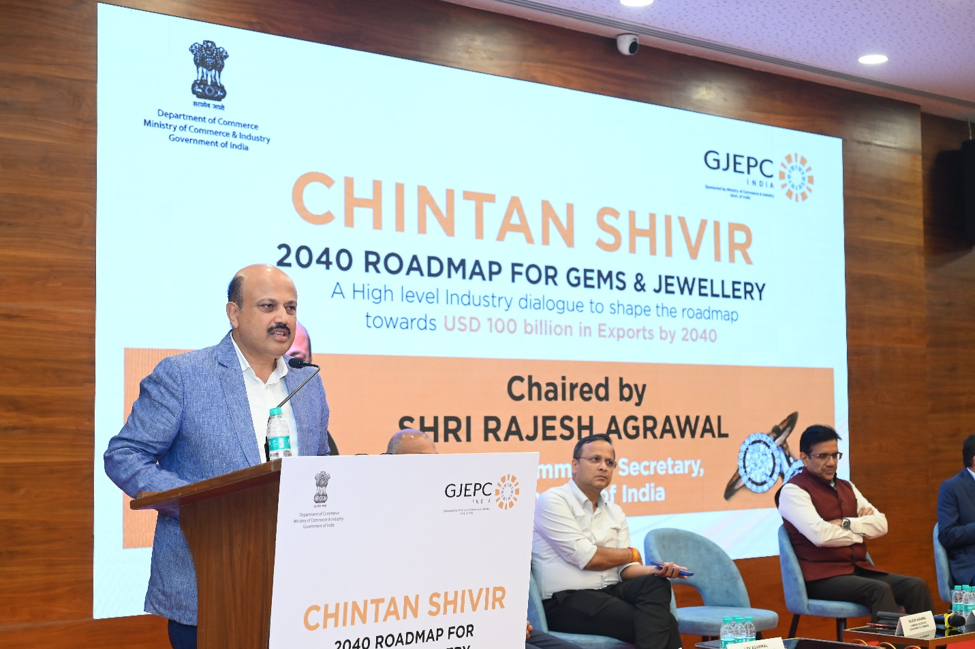
Shri Agrawal also called for the industry to move beyond low-margin OEM work, strengthen links between educational institutions and industry, invest in human capital and make craftsmanship an aspirational career. He highlighted AI and 3D printing as tools for product differentiation and called for India’s history, culture and stories to be incorporated into jewellery design.
He further stressed the need for technology-driven trust networks, greater risk appetite and mentoring of young talent to build resilient supply chains and globally recognised Indian brands aligned with Viksit Bharat 2047.
“India must move from being a commodity supplier to a global brand”
Shri Lav Agarwal, Director General, DGFT, said the Government’s role was to understand how it could work more effectively with industry, while urging the sector to approach the USD 100 billion ambition in mission mode.
“I am here today primarily as a learner. You are the people who are working in this trade every day, and it is important for us in government to understand how, as your partners, we can contribute better to the growth and delivery of this sector.”
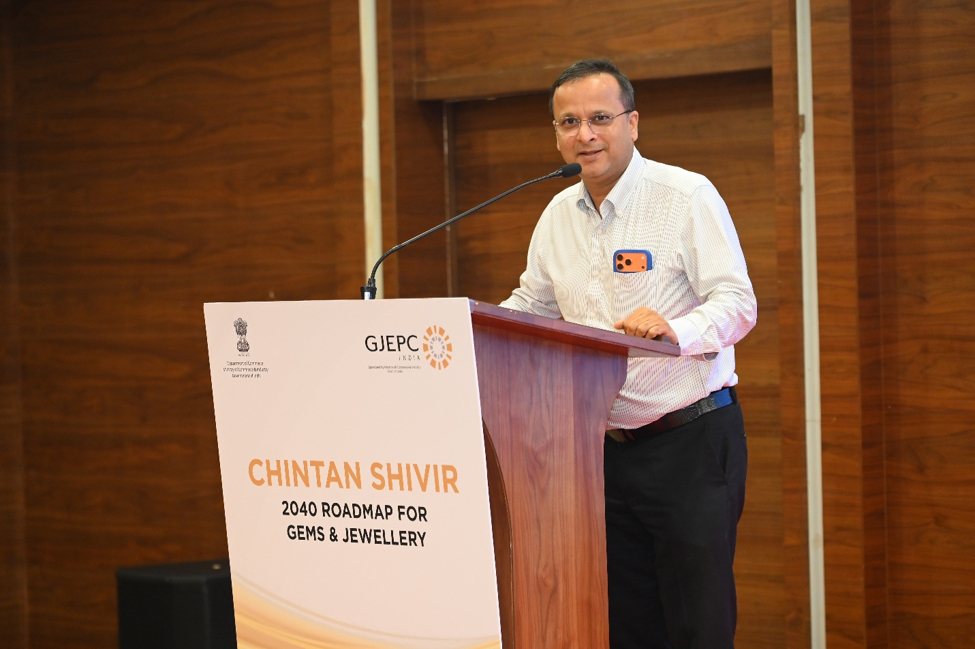
Shri Agarwal noted that global trade in the intermediate and value-addition segment is approximately USD 320 billion, with India’s USD 28 billion in exports representing around 6.25% of the market. He said India must move beyond commodity-led trade towards value addition, brands and design.
“We should position India as a brand and as a designer, and not merely as a participant in the trade. If we do that, our current 6.25% share can potentially move to 15%.”
He stressed that the target would require clearly defined tasks, responsibilities and sustained execution. He also pointed to the need to expand the exporter base beyond the current approximately 4,000 exporters, while helping existing exporters scale and become more competitive.
Shri Agarwal identified e-commerce as an important route for bringing new businesses into international trade through training, orientation and support. He said the larger ambition should be for India to become “the designers of the world, rather than simply the jewellers of the world”, with Government and industry working together to build globally recognised Indian jewellery brands.
“The next opportunity lies in accelerating value addition”
Shri Kirit Bhansali, Chairman, GJEPC, said the industry is at an important inflexion point, with new FTAs, a 15-year tax exemption on rough diamond sales through Special Notified Zones and stronger MSME support providing a policy foundation for growth.
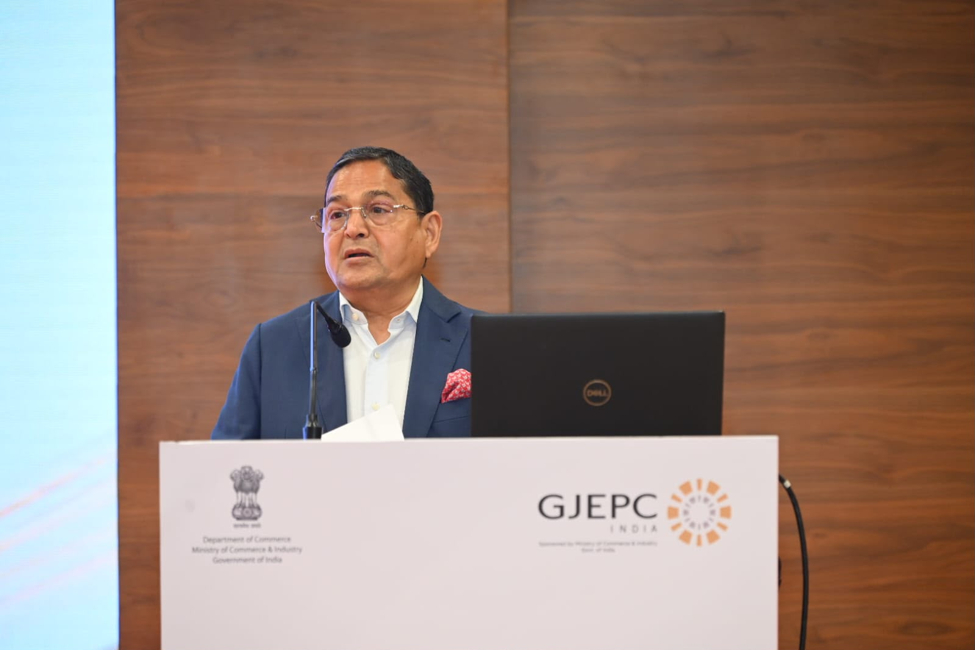
“The next opportunity lies in accelerating value addition, expanding finished jewellery exports and leveraging India’s world-class craftsmanship and manufacturing capabilities.”
Shri Bhansali said achieving USD 100 billion in exports by 2040 would require Government and industry to work together to unlock new markets, scale MSMEs and build a distinct identity for Indian products.
Mission 1: Global Market Access
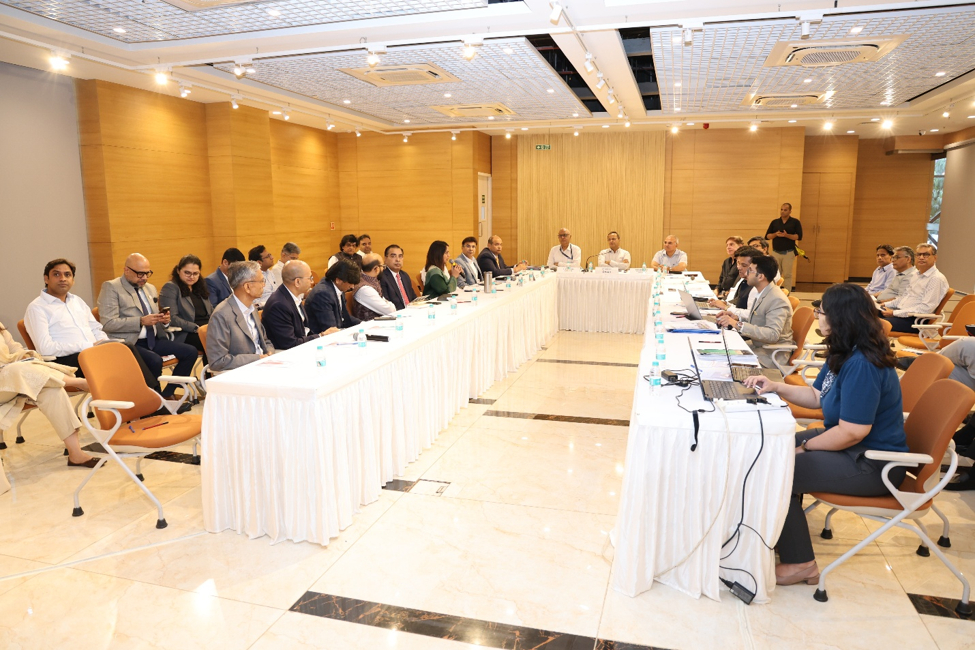
Mission 1: Global Market Access, chaired by Shri Lav Agarwal, Director General, DGFT, focused on using India’s expanding FTA network to increase the country’s share of global jewellery consumption.
The breakout examined ways to accelerate FTA activation in priority markets, strengthen awareness and utilisation of existing agreements and identify non-tariff barriers that continue to restrict exports. The approach also calls for stronger market intelligence and greater conversion of trade agreements into actual export gains.
E-commerce emerged as another potential growth channel, with proposals including dedicated export hubs, partnerships with logistics and e-commerce platforms and support for MSMEs entering digital exports.
The mission also called for a more sustained approach to international buyer development, including year-round exposition and buyer-development programmes, stronger participation in international trade shows and technology-enabled buyer discovery. Building buyer trust through internationally recognised testing and certification standards, ESG credentials and digital product certification was another priority.
Mission 2: MSME Scale-Up
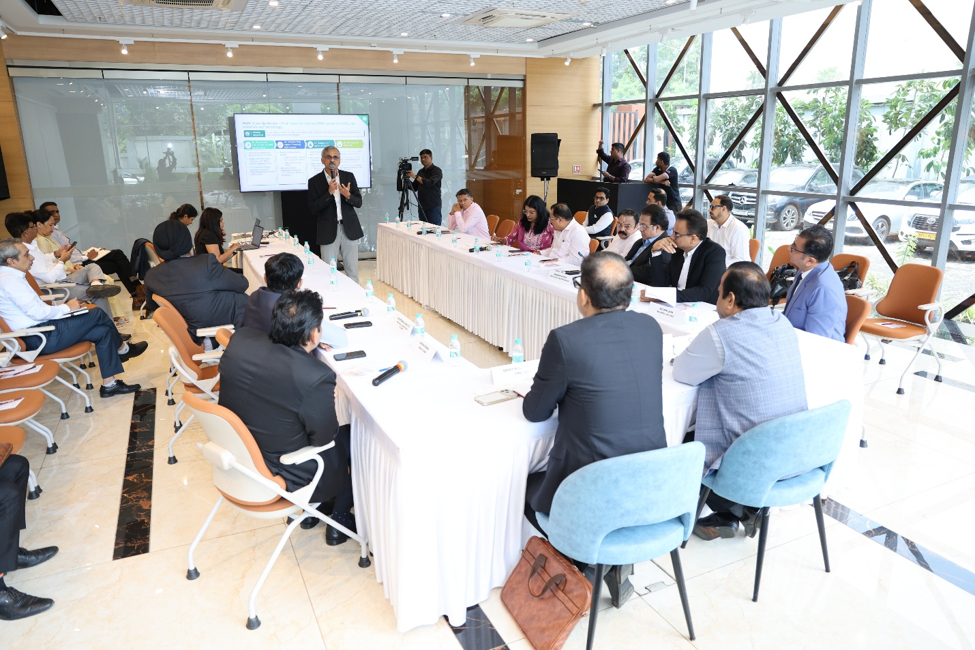
Mission 2: MSME Scale-Up, chaired by Shri R.K. Rai, Additional Development Commissioner, Ministry of MSME, with Shri Sristiraj Ambastha, CMD, ECGC, as Co-Chair, focused on helping the sector’s MSMEs move from survival to scale.
Finance emerged as a central issue, with the discussion focusing on improving actual access to existing schemes through better awareness, documentation and bankability. Proposed interventions included cluster-level mutual guarantee funds, cash-flow-based lending and greater use of GST, DGFT, banking and trade data.
The session also addressed the difficulty faced by small exporters in accessing gold in quantities below 1kg. Cluster-level pooling and 100-500g Gold Metal Loans were proposed to improve raw-material access.
Technology adoption was another priority, with CNC, laser, 3D printing, AI and advanced manufacturing identified as areas where targeted support could improve productivity and competitiveness. CFCs were envisaged as technology and skills hubs, bringing together testing, design, machining, equipment and training.
The broader objective is to create a larger pool of professionally managed, globally competitive MSMEs capable of contributing significantly to the USD 100 billion export target.
Mission 3: Export-Import Fast Track
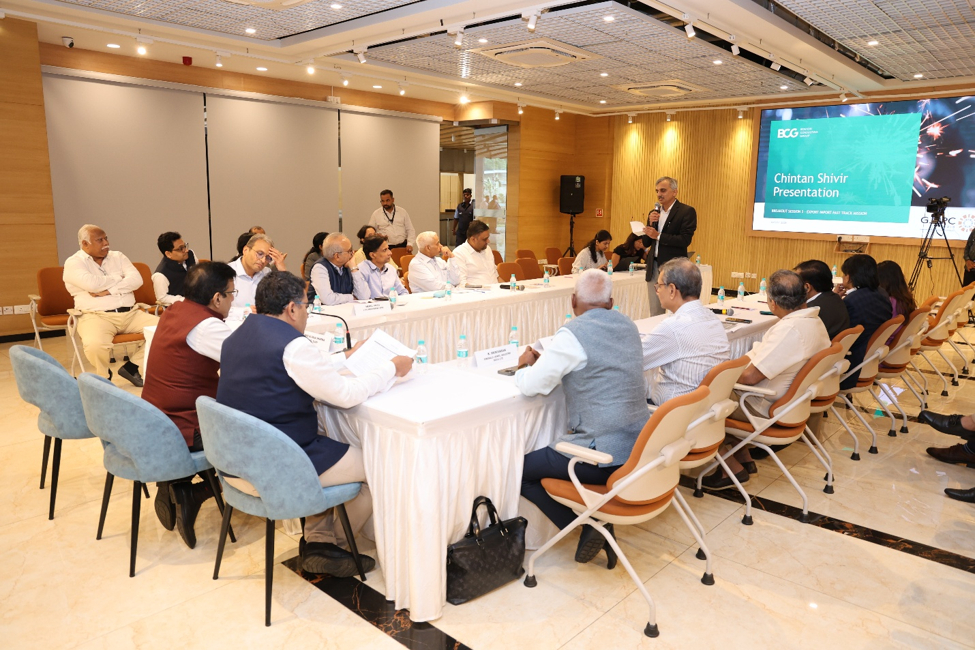
Mission 3: Export-Import Fast Track, chaired by Shri Shiv Kumar Sharma, Director General, DGEP, focused on making cross-border trade simpler, faster and more predictable.
The proposed reforms include a unified trade portal integrating seven existing systems through an API gateway, automated GST refunds and duty drawbacks, uniform digital documentation and single KYC.
The mission also examined customs reform, including standardised documentation and clearance procedures across ports, a dedicated gems and jewellery valuation protocol and AI-enabled risk-based clearance in place of blanket examination.
For SEZs, the recommendations included greater flexibility in operations and extending subcontracting timelines from 45 days to 180 days to better reflect jewellery manufacturing cycles. The session also explored greater use of idle SEZ capacity through subcontracting and reverse job work.
The objective is to reduce both the time and cost associated with importing raw materials and exporting finished jewellery.
Mission 4: Crafted by India
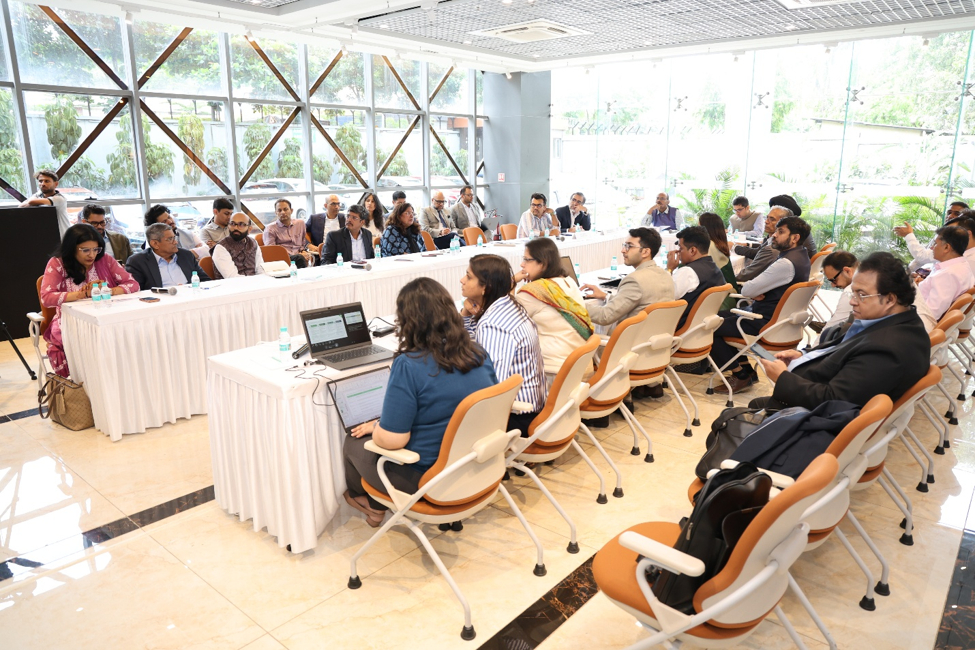
Mission 4: Crafted by India focused on building global recognition and greater value for Indian jewellery through design, intellectual property and branding.
At its core is a proposed government-backed “Crafted by India” certification, designed to establish India as a premium, design-led jewellery origin rather than primarily a cost-competitive manufacturing base.
The framework would cover quality, purity, craftsmanship, worker conditions, environmental standards, ESG and responsible manufacturing. The mission also called for stronger protection of Indian design through trademarks, patents and geographical indications.
A Digital Product Certificate was proposed to provide traceability covering product origin, materials, artisan details, ESG and quality credentials. GI-protected Indian jewellery crafts would also be promoted internationally through storytelling, digital campaigns and immersive experiences.
The mission envisages taking “Crafted by India” directly to global consumers through influencers, fashion publications, red-carpet placements, pop-ups and collaborations with luxury brands. It also seeks to support Indian jewellery companies in establishing overseas operations and building international brands.
Mission 5: Next-Generation Talent & Design
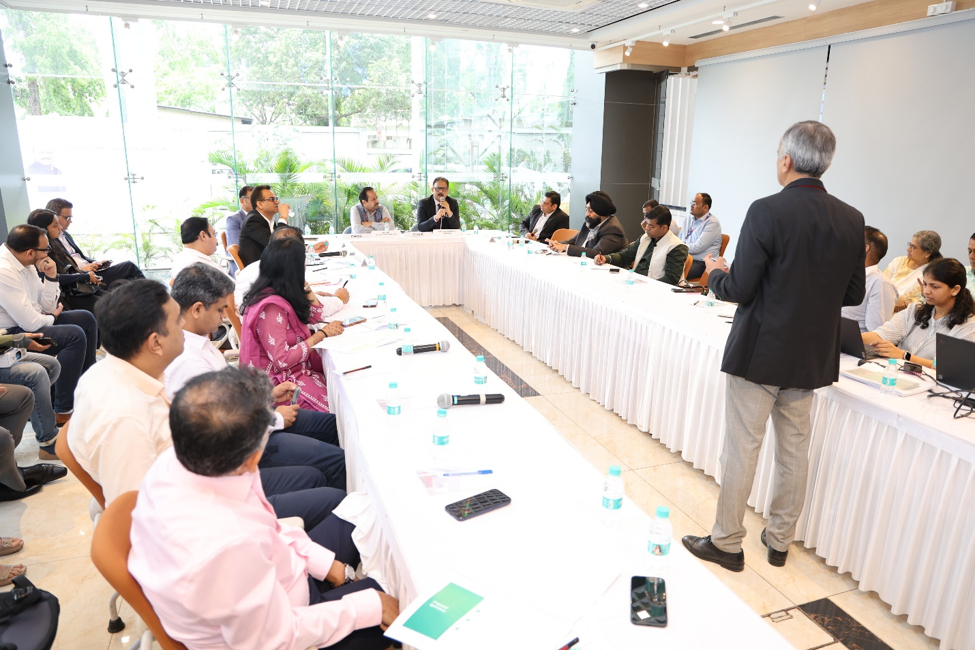
Mission 5: Next-Generation Talent & Design focused on the skills, design capabilities and talent pipeline required to support a USD 100 billion industry.
The discussion identified career progression, modern training and design origination as key gaps. Nine of 17 clusters reportedly face talent migration because of low wages and limited career progression, while existing curricula do not adequately cover CAD/CAM, export quality, advanced technologies and contemporary jewellery design.
The mission proposed formal career pathways for artisans, including recognition such as “Master Karigar”, a “Careers in Jewellery” campaign and a central jobs portal covering employers, salary benchmarks, internships and placements.
Training would be modernised to include CAD/CAM, precision finishing, export quality assurance, AI, CNC and 3D printing, while training infrastructure would be expanded into underserved clusters.
The mission also called for stronger industry-academia partnerships, international exchanges and internships, and a G&J Design Scholarship Fund to provide greater international exposure.
The discussions also identified an addressable market of approximately USD 128 billion across the midstream and downstream segments, with opportunities in high-value areas including the LGD+ ecosystem, gold mining and refining.
From OEM to ODM
The five missions collectively support a structural shift in India’s gems and jewellery industry. The roadmap seeks to consolidate India’s strengths in traditional segments such as natural diamonds while capturing emerging value pools and increasing value addition.
The roadmap envisages manufacturing output doubling to approximately ₹15 lakh crore and the sector’s overall economic value expanding to nearly ₹60 lakh crore.
The intended direction is clear: move from an OEM manufacturing base towards a global ODM and branding powerhouse, with greater value captured through design, technology, craftsmanship, provenance and brands.
The Chintan Shivir brought together Shri Lav Agarwal, Director General, DGFT; Shri Shiv Kumar Sharma, Director General, DGEP; Shri Dnyaneshwar Patil, Development Commissioner, SEEPZ; Shri Saket Kumar, Joint Secretary, Department of Commerce; Shri R.K. Mishra, Additional DGFT; Shri Sristiraj Ambastha, CMD, ECGC; Dr. Tariq Thomas, Director, Department of Commerce; Shri R.K. Rai, Additional Development Commissioner, Ministry of MSME; Dr. Shyam Kumar Barik, Deputy Controller, CGPDTM, DPIIT; and Shri Praveen Kumar, Senior Director, BIS. From GJEPC, Shri Kirit Bhansali, Chairman; Shri Shaunak Parikh, Vice Chairman; and Shri Sabyasachi Ray, Executive Director, participated along with members of the Committee of Administration.
Together, the five missions provide the sector with an action-oriented framework for the USD 100 billion export target by 2040, while positioning gems and jewellery as a contributor to the wider Viksit Bharat 2047 vision.