
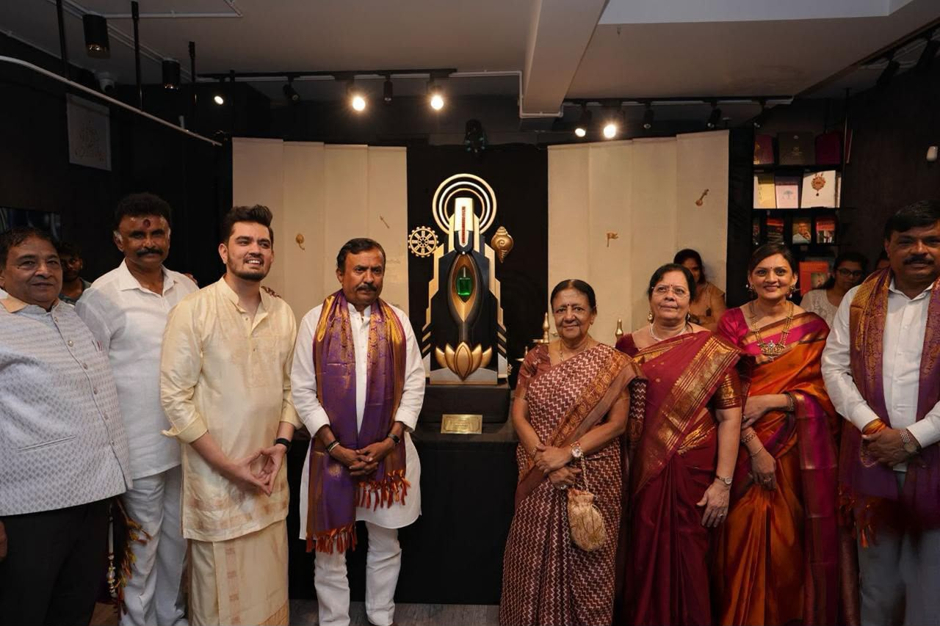
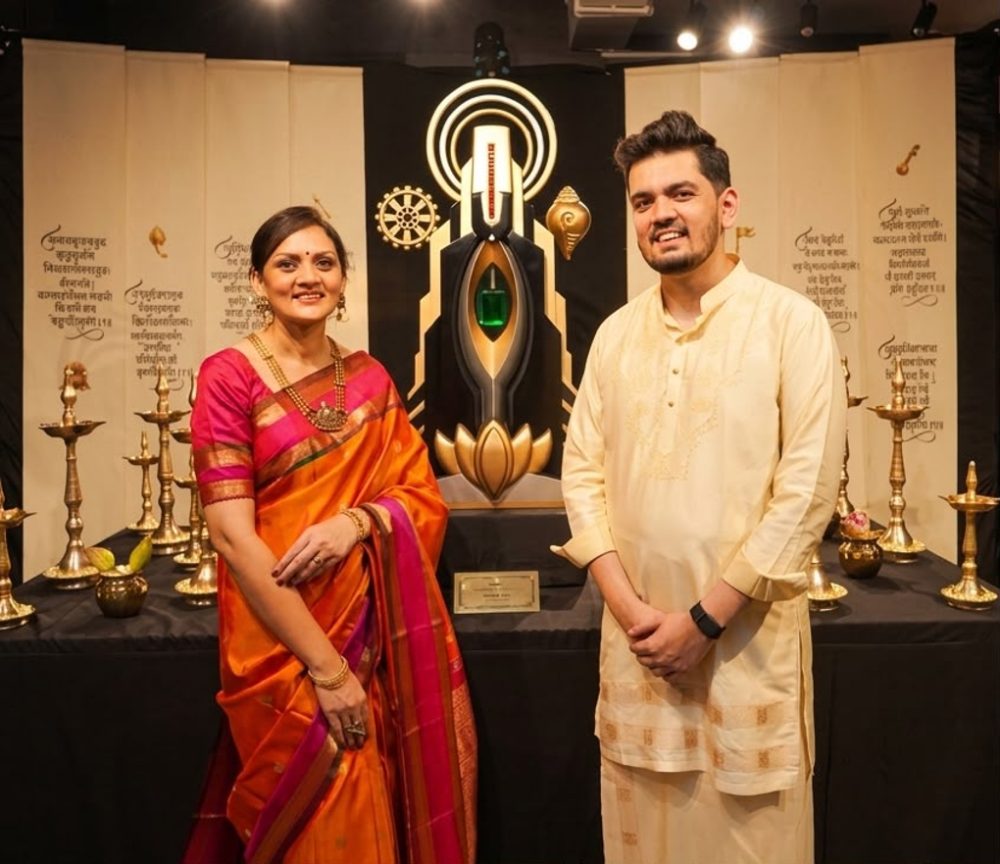
Bengaluru-based jewellery designer Sankesh Surana, along with his business partner and sister Preethi Chopda, unveiled the first creation, Viśvam Viṣṇuh’, from the ‘Ananta – Sacred Art Series’ in the presence of Shri Tejasvi Surya, Member of Parliament, Bengaluru South; Shri C. K. Ramamurthy, MLA, Jayanagar; and Shri B. Somashekar, former Corporator, Shakambari Nagar, Bengaluru.
The unveiling marked the debut of Ananta, a contemplative exploration of the divine through jewellery, inspired by the idea of “One Truth. Many Forms.”
Surana speaks exclusively to Solitaire International.
What inspired you to reinterpret Lord Balaji through a contemporary, 360-degree artwork, and what did you want ‘Viśvaṃ Viṣṇuḥ’ to convey that a traditional representation might not?
Some stories are written by the divine before we even know we are part of them. Our story began with an unexpected invitation to Tirupati Balaji Temple, Andhra Pradesh. That visit eventually led to the creation of ‘Viśvaṃ Viṣṇuḥ’, the first work from our ‘Ananta – Sacred Art Series’.
The temple visit made me reflect on the many ways in which the divine can be experienced. The Vaiṣṇavas see Him as Lord Viṣṇu, Vedānta sees Him as Brahman, while the Śaivas see Him as Lord Śiva. Different forms, different paths, but the essence is one: One Truth. Many Forms.
That became the philosophical foundation of ‘Viśvaṃ Viṣṇuḥ’. I wanted to create something that respected the sanctity and identity of Lord Balaji, while allowing people to experience Him through a contemporary artistic language.
The 360-degree approach was very important to me because I didn’t want the work to have only one perspective. As you move around the sculpture, the narrative unfolds and reveals different layers of the divine. It becomes less about simply looking at an idol and more about taking a visual and spiritual journey through the universe of Lord Vishnu.
The artwork took nearly two years to conceptualise and develop. What were the key stages of this journey, and what were some of the biggest design or technical challenges you encountered along the way?
It involved extensive conceptualisation, research and development of the narrative. From there, we worked on the form, proportions and iconography before moving into detailed design development, sculpting, modelling, engineering and finally the intricate craftsmanship and finishing.
One of the biggest challenges was bringing together sacred iconography, philosophy and contemporary sculpture into one cohesive work. Every element had to serve a purpose, both aesthetically and symbolically.
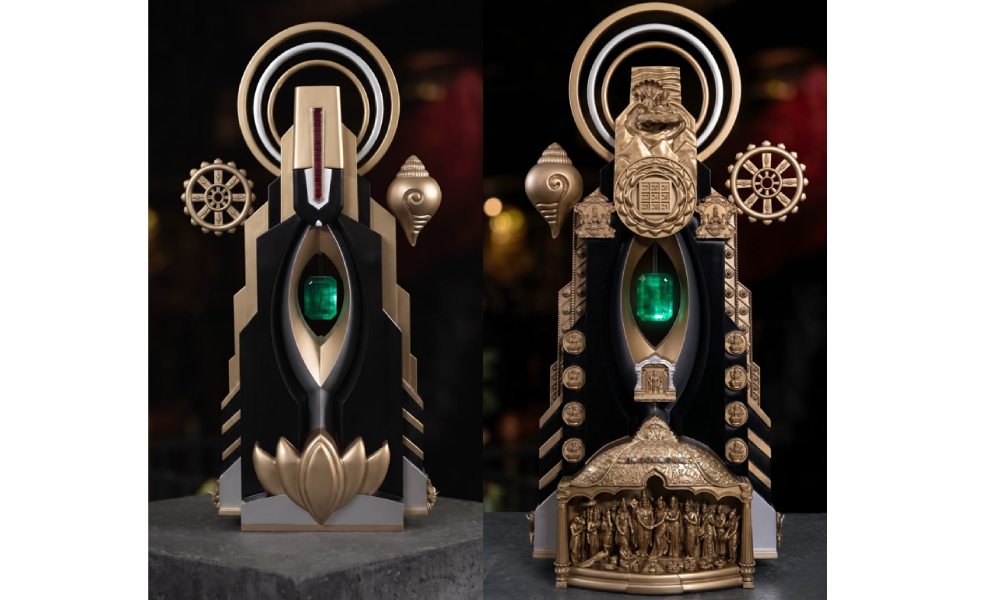
The reverse of the sculpture, for instance, is not simply decorative. It depicts a journey through the universe of Lord Vishnu beginning at ‘Vaikuntam’, the heavenly abode where Lord Vishnu and Goddess Lakshmi reside, and traces the divine arrival of Vishnu as Lord Balaji to the sacred hills of Tirupati. The journey continues through the seven temple gates and into the living sanctum.
As the narrative continues, we encounter ‘Vimana Venkateshwara’, before arriving at the grand celestial wedding of Lord Balaji and Goddess Padmavathi.
Technically, creating this level of detail within a four-foot sculpture was extremely challenging. Because the work is conceived as a 360-degree experience, every surface had to be considered equally. There were numerous iterations and refinements to ensure that the storytelling, proportions, structural integrity and craftsmanship worked came together seamlessly.
The front and reverse of the sculpture tell two different but connected stories — the Trinity of Brahma, Vishnu and Maheshwara on one side, and 19 gods and goddesses on the other. How did you arrive at this iconography, and what is the significance of the individual deities?
The entire iconography was developed around the idea that the divine can be understood through many forms, while ultimately remaining one.
The obverse presents the Holy Trinity of Brahma, Vishnu and Maheshwara, representing creation, preservation and transformation. At the centre is Vishnu—the preserver—and this establishes the larger cosmic context of the work.
The reverse takes the viewer into the deeper philosophy of Vishnu. It begins with Vaikuntam and leads towards the sanctum and the presence of Lord Venkateshwara, culminating in the celestial wedding of Lord Balaji and Goddess Padmavathi. It is almost like a visual pilgrimage—you move around the sculpture and gradually discover the story.
The 19 gods and goddesses are part of this larger universe, each representing a different divine presence and aspect. Together, they reinforce the central thought of the work: that different manifestations and different paths can lead us towards the same underlying truth.
So, while one side speaks of the cosmic nature of the divine, the other takes us through a more intimate and narrative journey of Vishnu’s manifestation as Lord Balaji.
At four feet tall, the piece is conceived as a work of art rather than simply an idol. What materials, craftsmanship and jewellery-making techniques were used for the intricate detailing of ‘Viśvaṃ Viṣṇuḥ’?
My background is in jewellery, so I naturally approached ‘Viśvaṃ Viṣṇuḥ’ with the eye of a jeweller. I looked at proportion, surface, texture, light, detailing and the relationship between different materials. In many ways, we treated the sculpture as an amplified piece of jewellery, translating the precision and sensibility of jewellery-making into a monumental form.
The material palette was an important part of the process. We worked with gold, silver, corn starch, cassava starch and sugarcane starch, along with natural gemstones. Each material was chosen and explored for its individual qualities and for how it could contribute to the larger visual language of the sculpture.
The natural gemstones bring colour, light and an organic individuality to the work, while gold and silver introduce the timeless richness associated with Indian jewellery and sacred objects. The starch-based materials allowed us to experiment with form, texture and intricate detailing in a completely different way.
Our jewellery-making sensibilities also influenced the surface detailing, texturing, stone setting, proportion and finishing. Translating these techniques to a four-foot sculpture required enormous precision and patience.
For me, ‘Viśvaṃ Viṣṇuḥ’ is something that lies between jewellery and sacred art. It takes the intimacy, craftsmanship and symbolism of jewellery and expands it into a monumental work of art.
You’ve said that the limited edition of 27 pieces has already sold out even before the unveiling date. What does the response tell you about the growing interest in contemporary interpretations of sacred art, and where do you see this space evolving next?
The response has been deeply humbling because ‘Viśvaṃ Viṣṇuḥ’ began as a personal artistic and spiritual exploration rather than simply a commercial project.
I believe there is a growing openness towards experiencing Indian spirituality through contemporary artistic languages. People are deeply connected to tradition, but they are also looking for new ways to engage with it, collect it and bring those stories into contemporary spaces.
I believe the future of sacred art lies in dialogue rather than departure—remaining deeply rooted in our cultural and spiritual heritage while allowing contemporary design, craftsmanship and technology to create new ways of experiencing those traditions.
That is also the larger intention behind the ‘Ananta – Sacred Art Series’. With every work, I want to explore stories, philosophies and forms that have existed for centuries, and reinterpret them in a way that allows today’s audience to pause, discover and experience them anew. ‘Viśvaṃ Viṣṇuḥ’ is our first chapter in that journey.