
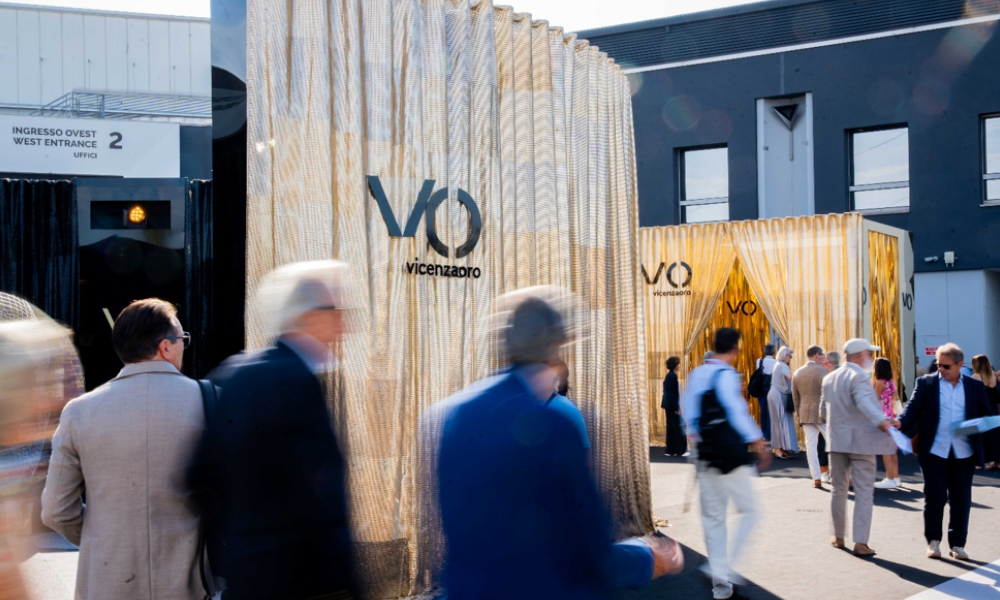
Across Vicenzaoro September 2026, conversations with leading exhibitors pointed to a market that is adjusting to high gold prices, shifting regional demand and changing consumer preferences, while high jewellery continues to rely on craftsmanship, distinctive design and natural gemstones.
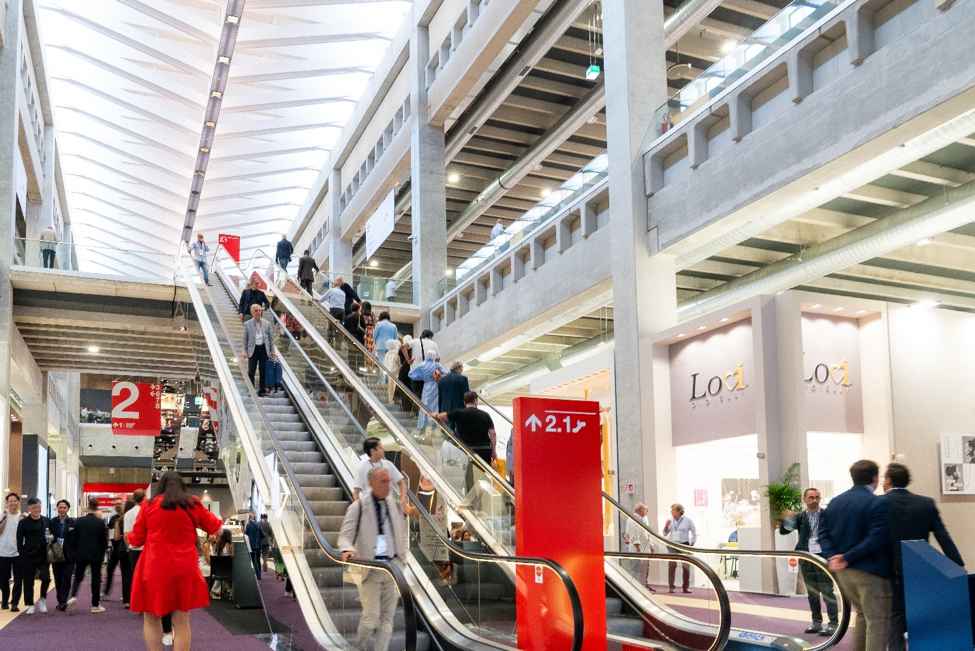
Vicenzaoro September 2026 opened against a significantly expanded backdrop. Italian Exhibition Group’s newly completed 23,000-square-metre Hall 2 has reshaped the Vicenza Expo Centre, bringing manufacturing, jewellery, technology and high jewellery into a more connected exhibition environment. The September edition brought together 1,300 exhibiting brands from 40 countries and a record 910 hosted buyers from 73 countries.
For the exhibitors interviewed by Solitaire International, the show provided a useful reading of how the market is evolving. The responses varied by positioning and geography, but several themes emerged: established markets remain important, the Middle East continues to generate significant demand for several brands, Asia is gaining ground for some companies, and high gold prices are being absorbed in different ways.
A show built around relationships and new business
For companies with decades of history at Vicenzaoro, September remains as much about reconnecting with established customers as it is about finding new ones.
Hong Kong-based Aaron Shum Jewelry has exhibited at Vicenzaoro for around 40 years, dating back to a period when only four Hong Kong-based companies were participating. This year, the company brought an entirely new collection and reported a combination of new business and renewed contact with long-standing clients. Its markets include Europe, while in the Middle East it operates under the Lifestyle Fine Jewellery name.
For Yoko London, Vicenzaoro has also become a long-established fixture. CEO Michael Hakimian said the company has been attending the show for 30 years and uses both the January and September editions to introduce collections and meet clients. For September, Yoko London brought its latest autumn-winter collections to the fair for the first time. Hakimian reported meetings with both existing and new clients, describing the company as consistently busy at the show.
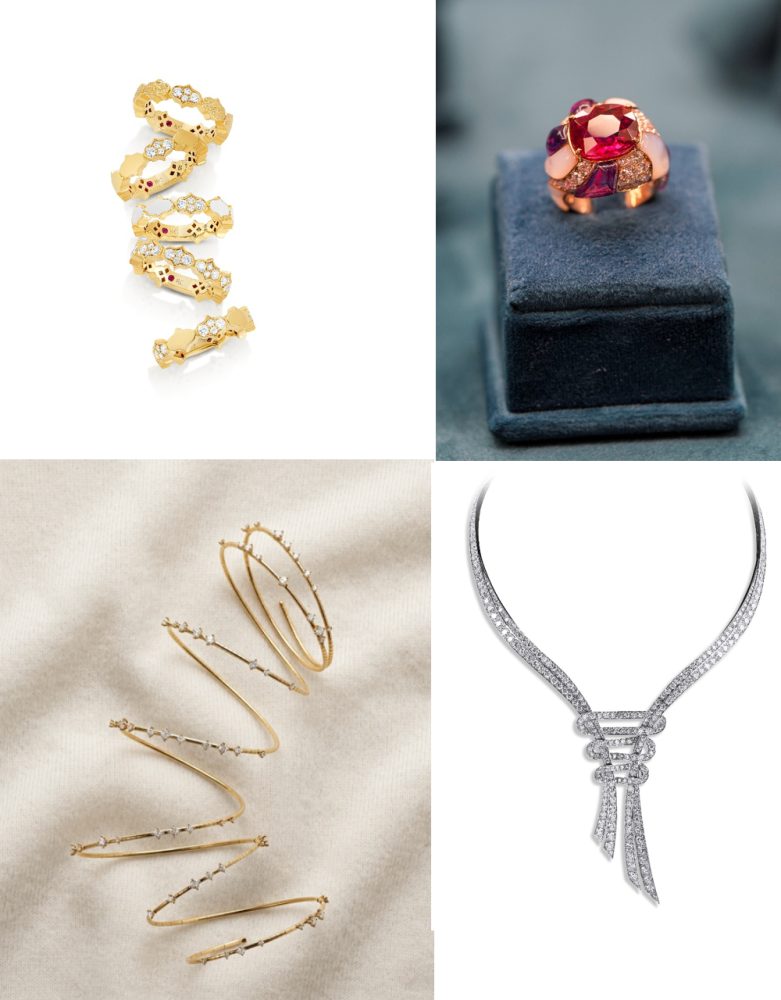
The Middle East and United States are currently Yoko London’s strongest markets, according to Hakimian. He also said movements in the gold price have little direct effect on the company because its pricing sits above fluctuations in the metal itself.
FOPE similarly views September primarily as a relationship-building occasion. Giovanni Morandina, Head of Marketing at FOPE, said the company generally introduces its major novelties in January. The September show therefore provides an opportunity to reconnect with clients and stakeholders, while also generating some new contacts.
The Middle East remains a critical market
Across several interviews, the Middle East emerged as one of the most significant markets.
For Casato, a company official noted it was still too early in the show to give a definitive assessment, but he remained positive about the market overall. The company serves South America, CIS countries, the Middle East, North Africa and the US, with Qatar singled out as one of its biggest markets. He said the Middle East was among the strongest-performing regions for the business.
At PLAH, the response from the Gulf has been particularly notable. Founder and Creative Director Sebastian Plah said the company was receiving strong feedback on its new collections, with demand coming from Bahrain, Qatar, Dubai and Kuwait. The company has been seeking to reach Middle Eastern clients for some time, and Plah said the response to titanium jewellery from the region had been encouraging.
PLAH’s experience also illustrates how product innovation can open new conversations. Its new Rumba collection is produced entirely in titanium, using a hand-carved surface technique that creates a brushed effect. Production takes place in Valenza, combining Italian craftsmanship with the use of titanium technology. The collection incorporates natural diamonds and natural sapphires. PLAH is also seeing interest from European boutiques, particularly in northern Europe and Austria, that are looking to introduce titanium jewellery.
Paolo Piovan Gioielli too informed that the Middle East had historically been the company’s largest market, but geopolitical circumstances there had affected demand. The company continues to produce one-of-a-kind jewellery in 18-karat gold, working with precious and semi-precious stones including amber, as well as cameos.
High jewellery stays close to gold, platinum and natural stones
The interviews also highlighted a clear distinction between high jewellery and more price-sensitive segments of the market.
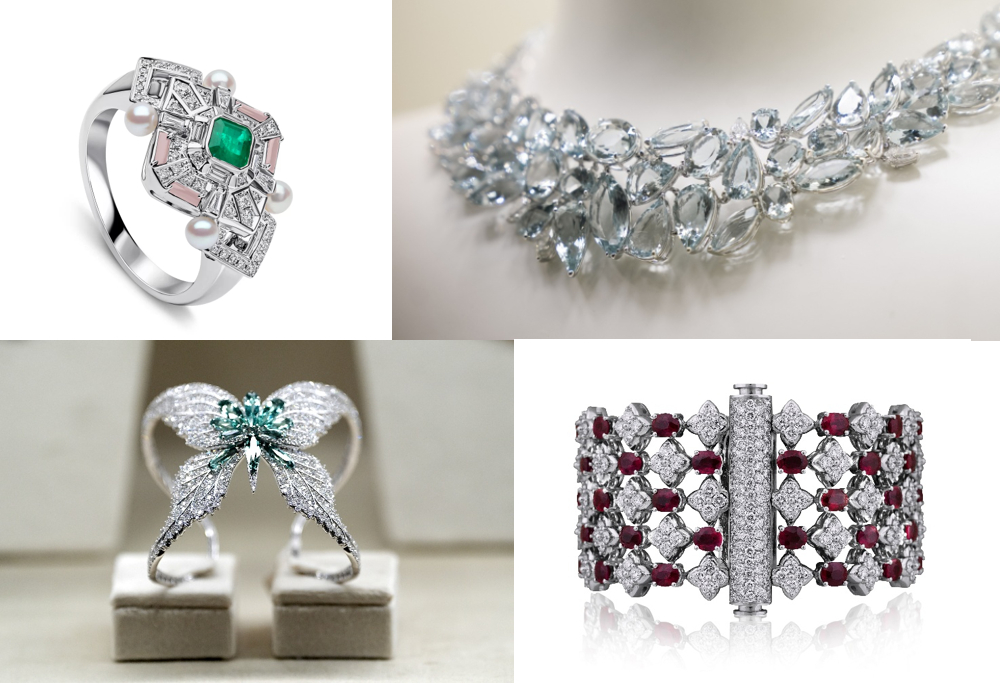
At the top end, Picchiotti Fine Jewellery Vice President Filippo Picchiotti said visitor traffic increased on the second day, and the company had several meetings scheduled. Known for one-of-a-kind jewellery, Picchiotti presented five or six high-end rings featuring unusual stones, including unheated purple, orange and yellow sapphires.
The United States is currently Picchiotti’s largest market, followed by the Middle East. Picchiotti said the rise of lab-grown diamonds has had limited impact on the company’s high-end niche. In his view, the pressure has been more pronounced in wedding and engagement jewellery. He also observed renewed recognition for natural diamonds, with prices showing some improvement.
Gold remains a cost consideration, but Picchiotti said its impact on the finished product is moderated by the importance of diamonds and coloured gemstones in the overall value of the jewellery. The company continues to work with 18-karat gold and platinum and has no plans to replace these materials with alternatives such as titanium in its high jewellery offering.
Casato takes a similar approach. An official said the company continues to work in 18-karat gold and has not changed its product design in response to gold prices.
Stefania Borriero, Sales & Marketing at Peruffo Jewelry, also reported a good show, with clients coming from Europe, the Middle East, the US, Spain and Italy. Peruffo continues to work in 18-karat gold and, according to Borriero, has chosen not to alter its designs in response to higher gold prices.
FOPE absorbs higher gold costs through planning and brand value
FOPE has taken a different operational approach to the same challenge. Morandina said the company plans material purchases well in advance to compensate, to some degree, for price fluctuations. Despite the rise in gold prices, FOPE has not seen a decline in purchases and has continued to grow organically beyond the price-list increase it implemented.
The company manufactures exclusively in 18-karat gold, in three colours. It has also introduced black gold and is seeing good results from a subtle rose-gold treatment. FOPE’s long-standing approach of encouraging consumers to mix and match its three gold colours remains central to its offer, with 99% of its products produced in the three variations.
The US is FOPE’s strongest market, while Italy remains its home market. Germany and the UK are established markets, with Asia increasingly important. FOPE operates a subsidiary in Japan and opened in Korea two years ago, where Morandina said results have been strong. Southeast Asia is also expanding for the company.
The company is also considering a greater direct retail presence. Morandina said retail is now a focus for FOPE as a possible next step in strengthening the brand and controlling more of the customer experience.
Technology becomes part of the design conversation
The growing role of alternative materials is particularly visible among designers working at the intersection of jewellery and technology.
Mattia Cielo has been using titanium in jewellery since 2006. He explained how titanium is used to create flexible, lightweight structures, including a bracelet in which individual pieces of gold are introduced into a titanium thread. The use of medical titanium also gives the structure a memory effect, allowing it to return to its original form after being stretched.
For Mattia Cielo, the objective is fundamentally connected to wearability. He emphasises lightweight construction, flexibility and durability, arguing that jewellery should be comfortable enough to wear throughout the day. The same principle extends to the company’s larger earrings, which are designed to retain visual impact while remaining lightweight.
Cielo’s business is geographically broad, with customers across the US, Europe, Asia and the Middle East. He identified the US as the largest market while also pointing to India as a potential market for the brand. The group already uses Indian manufacturers for some components in other parts of its production.
PLAH’s experience reinforces this movement towards titanium, although from a different design perspective. Its new Rumba collection uses titanium as the primary material, while its established lines combine titanium with gold and natural diamonds. The company’s response at Vicenzaoro suggests that titanium is finding interest among both Middle Eastern clients and selected European boutiques.
India enters the conversation
India surfaced in the interviews in different ways, from sourcing to potential market expansion and trade.
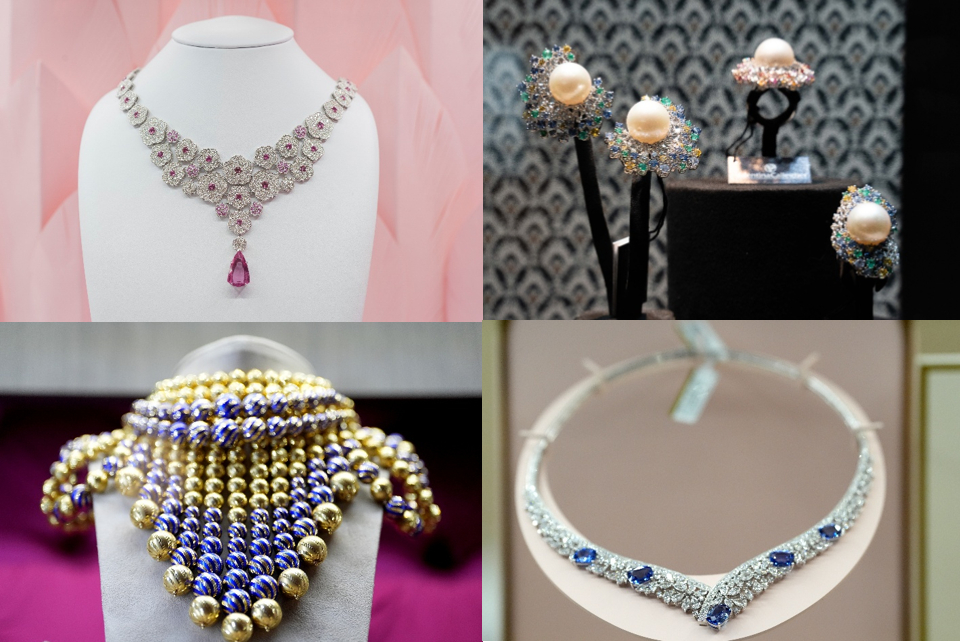
Picchiotti currently works with Indian suppliers, primarily for diamonds and emeralds. However, Picchiotti said the proposed India-EU free trade agreement would have limited direct impact on its current sourcing model because the company already imports diamonds and coloured stones without taxes. It also manufactures its own jewellery and therefore does not currently envisage moving production to India.
For Mattia Cielo, the prospect of easier trade between India and Europe was viewed more broadly. He said lower barriers and taxes could make European jewellery more accessible in India, while also pointing to India’s potential as a growing market for international niche brands.
That interest aligns with the wider international orientation of Vicenzaoro. The show’s redesigned layout brings the entire jewellery supply chain together, while its Creation community includes substantial participation from India, Hong Kong and Thailand alongside manufacturing groups from Europe, the US and other markets.
A market adapting without abandoning its identity
The exhibitor conversations at Vicenzaoro September offer a picture of a jewellery industry adjusting to a more complicated commercial environment while retaining strong attachment to established materials, craftsmanship and design identities.
For some brands, high gold prices have required advance purchasing and careful cost management. For others, the value contribution of gemstones and design means that the metal price has a less visible effect on the final product. Several continue to work exclusively in 18-karat gold, while designers such as PLAH and Mattia Cielo are demonstrating how titanium can become a design material in its own right.
Geographically, the picture is equally varied. The US remains an important market for several high-end brands, the Middle East continues to generate substantial business for companies, and Asian markets are becoming increasingly relevant for others.
The wider Vicenzaoro platform reflects these shifts. Its new Hall 2 now acts as a central connection point between the exhibition communities, while T.Gold has moved inside the Expo Centre for the first time, bringing jewellery technology closer to manufacturing and design. Around 170 companies participated in T.Gold, covering areas including additive manufacturing, high-precision machining, automation, casting, quality control and precious-metal recovery.
Against that backdrop, the voices from the show floor point to a market where innovation is increasingly about how jewellery is made, worn and positioned, while the fundamentals of high-end Italian jewellery remain firmly tied to craftsmanship, distinctive design, natural gemstones and precious metals.