
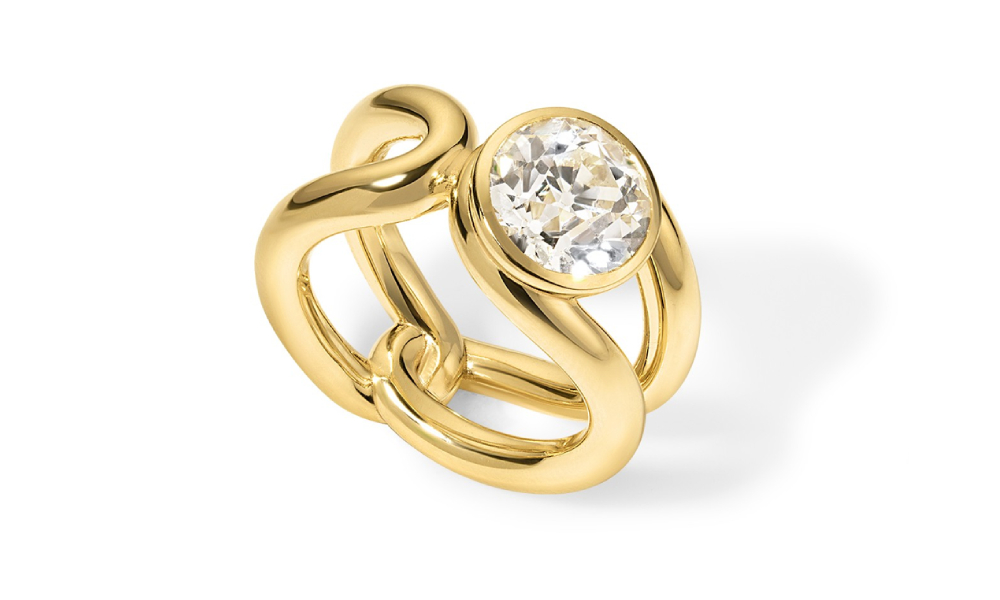
From fashion styling to fine jewellery, Jade Ruzzo brings an instinctive understanding of how women express themselves through what they wear. Her designs balance sculptural gold, hand-selected gemstones and diamonds with a sense of ease, creating pieces that are distinctive without being overstated. Personal memories, familiar objects and the rhythms of everyday life often spark her creations, lending them a deeper emotional resonance.
From jewellery inspired by her musician father to pieces envisioned as future heirlooms for her daughter, Gloria, Ruzzo’s work is as much about connection as it is about design. She speaks about individuality, creative instinct and building a jewellery brand on her own terms.
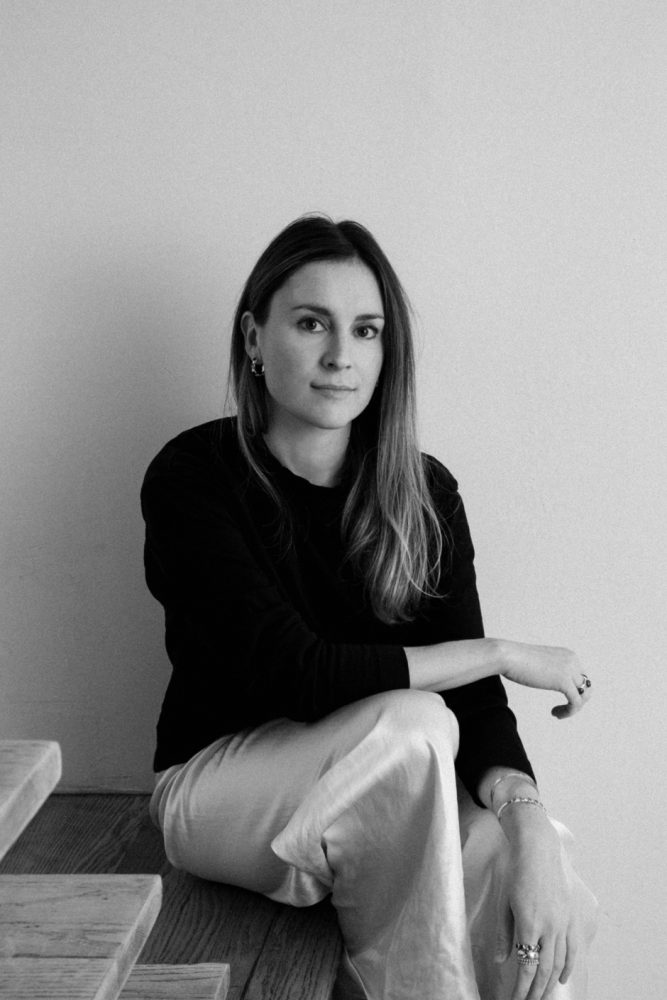
You spent a decade working in fashion and personal styling before launching your own jewellery label. Do you see jewellery as an extension of personal style rather than simply an accessory?
My background in fashion has certainly shaped the way I think about jewellery. Spending years styling women taught me that personal style is really about instinct, confidence, and knowing what feels like you. I became interested in the way jewellery could completely change the look, often in a much more subtle way than clothing.
Jewellery should feel like a natural extension of the person wearing it, rather than something reserved for a particular occasion or added as an afterthought. The most interesting women have a deeply personal relationship with their jewellery. They wear beautiful pieces with the same ease as their favourite jeans or a great vintage jacket, mixing pieces in a way that feels instinctive and entirely their own. That’s always been the intention behind my designs: jewellery that feels effortless and individual, and becomes part of someone’s everyday identity.
Your father’s passing and the birth of your daughter, Gloria, were two significant moments in your personal journey. How have these personal experiences found their way into your creative expression?
Losing my father and becoming a mother changed my relationship with jewellery in a profound way. I started to understand the emotional weight that objects can carry, and how a piece of jewellery can keep us connected to a person or a moment in our lives.
My father and I were incredibly close, and after he passed, I found myself searching for ways to keep his memories close to me. When Gloria was born, that feeling became even stronger. The two never had the chance to meet, and I wanted to create something that could connect them in a meaningful way.
My father was a musician, and his influence is woven throughout my work, particularly in the Percussion and Vic collections. I have a silver and turquoise cuff that belonged to him, and it means more to me than almost anything I own. It’s a beautiful reminder that the value of jewellery goes so far beyond the materials.
Becoming a mother to Gloria gave that idea another dimension. I started thinking about the pieces I would eventually pass down to her, and the stories they would carry. That connection between past and future has become an important part of the brand. I want to create jewellery that lives with you and gathers meaning over time. There’s something special about knowing that a piece of jewellery can connect people across generations, even those who never had the chance to know each other.
You describe your aesthetic as jewellery that whispers rather than yells. How do you give simplicity a distinctive voice?
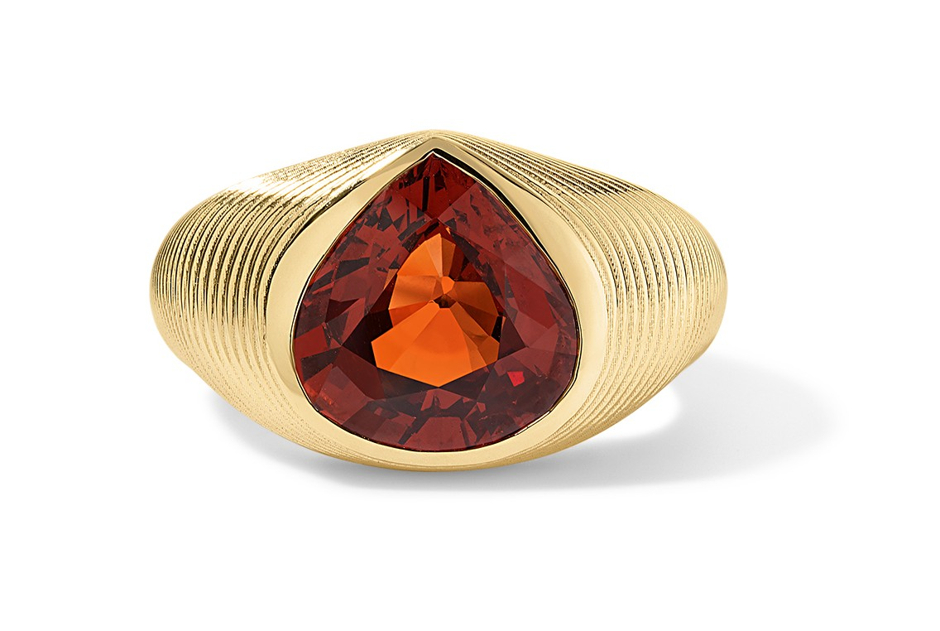
I believe there’s something incredibly confident about restraint. A piece doesn’t have to be loud to have presence. In fact, I find the most compelling designs are often the ones that reveal themselves slowly.
I’m drawn to substantial forms, beautiful proportions, and unexpected details. My jewellery can be bold in scale, but there’s always a sense of simplicity to it. For me, simplicity is about being very intentional. When you strip away anything unnecessary, every curve, proportion, and detail becomes that much more important. That’s where a piece develops its own personality.
Your creations bring together coloured gemstones, hand-selected diamonds and pearls in unexpected combinations. How much does the stone itself influence the final design?
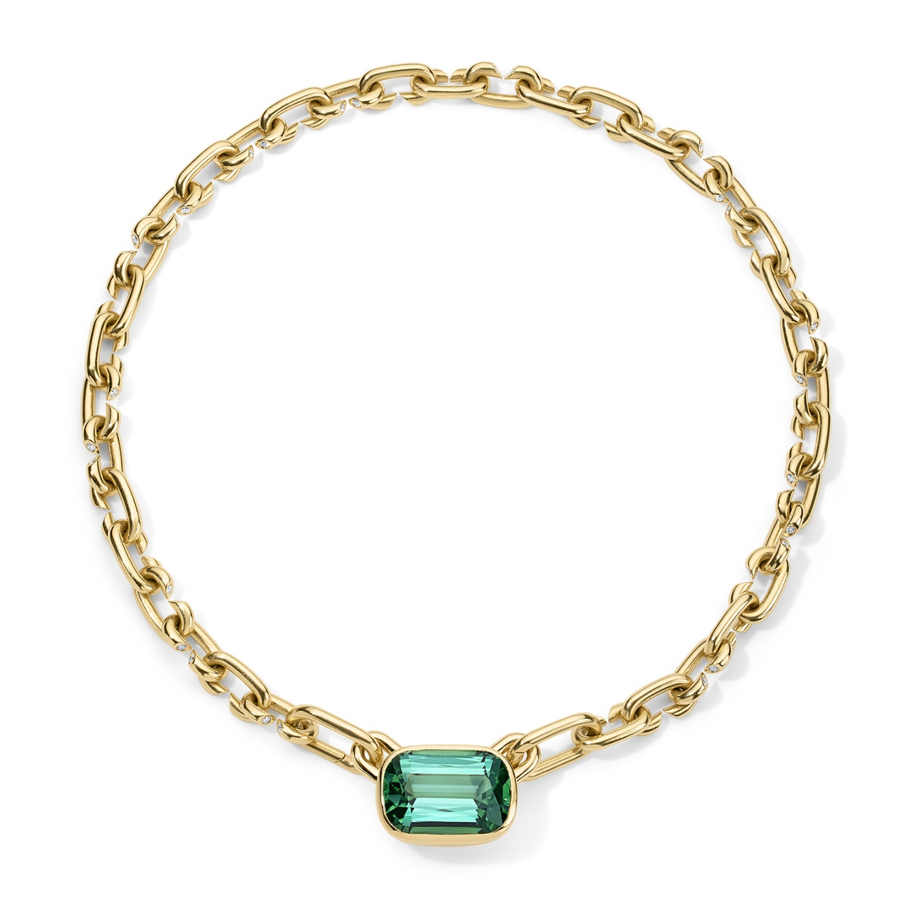
I’m very instinctive when selecting gemstones. I’m drawn to interesting colours, unusual tones, and stones that have a certain character to them. I particularly love cabochons because there’s a softness and depth to them that is very modern. I’m less interested in traditional ideas of perfection and more interested in what makes a stone visually compelling.
Sometimes a stone can inspire an entire design, and other times I’ll have a specific shape or silhouette in mind and search for exactly the right gemstone to bring the creation to life. I love playing with unexpected colour combinations that might not traditionally be paired together.
There’s something really satisfying about finding that balance between the natural beauty of a gemstone and the structure of the gold around it. I want the two to feel completely connected.
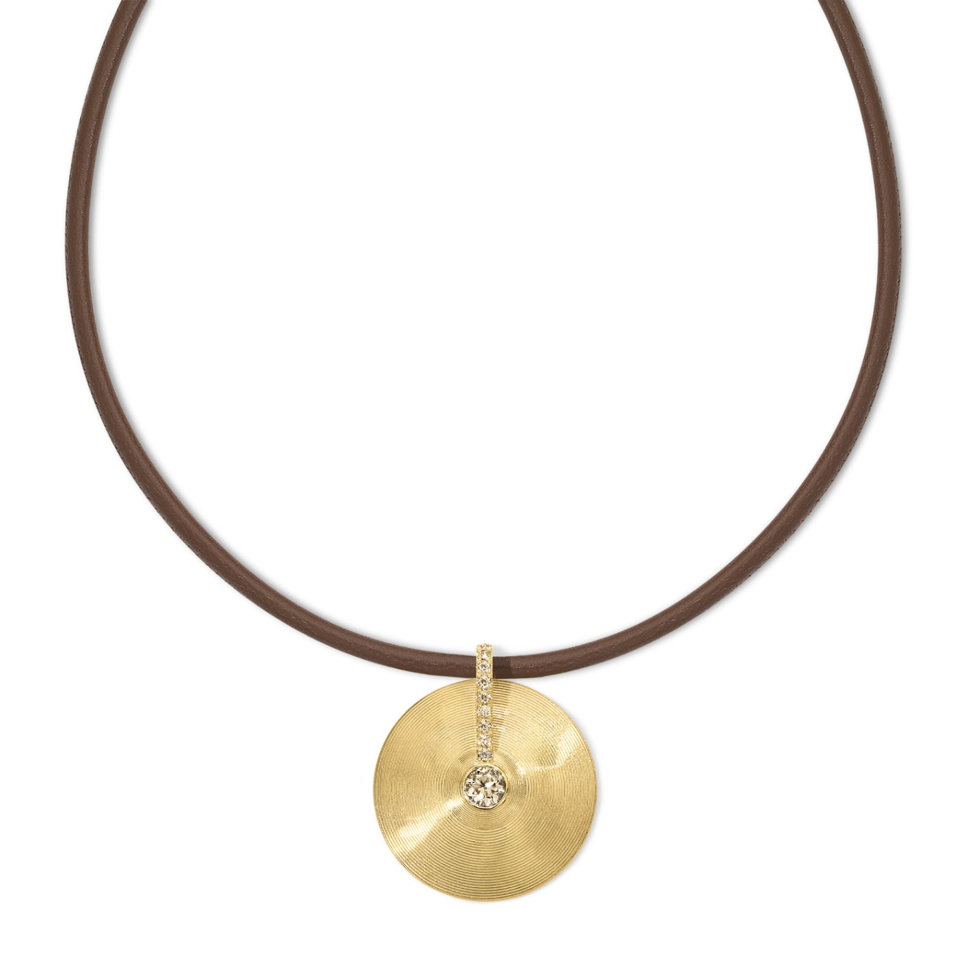
Collections such as Tennessee and Percussion draw inspiration from familiar forms and everyday objects. What is your process of translating an ordinary observation, memory or experience into an extraordinary piece of fine jewellery?
Inspiration usually starts with something very personal or familiar. It might be a memory, an object, a shape, or even a feeling that stays with me. I’m constantly noticing little details in everyday life, and I love the challenge of taking something recognizable and interpreting it in a completely different way.
The Percussion collection is a good example. My father was a drummer, so percussion instruments were a familiar part of my childhood. I was interested in translating their shapes, textures, and movement into jewellery without making the references too literal.
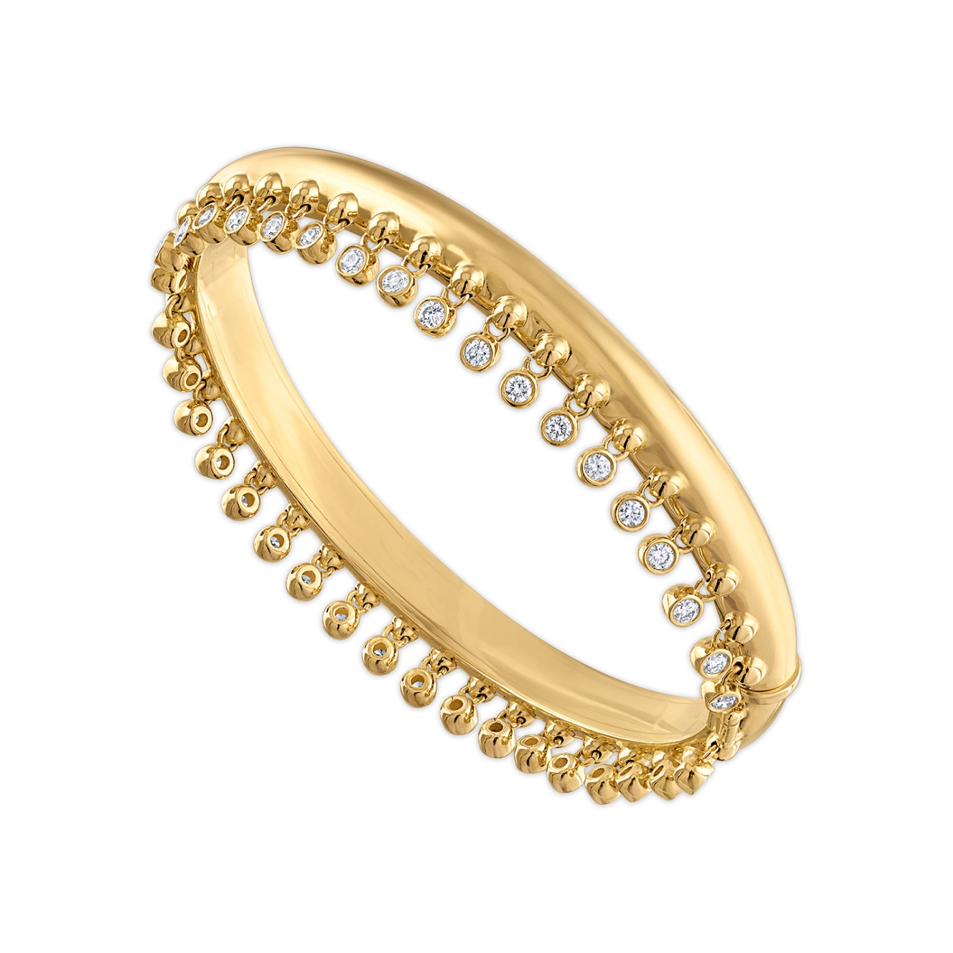
With Tennessee, I wanted to capture a sense of rhythm and movement through diamonds delicately suspended from substantial gold forms.
My process is really about distilling an idea down to its most interesting elements. I love when there’s a story behind a design, but you don’t need to know that story to appreciate the jewellery.
You champion heirloom jewellery over fleeting trends. How do you balance timeless design particularly when catering to a new generation of luxury consumers?
I don’t think timelessness has to mean traditional or conservative. To me, a modern heirloom is something that feels relevant today but will be just as interesting twenty or fifty years from now.
I’m much more interested in developing a recognizable design language that can evolve naturally than responding to what’s happening in the moment. Sometimes that means experimenting with a new material, introducing an unexpected gemstone, or revisiting a familiar silhouette from a different perspective.
I also think the way people wear fine jewellery has changed. There’s a freedom in how women wear and collect jewellery today that I find really exciting. Beautiful pieces aren’t being saved for special occasions. My client wants jewellery that feels personal, expressive, and easy to incorporate into everyday life. That philosophy has always been central to my brand.
Building an independent fine jewellery label in New York comes with its own challenges. What has been the most unexpected learning curve?
The biggest learning curve has been understanding how to balance creative freedom with the realities of running a business. I’ve always had a strong point of view when it comes to design, but building an independent fine jewellery brand means being equally invested in everything that happens beyond the creative process. From sourcing stones and overseeing production to managing relationships and making decisions about growth, there are so many layers to the business that people don’t necessarily see.
What’s been most surprising is how much I enjoy the entrepreneurial side of it. I love the challenge of building something from the ground up and having a hand in every aspect of the brand. Being independent allows me to stay closely connected to the work and make decisions based on what feels authentic to my vision, rather than following a prescribed path. I’ve come to realize that the creative and business sides aren’t really separate. They’re both essential to building something that feels distinctly my own.
Beyond the intrinsic value of gold and gemstones, what makes a piece of jewellery worthy of being passed down through generations?
What makes jewellery truly heirloom-worthy is the life it has lived … the memories attached to it, the person who wore it, the moments it was present for.
Some of my most treasured possessions aren’t necessarily the most valuable in a traditional sense. They’re the pieces that belonged to people I love, and wearing them makes me feel connected to them.
When Gloria eventually inherits my jewellery, I hope she sees more than the designs themselves. I hope she sees pieces that I loved, wore, and lived in. I want her to feel connected to me in the same way I feel connected to my father when I wear his cuff. And I hope she’ll wear them in her own way. That’s the beauty of an heirloom. It carries the history of the person who came before you, but becomes part of your own story too.