
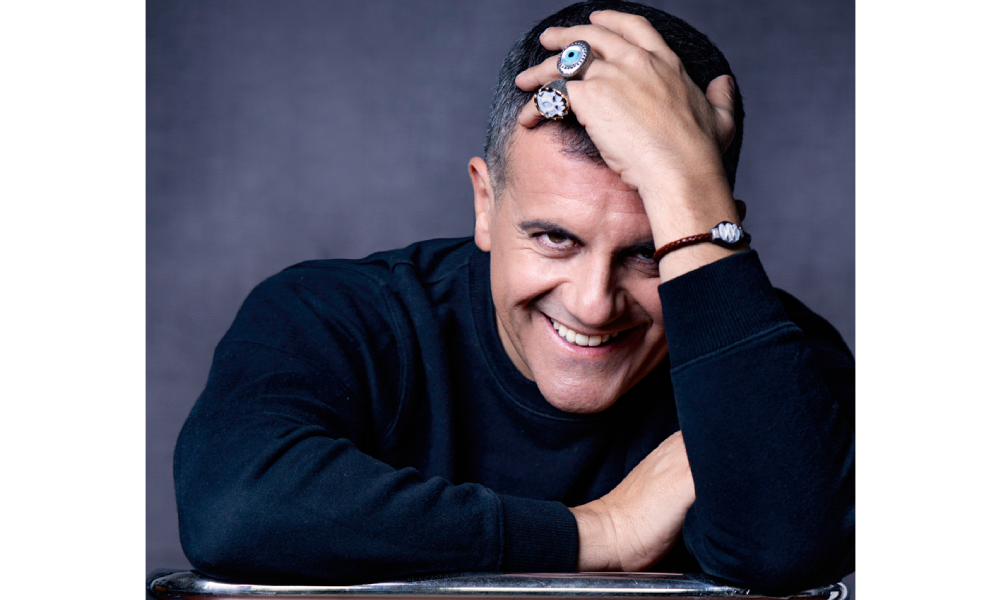
Diving into Amedeo Scognamiglio’s world reveals an unbridled mind—fearless and instinctive. Drawing from the cultures he has inhabited and his deeply rooted Italian heritage, his pursuit remains singular: to create high jewellery as art.
On one hand, he reinterprets and elevates his sixth-generation legacy of cameo carving; on the other, he channels his cross-cultural sensibility into pieces that invite personalisation. Narratives lend heft to his creations, and his strong foundation in master craftsmanship enables him to juggle brands that are diverse in nature and design. His quest is to stay constantly stay current, and provocatively reimagining legacy for now!
Over to the maestro …
You wear many creative hats — master cameo carver, co-founder of Faraone Mennella, and founder of your own brand, AMEDEO. How do you balance these different creative identities, and what keeps you energised across them?
Honestly? Most days it doesn’t feel like balancing anything. I’ve always been either in the workshop carving for AMEDEO, or with Roberto (co-founder of Faraone Mennella) on a call with our artisans arguing about whether a clasp should be architectural or fluid. They’re different muscles—one is solitary and obsessive; the other is collaborative and fast. The variety keeps me from becoming one of those artists who secretly hates their own work after thirty years.
You began carving cameos at a young age, working in your basement workshop. Looking back, how did those early experiences shape your artistic instincts and your connection with the craft?
I didn’t have ‘artistic instincts’ as a child. I had sore fingers and a lot of ruined shells. My father would pull something out of my hands and say, ‘You rushed.’ And he was right. The shell doesn’t care about your deadline. It’s hydrostatic calcium—one wrong angle and it cracks. I learned that lesson hundreds of times before I learned anything about design. But that frustration became useful. Now I can look at a rough shell and feel where the image lives in it. That’s not an instinct. That’s just repetition.
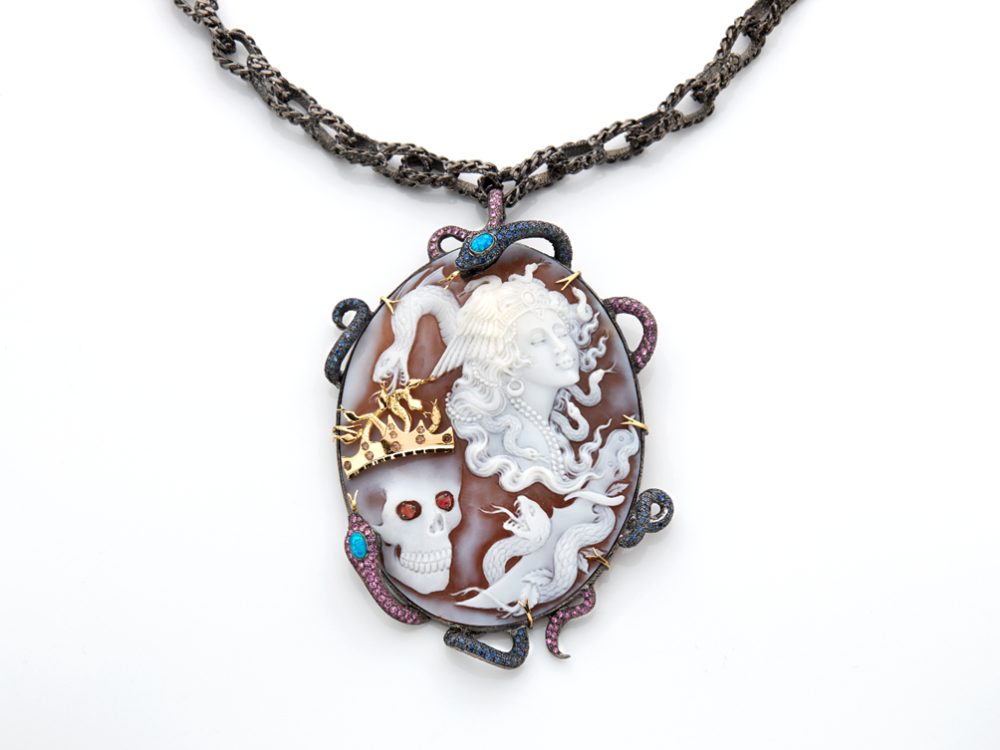
You come from a sixth-generation family of cameo carvers from Torre del Greco. How has this deep lineage influenced the way you approach jewellery design today?
I remember visiting my father’s vault in our Torre del Greco factory and seeing my great-grandfather’s name in a ledger from 1892. That was … strange, thrilling, but also claustrophobic. Because now you’re not just making objects, you’re carrying something. But I’ve learned that tradition isn’t a contract you inherit—it’s a conversation you choose to join. If I only repeated what my ancestors made, I’d be honouring their hands but betraying their curiosity. They were experimenting with gas lamps and new tools in their time. I do the same with my tools.
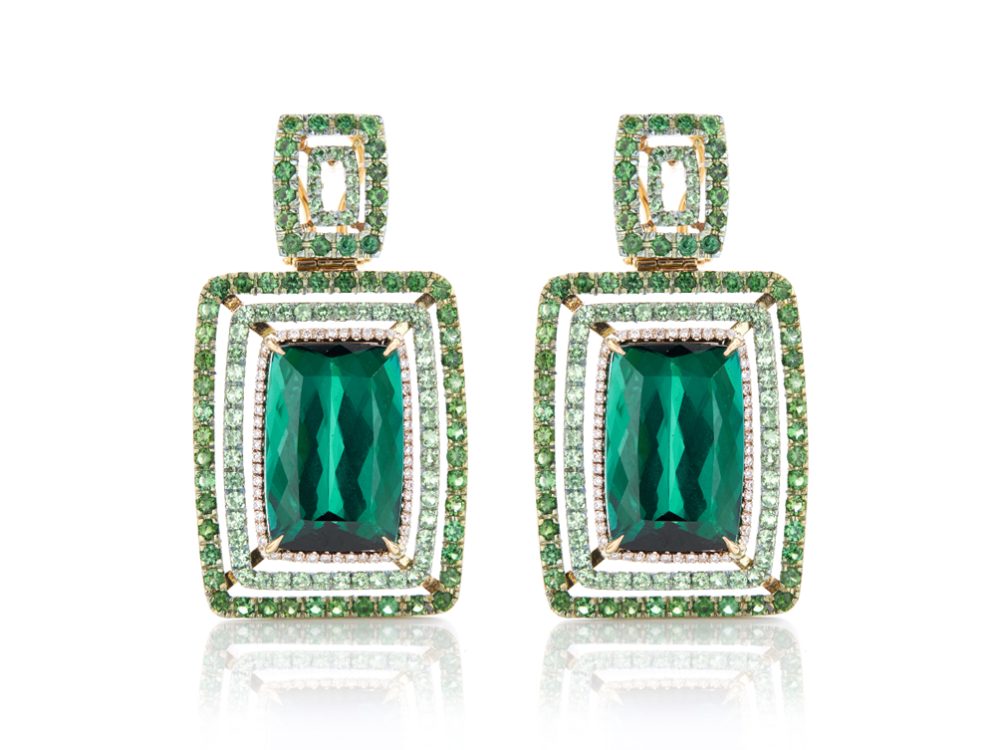
You co-founded Faraone Mennella with Roberto Faraone Mennella, blending Italian design heritage with the bold energy of New York. How did this cross-cultural environment shape the aesthetic and identity of the brand?
We arrived in 1996 with big dreams, fancy ideas, and no budget. Roberto went to study Design at Parsons School; and I was still figuring out the subway and selling my father’s cameos where I could. But New York in that era was hungry for Italian craft, and Italian craft was hungry for New York’s irreverence.
We’d be at a gallery opening one night, and the next morning I’d be trying to translate that energy into a brooch. The city made us faster. In Italy, a collection might gestate for three seasons. In New York, someone asks, ‘Can you have it Tuesday?’ and you say yes, then figure out how.
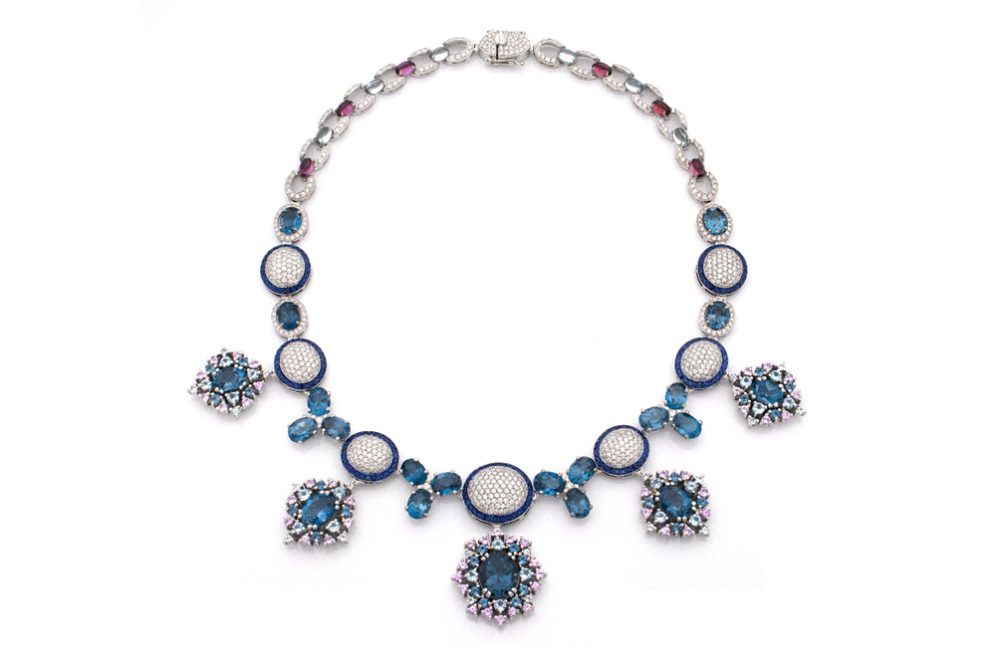
With AMEDEO, you have reimagined the ancient art of cameo carving, often introducing unexpected motifs and contemporary references. What inspired you to challenge the traditional boundaries of cameo jewellery?
When I started, cameos were either grandmother’s heirlooms or museum pieces. Beautiful, but sealed behind glass. I remember thinking: Why is the skull forbidden? The Greeks carved skulls. But somehow the 20th century sanitised everything into pastoral profiles. Once I realised the shell was just a surface—like canvas or marble—the question became: what shouldn’t I carve? The answer was: nothing. Pop culture, tattoo motifs, photorealistic pets. The medium doesn’t care about our categories.
Your creations often feel like miniature works of art — sometimes classical, sometimes playful or even gothic. How important is storytelling in the way you design jewellery?
I once carved a cameo for a client whose father had died. She wanted his portrait, but she also wanted something he used to say to her—‘Keep swimming’—hidden in the background. So, I carved tiny fish scales into the shell layers behind his shoulder. You can barely see them unless you know how to look. That’s what I mean by storytelling. It’s not always a narrative you explain; sometimes it’s a secret the wearer carries. The piece becomes a conversation between the wearer and the object.
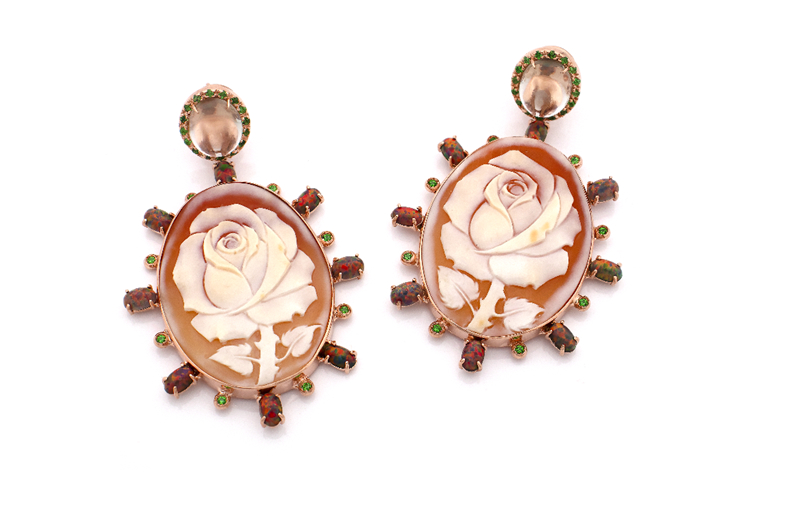
Many collectors are drawn to the deeply personal nature of your bespoke cameo portraits. In today’s luxury landscape, how important is personalisation in jewellery design?
I have clients who own dozens of pieces from major houses. Stunning work. But they’ll say to me, ‘This is the only thing I own that nobody else has.’ Spike Lee, for example. And they don’t mean rarity, they mean recognition. A bespoke portrait captures a specific nose, a particular dog’s lopsided ear, the exact way someone’s hair falls. That’s not customisation. That’s memory made solid. The word ‘exclusive’ has been so abused it barely means anything anymore. What people want now is something genuinely theirs.
You have also experimented with unexpected formats — even incorporating cameos into streetwear accessories such as baseball caps. What excites you about pushing traditional craftsmanship into new cultural contexts?
The baseball cap thing started as a joke, honestly. I had this carved skull cameo, very baroque, and I stuck it on a cap to annoy my studio manager, Anna. But then I photographed it, and the contrast worked. It was ridiculous—in a good way. Sixteenth-century technique, twenty-first-century streetwear. The tension wakes people up. I’ve also embedded cameos into furniture, into chess sets and architectural panels. Each time you move a craft into a new context, you test whether it actually has life, or if it’s just nostalgia. So far, it’s holding up.
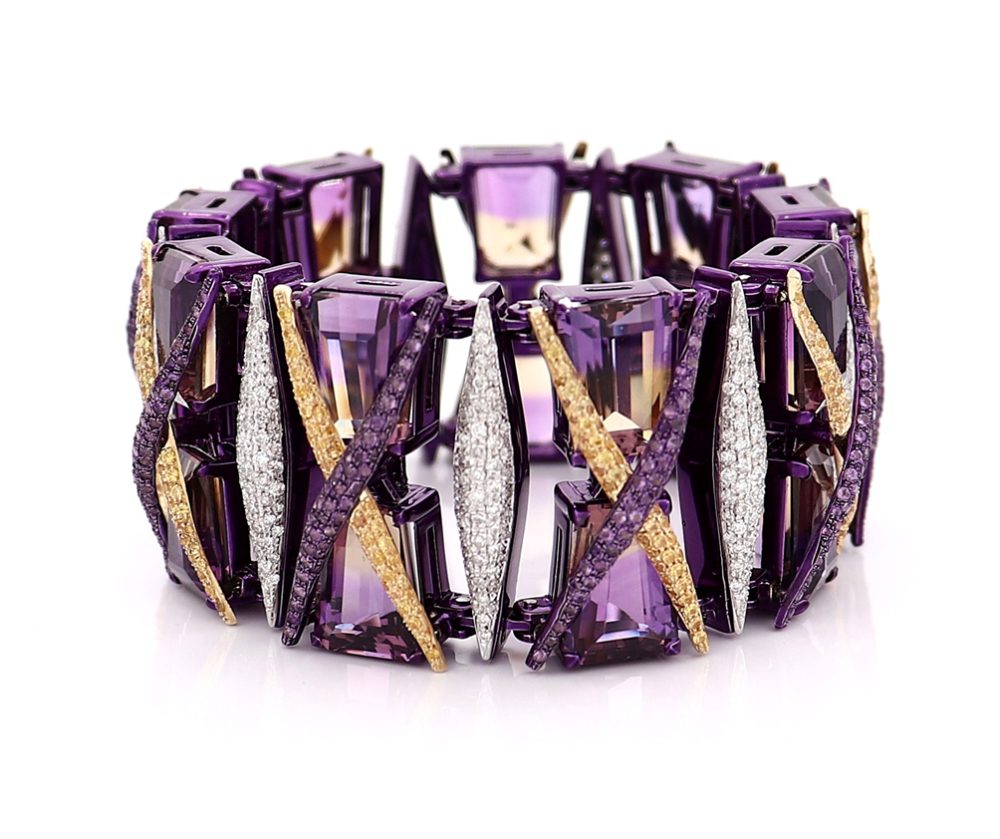
As one of the judges for the Artisan Awards, what was your overall impression of the entries this year? Were there any ideas or techniques that particularly stood out?
What stayed with me most was how seriously everyone took the craft. In the micropainting pieces, you could see designers turning tiny surfaces into whole little worlds—full of detail, but still elegant and wearable, not “look‑ what‑ I‑ can‑ ‑do” showoffs.
In the ‑embroidery-inspired work, I loved when metal started behaving like fabric. When filigree and jali became “threads” and the pieces actually draped and moved on the body, you felt that couture attitude came through in a very fresh way. That’s when jewellery stops being just ornament and starts to feel like clothing you happen to cast in gold.
And in Poetic Layers, there was a clear desire to make jewellery a small, secret universe—things that open, rotate, hide portraits or messages, and reveal themselves slowly.
As a judge but also as a colleague, it’s exciting to see a generation that isn’t satisfied with just making something pretty; they want it smart, emotional, and a little bit unexpected. I recognis‑e that impulse very well.
Across your career, you have balanced heritage, craftsmanship and experimentation. What advice would you give young jewellery designers who are trying to honour tradition while still finding their own voice?
My father never let me design anything for the first two years. I hated him for it. Now I tell young designers the same thing: spend five years learning how to make things properly before you decide to reinvent them. I know…five years sound like forever when you’re twenty. But if you don’t know why a rule exists, you can’t break it intelligently, you’re just guessing. When I started carving contemporary subjects, like monkeys and skulls, I didn’t do it because I couldn’t do classical. I did it because I’d done classical for years and was bored with lady profiles and birds. That boredom was earned. Young designers should chase that earned boredom.
If you had to define the future of luxury jewellery, what qualities do you believe will matter the most?
Longevity. Not in the marketing sense—in the literal sense. People are buying less but buying better. They want to know that in fifty years, someone will still be wearing this. That means honest materials, construction that can be repaired, and design that won’t feel dated. The jewellery that survives this moment won’t be the loudest or the most expensive. It’ll be the most considered.
My happiest moments are those when I accidentally spot a lady in Capri or on Madison Avenue wearing a pair of Faraone Mennella earrings or an AMEDEO ring from 15 years ago. Mission accomplished!