
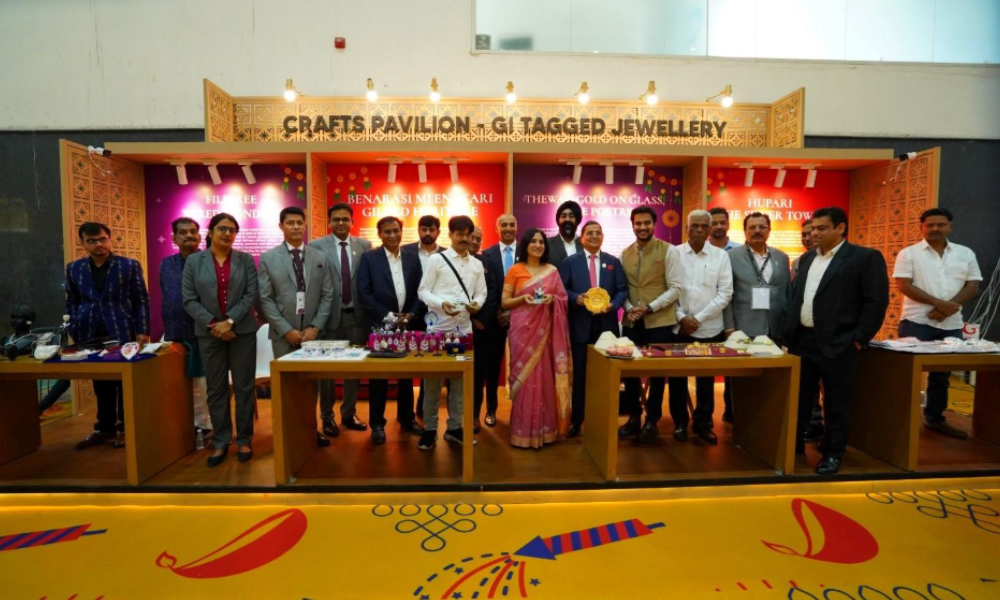
At IIJS Bharat Tritiya 2026, GJEPC organised a dedicated showcase of GI-tagged jewellery at the Crafts Pavilion in Hall 5, BIEC.
Bringing together India’s rich jewellery heritage under one roof, the show featured four iconic GI-tagged jewellery traditions from across the country. These include the delicate Silver Filigree from Cuttack, Eastern India, known for its fine lace-like craftsmanship; the vibrant Benarasi Meenakari from Varanasi, celebrated for its colourful enamel work; Thewa from Pratapgarh, Rajasthan, distinguished by its intricate gold-on-glass artistry; and Hupari Silver Jewellery from Kolhapur, Maharashtra, renowned for its finely handcrafted silver pieces. Together, the showcase highlighted the diversity and enduring legacy of India’s traditional jewellery crafts.
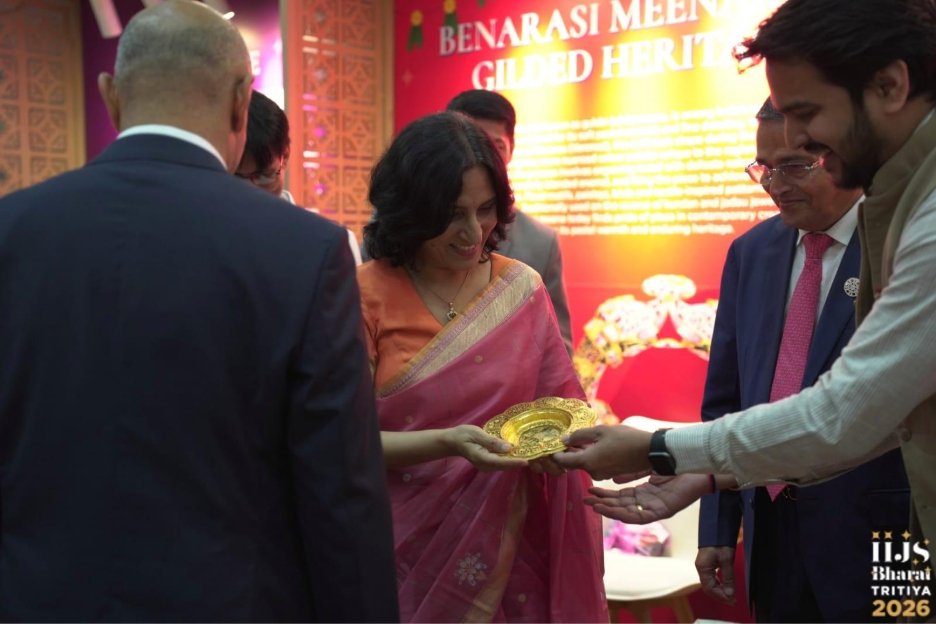
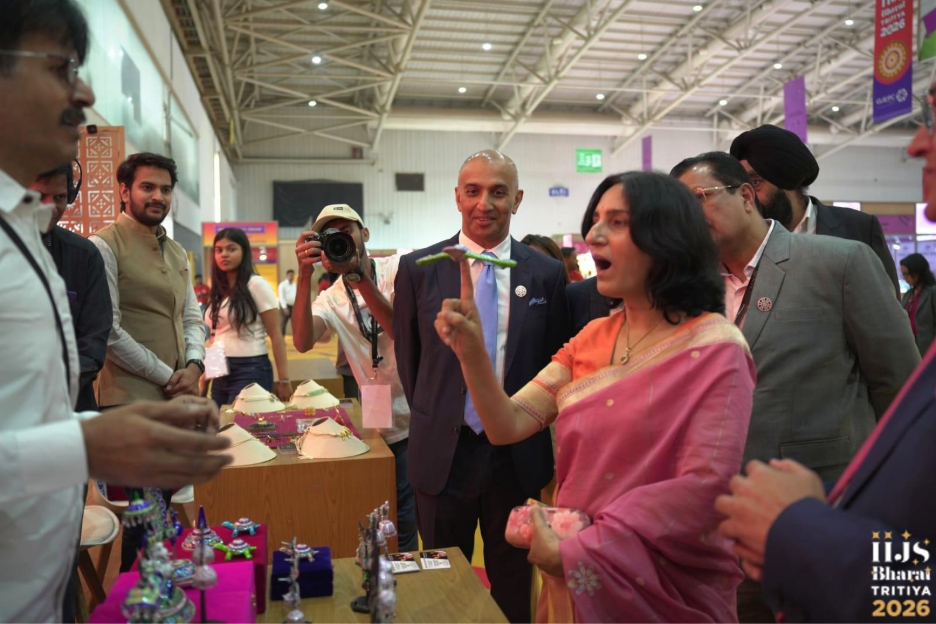
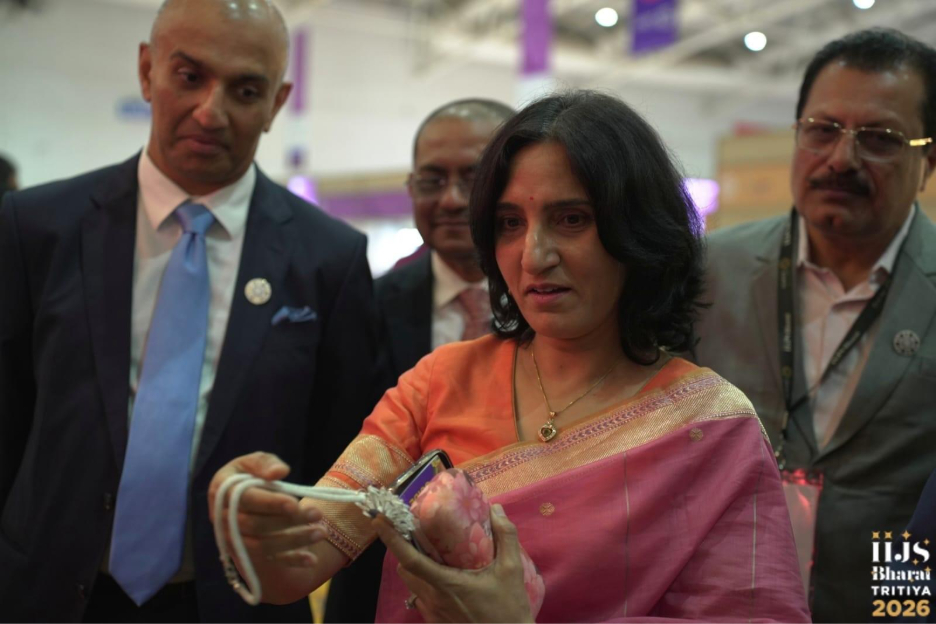
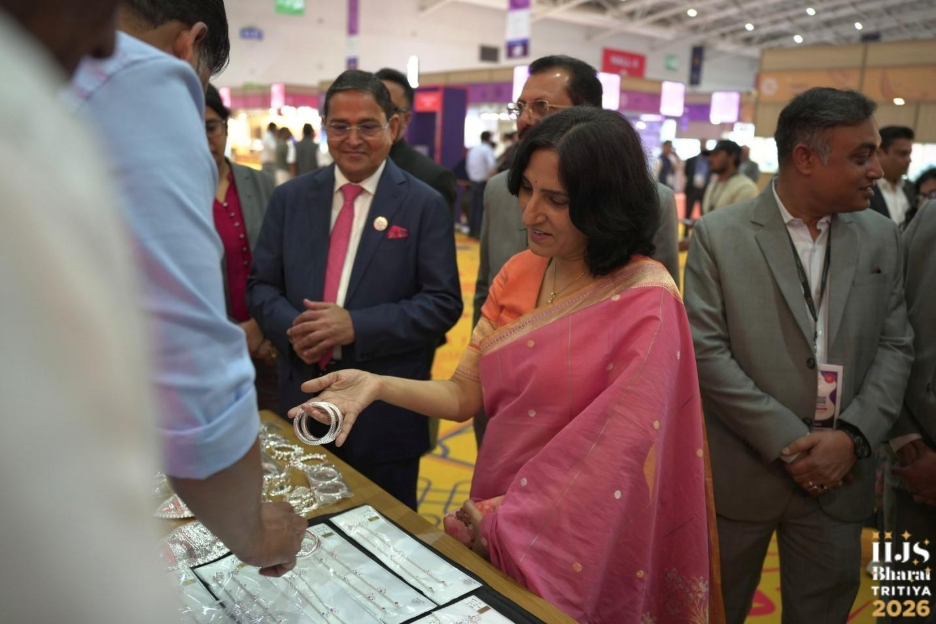
Appreciating the GJEPC initiative for the special “Crafts Pavilion – The GI-tagged Jewellery”, Chief Guest Smt Gunjan Krishna, IAS, Commissioner for Industrial Development & Director of Industries & Commerce, spent considerable time conversing with the national award-winning artists.
In her exclusive interview with Solitaire International, she expressed her opinion on the initiative to promote GI-tagged jewellery crafts.
“India has immense diversity to offer. Every region has its own distinctive jewellery traditions—and this diversity is our strength. I feel the world has not yet been fully exposed to this diversity.
We should consider bringing this heritage together, perhaps through museums, and curated platforms, and catalogues that showcase India’s craftsmanship to the world – and of course, showcase our craftsmen, too. They deserve recognition. While they are already doing commendable work, we need to acknowledge and promote them even more.
While we are known globally for cutting and polishing diamonds—holding a dominant share—we must also focus on value addition and branded jewellery.
We should aspire to build strong global brands from India. There are encouraging examples already in India—designers and brands that are gaining recognition. We must scale these efforts and take them to global markets. The private sector needs to take the lead in creating larger, aspirational brands—ones that appeal not only to consumers in India, where jewellery already holds deep cultural value, but also to audiences across the globe.
We should also work towards securing more GI recognition. GJEPC’s initiative, where GI crafts from across India are being identified and presented to the world, is a step in the right direction.
We should also consider having a strong global brand ambassador to represent Indian jewellery, because a powerful ambassador can effectively communicate what we stand for. Such efforts can play an important role in taking our jewellery to the international stage.
India already enjoys global stature in diamonds and several other segments of the industry, but the next step is to move towards higher value addition and stronger brand presence worldwide.”