
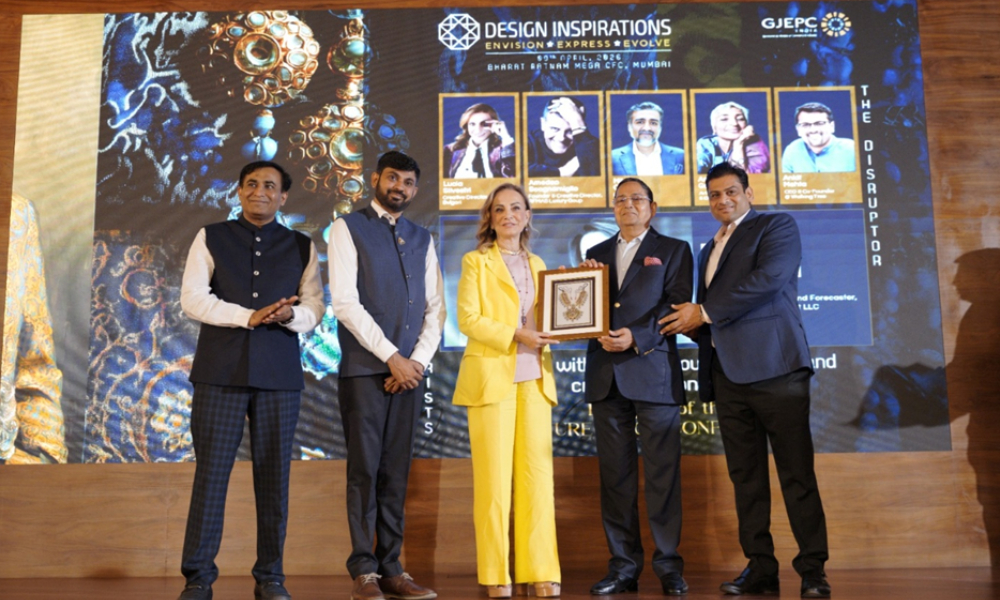
At Design Inspirations in Mumbai, GJEPC placed design at the centre of industry dialogue, as jewellery moves beyond product into narrative, identity, and consumer-driven relevance.
GJEPC convened Design Inspirations, the knowledge and trend-forecasting platform focused on the future of jewellery design, at Bharat Ratnam Mega CFC in Mumbai on 9th April 2026. The daylong conference brought together more than 220 attendees including global creative icons, strategists, industry leaders, and students to decode how jewellery design is evolving across culture, technology, and consumer behaviour.
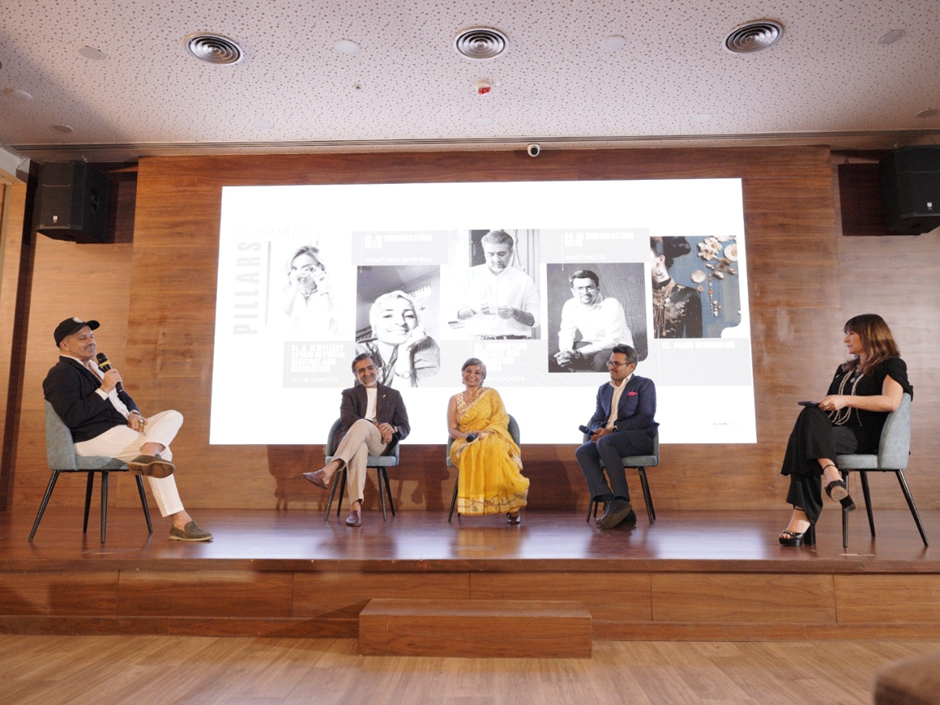
The distinguished speaker line-up brought together some of the most influential global and Indian design voices, including Lucia Silvestri, Creative Director, Bvlgari; Amedeo Scognamiglio, Founder & Creative Director, RFMAS Group; Dr. Annapurna Garimella, Art Historian & Designer; Milan Chokshi, Founder, Moksh; and Ankit Mehta, Co-founder & CEO, Walking Tree.
The conference was curated by Paola De Luca, Creative Director & Trend Forecaster, Founder of The Futurist and Co-founder, Trendvision Jewellery + Forecasting, who shaped the thematic direction and anchored the day’s discussions.
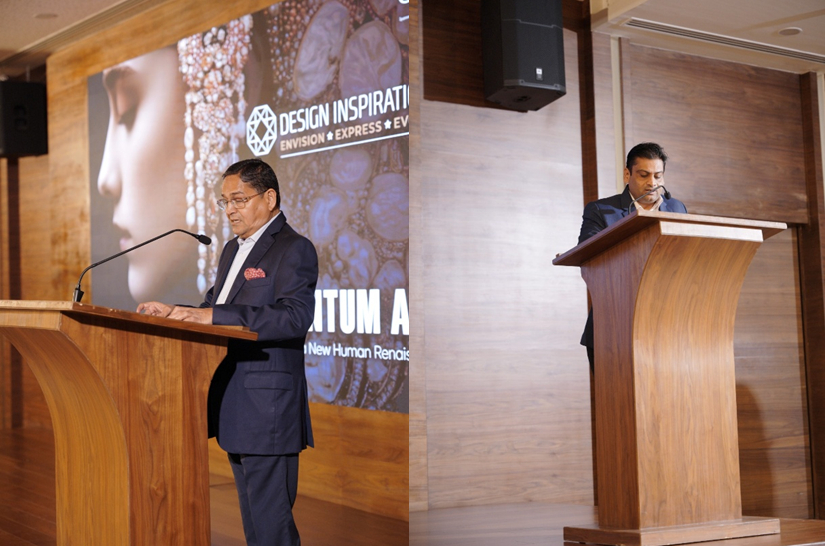
The GJEPC leadership present included Kirit Bhansali, Chairman, GJEPC; Jayanti Savaliya, Regional Chairman – Gujarat, GJEPC; Ashish Borda, Convener – Promotions & Marketing, GJEPC; and Mital Doshi, Member – Diamond Panel, GJEPC.
Speaking about the growing importance of design, Kirit Bhansali, Chairman, GJEPC, said, “The global jewellery landscape is evolving rapidly. Consumers today are more aware, markets are more diverse, and value is no longer defined only by material, but by design, meaning, and relevance. In this environment, design is no longer a differentiator; it is a necessity. India has long been recognised for its manufacturing excellence, but we are now clearly moving towards becoming a design-led industry, creating products that are not just made in India, but relevant across global markets.”
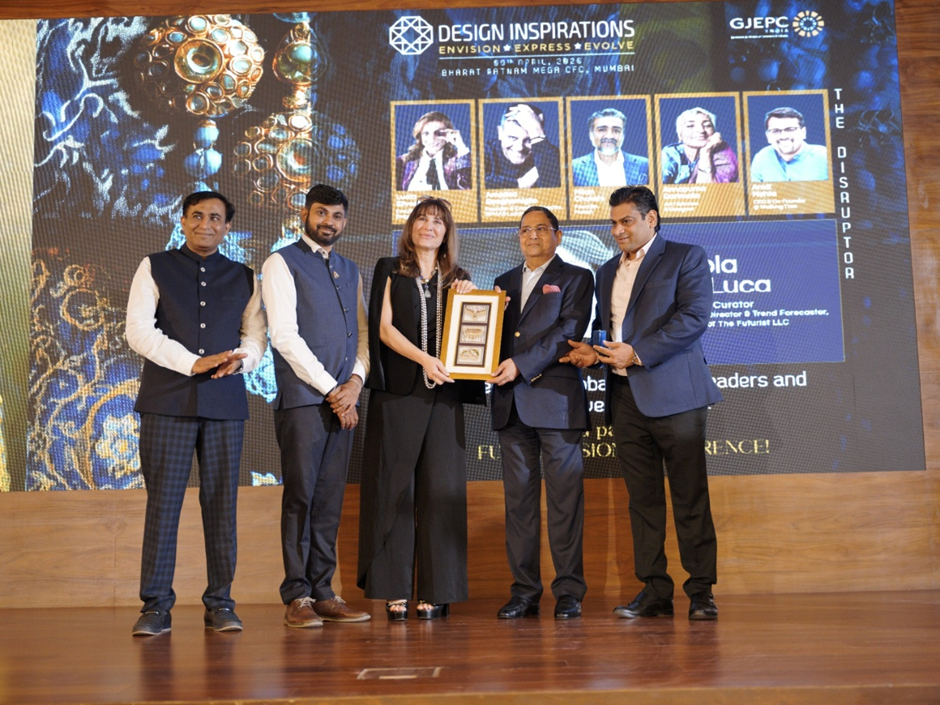
In her keynote address, Paola De Luca framed the present as the “Quantum Age”, a period defined not just by transformation, but by leaps. Change, she noted, is no longer linear or gradual; it is sudden, non-linear, and disruptive, driven by geopolitical shifts, rising gold prices, and rapid technological acceleration. This “leaping” dynamic is reshaping how the industry thinks, designs, and responds.
De Luca positioned India at the centre of this shift, arguing that its combination of heritage, craftsmanship, and advancing technology places it in a strong position to leap ahead within the emerging Global South. At the same time, she expanded the definition of design, moving it beyond product creation to design thinking, where storytelling, vision, and the ability to imagine and sell an idea become central. AI, in this context, acts as “augmented imagination”, enabling creators to translate thought into reality, but only when paired with human intelligence and emotional depth.
Lucia Silvestri shifted the lens inward. Her process starts not on paper, but at the gem table. Stones are not selected, they are “read”. Imperfections become identity. Collections take years, not seasons. She spoke about instinct, restraint, and the discipline of evolution; building new expressions without diluting a brand’s core codes.
She also said that building a brand identity requires a strong design DNA; it is about authenticity and staying true to the company’s vision. “Don’t copy yourself—be contemporary.”
Dr. Annapurna Garimella brought structural clarity. Design cannot sit apart from making. “In doing, thinking happens,” she noted, adding, “Research is important, and so is material. Don’t devalue the resource or material you are working with as everything has energy. So research, material engagement and documentation must work as a single system.” She flagged a critical gap – India’s weak archiving culture – and positioned documentation as intellectual capital, not an afterthought. Her advice was straightforward: undervalue the craftsperson, and the system weakens at its core.
Milan Chokshi cut through conventional definitions of luxury. “Luxury is quiet and handmade jewellery is almost sacred. The future lies in the imperfection of human touch,” he stressed. Excess is losing ground, meaning is gaining ground. He pushed for a reset: strip away inherited, colonial ideas of opulence and rebuild around restraint, material honesty, and the human hand. His position was clear: India does not need validation from global markets; it needs clarity in its own voice.
The panel discussion intensified the debate. Jewellery is no longer competing only within its category. It now sits alongside wellness, travel, and lifestyle experiences for consumer attention. That changes the brief. Design must carry emotion, identity, and relevance. Execution emerged as the weak link; ideas are abundant, but disciplined delivery remains uneven. The panel also drew a firm line between brands and manufacturers, arguing that both roles are critical but require distinct strategies.
The afternoon session focused on future tools and shifting formats. Amedeo Scognamiglio spoke about evolution as survival, urging designers to carve out niche identities rather than dilute themselves in crowded markets. Sell the idea, not just the object. Build a universe around it.
Ankit Mehta stressed that India has an incredible pool of talent, but the real question is how creativity can harness innovation and technology to deliver fresh, relevant ideas to consumers. “I believe it’s equally important to bring in perspectives from across artistic disciplines—diverse inputs often lead to more compelling and layered collections. To me, luxury is about excellence in every aspect.” Mehta also emphasised that India already has strong technological support, with Bharat Ratnam – Mega CFC offering some of the most advanced tools available globally. The resources are in place—what’s needed now is greater discipline and sharper execution of ideas.
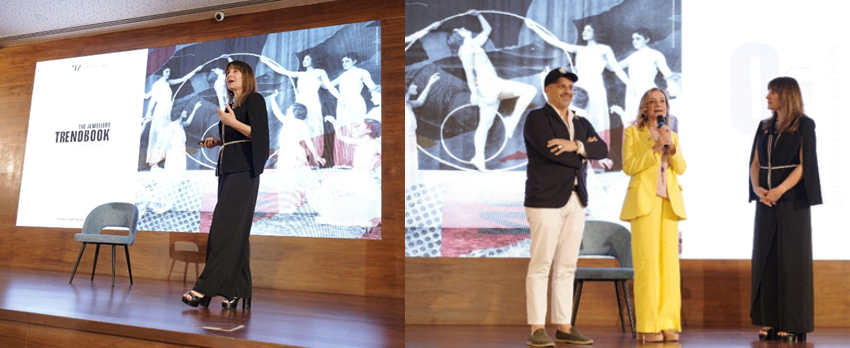
De Luca returned with the Trendbook 2027+, mapping clear directional shifts: modular as well as stackable jewellery, fluid forms, hybrid materials, and a wardrobe approach to styling. Pieces will be lighter, transformable, and layered. Colour will expand beyond convention. Even diamonds will move toward unusual cuts as differentiation becomes essential.
By the end of the day, the message had sharpened, and a recurring thread ran through the closing discussions: Technology will accelerate design, but not replace authorship.
- AI is a place to start a concept, not where it should land. It can extend imagination, but it cannot replace authenticity. The new luxury in jewellery is defined by authentic emotion, amplified by technology.
- Storytelling, when stripped of personal truth, collapses. When rooted in lived experience, it becomes the product.
- Jewellery is shifting from object to idea, from asset to expression.
The next phase will not be defined by scale alone, but by clarity of thought, strength of narrative, and the ability to translate both into design that holds meaning.