
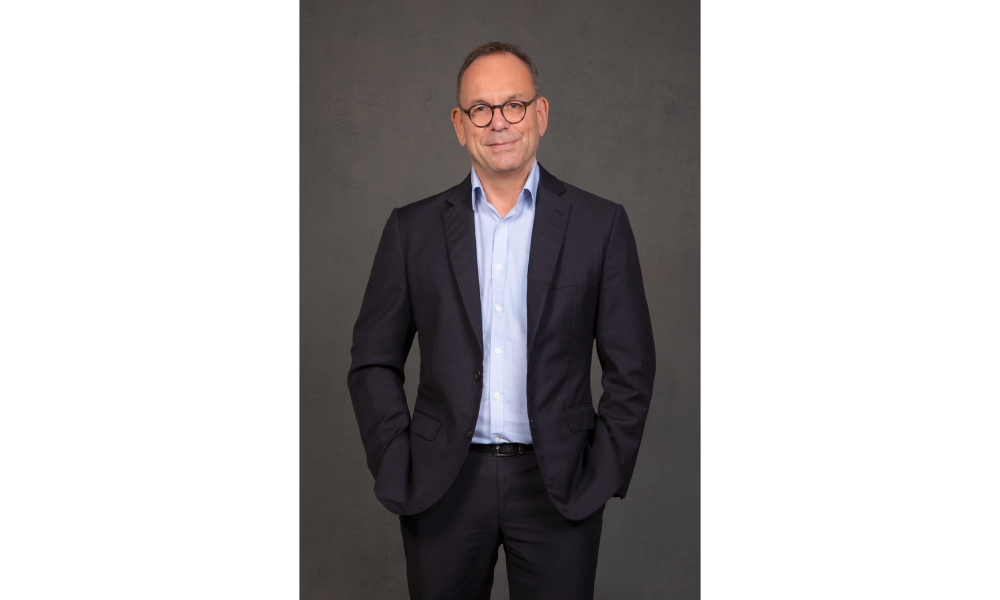
Meet Nicolas Chrétien, the creator of World Diamond Day, an initiative reshaping the narrative around diamonds, shifting from legacy perceptions to a more future-facing, tech-driven and responsible vision of luxury.
What prompted you to create World Diamond Day. What gap were you trying to fill?
Over the past two decades, the diamond industry has gradually lost narrative clarity. Communication became fragmented, unity weakened, and a broader marketing malaise emerged, one that remained largely unaddressed. World Diamond Day was created to respond to that gap by restoring meaning, coherence, and a unified voice across the industry, built around a simple idea.
Was there a specific moment or trigger that made you feel the industry needed a unifying global day?
The idea of World Diamond Day is not new to me. Fifteen years ago, I first introduced this concept through the World Diamond Mark, a not-for-profit organisation, initiated through the World Federation of Diamond Bourses (WFDB), to promote natural diamonds and to become the marketing arm of the industry. In many ways, it was a precursor to what the Natural Diamond Council (NDC) represents today, although it did not endure.
Because I was convinced it was the right direction, I revisited the idea again in 2018, but without success. It was only a year ago, through my new initiative, the World Diamond Heritage Board, that I decided to make it happen with or without the support of the industry. So there wasn’t a single defining moment, but rather a long-standing conviction that a unifying global day is essential for the industry, a belief I have carried for nearly two decades.
Why did you choose to gift the rights to NDC instead of retaining them?
It was, above all, the right decision for the industry. Perhaps not the most advantageous for me personally, but clearly the right one for the industry as a whole.
As Jeffrey Fischer, former President of IDMA, wrote to me the day after the announcement: “That attitude of prioritising the industry over parochialism and self-interest is refreshing and sadly quite rare.”
The NDC is the natural home for World Diamond Day. If we believe that the NDC is, and must be, the leading voice of the industry, then it is where such a global initiative belongs. I fully support that direction.
Was that decision more philosophical or strategic?
It was both ethical and strategic.
After a full year of work, more than 1,000 hours invested in building World Diamond Day, I had a campaign ready to launch. And yet, I chose to hand over what was, in many ways, my “baby.” It was a very difficult decision. To be honest, I spent many nights thinking about it.
The decision was ethical because, if you genuinely want to do what is right for the diamond industry, then this is the right path. It was also strategic, because placing World Diamond Day within an organisation capable of scaling it globally was the best way to ensure its growth. What was achieved in this first edition would likely have taken me two or three years to accomplish on my own.
What role did you envision the NDC playing in scaling World Diamond Day?
World Diamond Day has likely been one of the most impactful campaigns led by the NDC since its inception, celebrated across more than 50 countries, and delivered at an extremely low cost.
The role of the NDC is clear: to act as the guardian of the World Diamond Day spirit, while providing the global structure, coordination, and amplification needed to transform the initiative into a long-term, internationally recognised movement.
In that sense, it is comparable to initiatives like Earth Hour, a global movement organised by the World Wide Fund for Nature (WWF), which has become one of the largest grassroots environmental campaigns, uniting millions of people across more than 180 countries.
More fundamentally, the role of the NDC is also to use it as a platform to unify the entire industry around one shared annual moment. To achieve this, the creation of a representative World Diamond Day board inviting key stakeholders is a strong, relevant direction.
Do you see it primarily as a consumer-facing initiative, or as a way to align the industry internally?
It is both. Internally, it aligns the industry. Externally, it reconnects consumers with the emotional meaning of natural diamonds, thus bridging these two dimensions.
For the industry, it is a powerful platform to support and structure funding for the NDC around a clear initiative. It becomes a movement that stakeholders can actively support, with a direct understanding of its purpose and impact. It can also act as a strong accelerator for industry funding. When partners clearly see where their contribution goes, and the global impact it generates, they are far more inclined to engage and support it.
It is also a consumer-facing initiative, less visible in this first edition, but clearly designed to grow in that direction in the years to come. More fundamentally, it operates as a three-level strategy: industry, teams, and consumers.
At the industry level, it creates alignment and unity.
At the team level, it engages staff by inviting them to participate, sharing their own stories and becoming part of the movement. Once teams are genuinely involved, it naturally evolves into a powerful consumer-facing celebration.
World Diamond Day 2027 will be a more consumer-facing celebration.
How do you ensure it doesn’t become just another marketing moment, but builds long-term value for natural diamonds?
This is the fundamental question.
By keeping the focus on meaning, not promotion. World Diamond Day is not about selling or artificial marketing, it is about stories, transmission, and human connection. That is what creates long-term value.
To achieve this, a clear vision and mission are essential. World Diamond Day is the moment we pause to honour the story behind every natural diamond. It is not about what a diamond is, it is about what it means.
They carry memory. They endure. And so do we. In a world that forgets, they remind us what makes us human.
World Diamond Day positions natural diamonds not as products, but as enduring symbols of human meaning in an increasingly artificial world. Natural diamonds are witnesses to time, to life, and to human stories.
In the context of synthetic diamonds, what role can World Diamond Day play in reinforcing the identity of natural diamonds?
I see a strong future for synthetic diamonds in the jewellery industry over the next decade, despite some who expect their decline.
World Diamond Day can play a fundamental role, not by opposing, but by clarifying—by helping each category express its true nature, its meaning, and its place.
That said, I want to remain focused: for me, the future of the natural diamond industry will not be found in responding to the LGD industry. Natural diamonds are not defined by comparison. They are defined by what they carry: time, rarity, transmission, and human history.
What is the single most important message World Diamond Day should communicate globally?
Diamonds are not products. They are human stories. World Diamond Day reminds us what makes us human.
What would success look like for this annual event over the next 5–10 years?
Success will be to see World Diamond Day become the largest celebration of its kind, mobilising the entire industry across every step of the value chain, with hundreds of thousands of celebration points worldwide. But this is only the visible part of success.
In five to ten years, in a world defined by speed, synthetic replication, digital fatigue, artificial intelligence, and growing human disconnection—especially among Generations Y, Z, and Alpha—World Diamond Day will reveal its full meaning and power.
Ultimately, success will be to transform this moment into the strongest global celebration, where diamonds become a universal symbol and voice, not only of luxury, but of meaning and human connection. A voice that says:
Choose Love.
Choose Real.
Choose Time.
Choose Imperfection.
Choose Origin.
Choose Legacy.
Stay human. This is what success for World Diamond Day should look like in the next 5 to 10 years.
If you could change one thing about how the diamond industry communicates today, what would it be?
Before even discussing how to communicate, I would question why we communicate and give ourselves a clear reason to speak.
Today, every organisation feels responsible for communicating with consumers—often in isolation, and sometimes without clarity or consistency. The result is a fragmented narrative that weakens the overall message.
What we need is not more communication, but better alignment.
In this context, the NDC has a critical role to play in driving this alignment and helping the industry move toward a more unified and coherent narrative. There is still a clear opportunity to strengthen unity.
Looking back, what has creating (and then letting go of) World Diamond Day taught you about influence versus ownership?
It is a very interesting question.
The simplest answer would be that influence creates scale, while ownership can sometimes limit it. But behind that lies something deeper: the personality of the person behind each initiative.
In our industry, I see many people taking the stage, expressing opinions, and asserting strong views. My approach is different. I am more comfortable working behind the scenes, thinking, imagining, and exploring solutions, then sharing them in the right moments, with the right people.
My influence lies in my ideas. For me, influence is not about visibility or ownership. It is about the ability to shape ideas, to create movement, and to let them grow beyond you with people who understand and value the work that has been done.
My humble story simply reflects that the industry must be more open, open to new ideas, to experimentation, and to outsiders. Because the greatest threats to any industry are not external competition, but internal closure.