
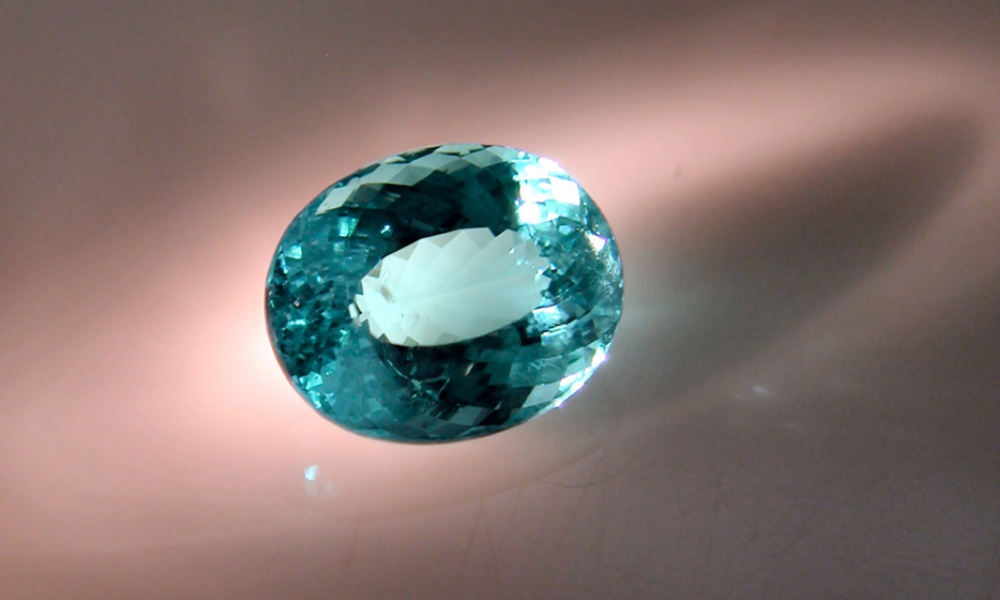
IIGJ Lab, a project of the GJEPC, has introduced origin determination services for Paraiba tourmalines, extending its portfolio beyond emeralds, rubies and sapphires (blue and pink), which were added in December 2025. The move aligns with rising demand for traceability and scientific certification in coloured gemstones.
Paraiba tourmaline refers to copper- and manganese-bearing stones in electric blue, neon blue, violet blue, bluish green to greenish blue, green and yellowish green shades. While the name originates from Paraiba in Brazil, the term is now used for stones of similar composition and colour regardless of origin. Major commercial sources include Brazil, Mozambique and Nigeria.
The lab will determine probable origin using advanced analytical methods such as chemical composition analysis, spectroscopy and inclusion studies, reinforcing its positioning as a standards-aligned certification facility serving evolving industry requirements.
Alongside the new service, IIGJ Lab has revised nomenclature protocols. Only stones within the defined blue-to-green colour range and coloured by copper and manganese will be classified as ‘Paraiba’. Stones in other colours, such as pink or purple, will not carry the Paraiba variety name, though the presence of copper and manganese will be disclosed in report comments.
Certification Fees (inclusive of GST):
- Single Stones (per stone)
- Up to 10.00 ct: ₹3,000 (GJEPC members), ₹3,500 (non-members)
- Above 10.00 ct: ₹4,000 (members), ₹4,500 (non-members)
- Packet Lots (minimum size: 1 ct)
- 5–15 pieces: ₹2,500 (members), ₹3,000 (non-members)
- 16–49 pieces: ₹2,200 (members), ₹2,700 (non-members)
- 50 or more: ₹1,800 (members), ₹2,300 (non-members)
- Bead Strings (per 10 cm)
- Minimum bead size: 4 mm: ₹15,000 (members), ₹18,000 (non-members)
- Results based on 25% sampling of pieces
- Minimum chargeable length: 10 cm
Existing discount schemes for CDC and association members will continue to apply.