
While rare gems and precious metals remain the traditional pillars of high jewellery, it is seasoned craftsmanship that truly defines the signature identity of marquee brands. To prove it, globally renowned and modern jewellers are taking bold steps — looking beyond the mines and finding aesthetic and material potential in industrial waste, fractured stones, and discarded electronics. By transforming them into objects of desire, they are challenging the traditional methods of the jewellery industry, encouraging a future where luxury can be created with pure creativity and conscious innovation.
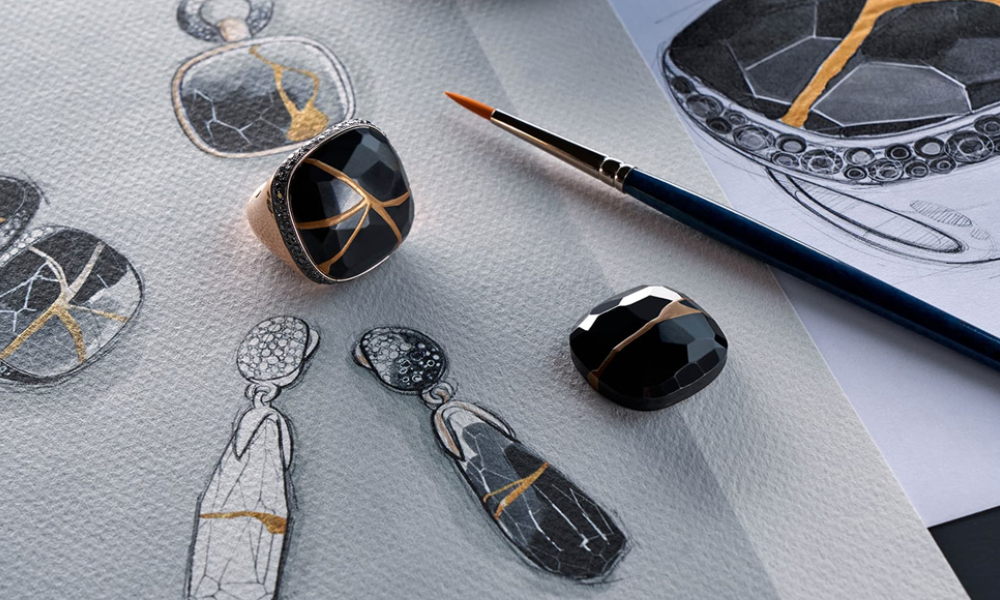
Pomellato Kintsugi Collection: Italian jewellery house Pomellato found inspiration in ancient Japanese philosophy to address the issue of material waste and convert it into wearable art. During the cutting and polishing processes, gems and stones can sometimes fracture, making them unsuitable for fine or high jewellery. However, Vincenzo Castaldo, creative director of Pomellato challenged this idea with the Kintsugi collection. The main ingredient in this collection are fractured gemstones that are given a renewed identity using 15th-century Japanese art of Kintsugi, an art form that heals broken ceramics with gold lacquer.
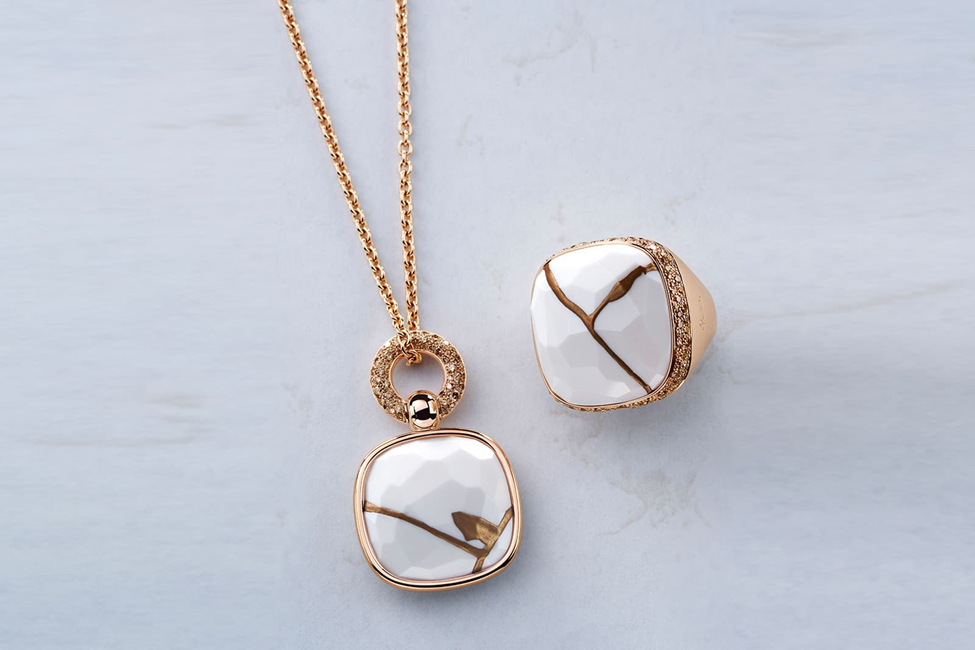
To materialise this unique vision, Pomellato collaborated with a Tokyo-based Kintsugi master to reassemble and repair damaged Kacholong stones (volcanic-origin stone that is a form of common opal) using gold resin to highlight, rather than conceal their structural breaks and celebrate the stone’s life journey.
Pomellato even priced this collection in the premium range. While Pomellato’s core Nudo and Iconica collections have an entry price between $2,500 and $5,000, the Kintsugi collection is priced in the high-jewellery range between $10,000 – $18,000. Through this strategic pricing, Pomellato aims to indicate that in the modern luxury market, bespoke artistic intervention and sustainability can command higher valuations than traditional jewellery made with flawless gems.
The Royal Mint’s 886: UK’s Royal Mint 886 is a contemporary jewellery line that uses gold recovered from discarded electronics. At its South Wales facility, the Royal Mint processes circuit boards from discarded laptops, mobile phones and other electronics to recover gold and silver. A patented chemical technology, developed with a clean-tech partner, is used to separate high-purity metals from electronics. The process operates at relatively low temperatures and requires far less energy than traditional gold and silver extraction.
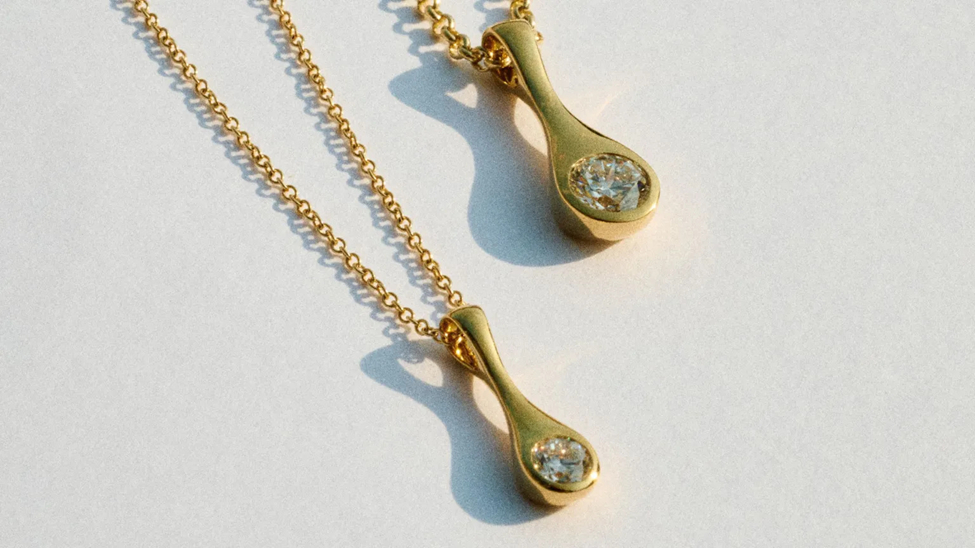
Royal Mint introduced its first dedicated engagement and bridal collection in late 2025. The range includes wedding bands, engagement rings, earrings, bracelets and necklaces crafted in 18-karat gold and sterling silver. The line also features a Teardrop design series, alongside classic solitaire and diamond engagement rings set with either lab-grown or natural diamonds. Each piece reflects the brand’s sustainable focus by reinterpreting traditional bridal jewellery with recycled precious metals.
The pricing for the 886 collection is transparent and linked to the weight of the metal. Sterling silver pieces start at £145. An 18-karat gold band ring is priced at approximately £1,795, while heavier cuffs and bangles can reach £5,995.
Courbet Urban Gold: Located in Paris’ iconic Place Vendôme, this French jewellery house was founded with a commitment to sustainability. Courbet uses only recycled ‘urban gold’; sourcing gold from electronic waste and existing jewellery. Courbet’s elaborate diamond-set rings, typically range upwards of $3,100, aligning the brand with the traditional jewellery boutiques that surround them at the Place Vendôme.
Boucheron high jewellery with Cofalit: Parisian high jewellery house Boucheron experimented with an unusual material called Cofalit, a glass-like substance created from the industrial treatment of hazardous waste such as asbestos. When this waste is exposed to extremely high temperatures, it melts and solidifies into a stable, black material.
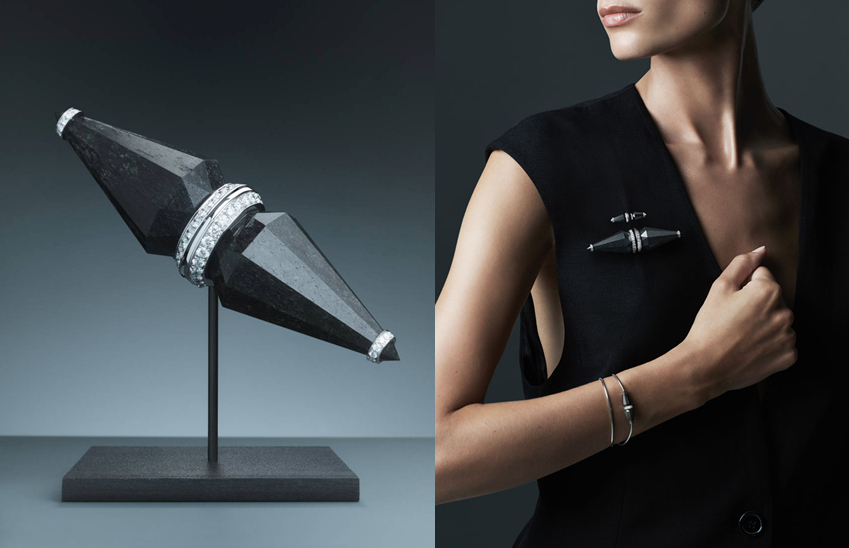
Cofalit is typically used in construction, such as road foundations or infrastructural fills. By introducing it into high jewellery, Boucheron reimagined an industrial by-product as a decorative gemstone-like material.
Claire Choisne, creative director of Boucheron introduced Cofalit in the Jack de Boucheron Ultime capsule collection. The material is cut and polished to achieve a deep black, mirror-like finish stone similar to Onyx. The Cofalit elements are then set in 18-karat gold, transforming an industrial residue into a high-jewellery material. Despite their unconventional origin, the pieces were priced around traditional high-jewellery, underscoring that their value was defined by craftsmanship, design and innovation rather than the intrinsic cost of the material.