
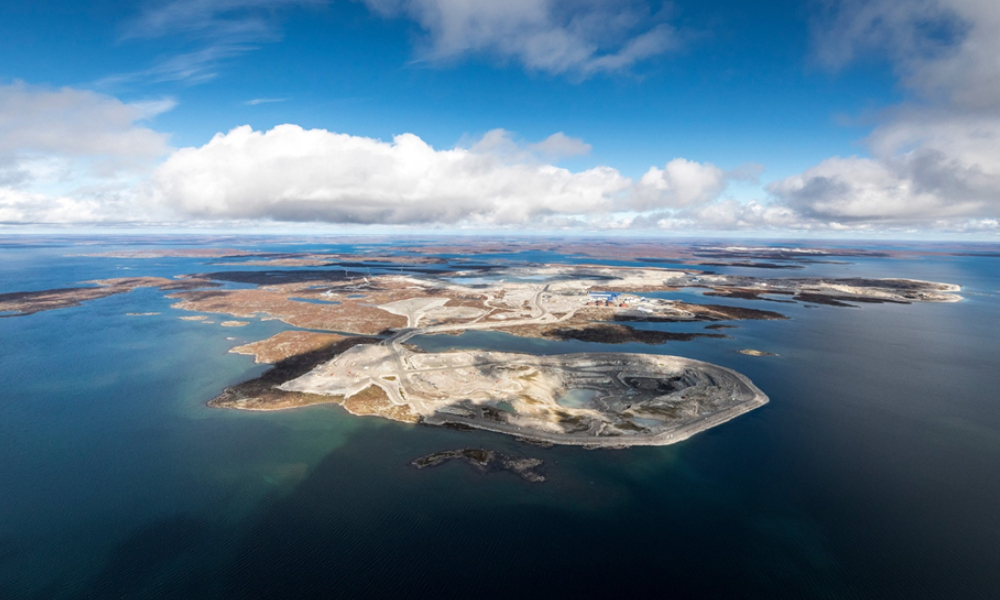
Rio Tinto has marked the final day of production at its Diavik diamond mine in Canada’s Northwest Territories, concluding 23 years of operations that produced more than 150 million carats of rough diamonds.
Rio Tinto Iron & Titanium and Diamonds Managing Director Sophie Bergeron said: “Forty years ago there were very few people who believed there were diamonds in Canada – even fewer could have foreseen how the Diavik story would unfold. To arrive at this milestone has required vision, courage and determination to overcome significant challenges to mine diamonds beneath a frozen lake in one of the world’s most remote and pristine ecosystems.”
She added: “Today, Diavik’s influence stretches into many spheres and over many continents and I am very proud to acknowledge all those people who have contributed to the discovery and development of the mine and the production and marketing of some of the finest diamonds the world has ever seen.”
Discovered in 1991 beneath Lac de Gras, around 220 kilometres south of the Arctic Circle, the Diavik mine began production in 2003. The operation, comprising four kimberlite pipes, used both open-pit and underground mining methods to produce predominantly white gem-quality diamonds, along with a small proportion of rare yellow stones.
Indigenous government organisations, government representatives and other stakeholders attended a ceremony at the mine to mark the completion of production.
Diavik Chief Operating Officer Matthew Breen said: “This is an historic day for Diavik and the Northwest Territories and a great source of pride for this unique Canadian success story. Diavik has been an inspired collaboration between a modern mining company and Indigenous partners with an enduring legacy of socioeconomic benefits for the North.”
He added: “We look forward to continuing to respectfully reclaim the land in line with our commitments to, and in partnership with, the Government of the Northwest Territories and Indigenous partners.”
Closure planning for Diavik began before production commenced, covering areas such as safety, land use, water, biodiversity and community development. Rehabilitation activities will continue through 2029, followed by a period of post-closure monitoring.
The mine’s final production of rough diamonds will be polished and sold through 2026 and beyond via Rio Tinto’s international network of customers, including its Select Diamantaires™.