

As consumers place greater value on meaning and self-expression, the unique characteristics of natural diamonds may be the industry’s greatest competitive advantage.
The rise of lab-grown diamonds is forcing the natural diamond industry to talk more about the product itself.
That means not only promoting the values natural diamonds represent or the good they do, but drawing attention to the characteristics of the stones themselves.
That may sound obvious, but it’s an aspect of the trade that faded over time.
Transparency improved dramatically over the past several decades. Grading reports became standard, price lists became indispensable, and advances in imaging technology enabled more diamonds to be traded online, both within the industry and directly to consumers.
Those developments have undoubtedly benefited the trade, giving buyers greater confidence and making the market more efficient. The unintended consequence, however, was that diamonds increasingly came to be bought and sold based on their specifications rather than their beauty. In many respects, the product became commoditised.
That appears to be changing, driven by two related developments: the rapid rise of lab-grown diamonds and a broader consumer shift toward authenticity and individuality.
The Rise of Uniformity
As technology improved, the lab-grown market has evolved into a highly standardised product category. The near-perfect diamond is no longer a rarity but the norm.
That shift became so pronounced that the Gemological Institute of America (GIA) overhauled its reporting system for lab-grown diamonds in 2025. Rather than applying the same colour and clarity nomenclature used for natural diamonds, it adopted a descriptive classification system that better reflects the consistency of lab-grown production.
When perfection becomes the norm, consumers begin looking for something different. They seek individuality, distinctive characteristics and products that express their personality.
Ironically, the rise of lab-grown diamonds may be prompting the natural diamond industry to rediscover one of its greatest strengths. As one product becomes increasingly uniform, the individuality of the other has become a far more compelling point of difference.
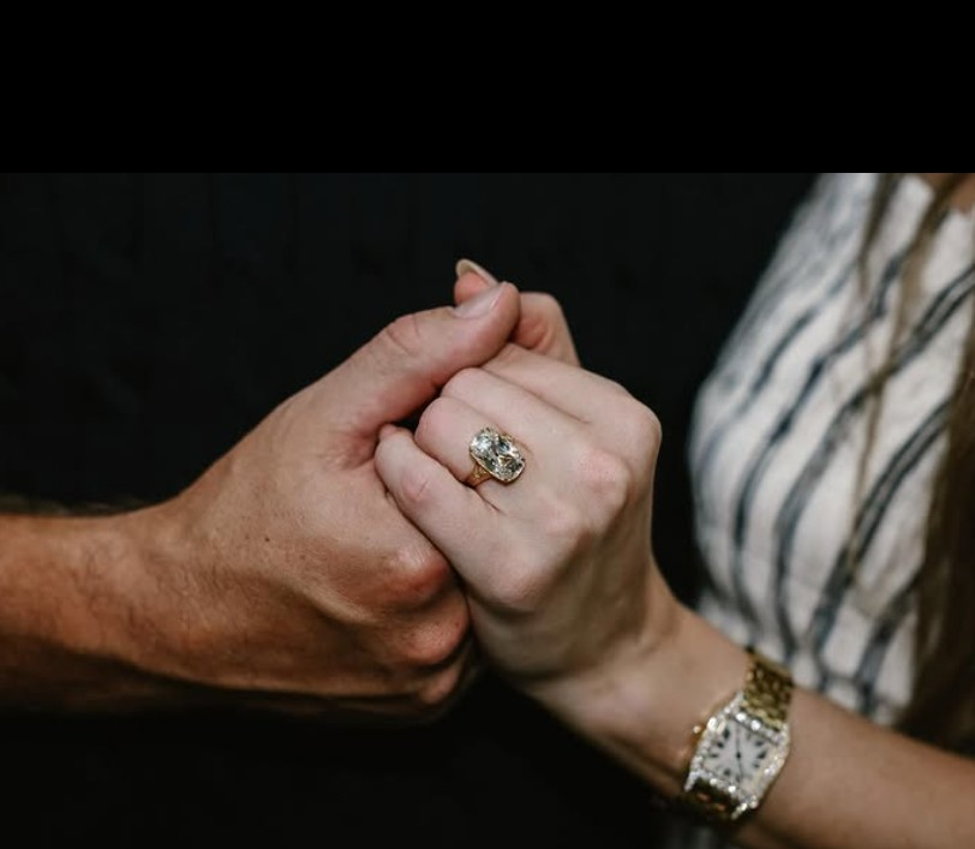
One of jewellery’s defining pop culture moments of 2025 reflected that shift. Taylor Swift’s engagement to Travis Kelce put an antique-style yellow diamond ring in the spotlight, challenging conventional ideas of the “perfect” engagement diamond and fuelling renewed interest in vintage cuts and diamonds with character.
That’s where natural diamonds have a compelling advantage, which one hopes that dealers and jewellers are recognising. Part of that lies in the history, journey and legacy that accompany a natural diamond. The rest lies in celebrating the physical uniqueness of each stone, an aspect of the product that has arguably been overshadowed by the rise of grading reports and online trading.
No two natural diamonds are exactly alike. Each has its own combination of inclusions, growth patterns and optical characteristics. Similarly, no two people are identical. In a market where consumers increasingly value authenticity and self-expression, that individuality becomes an important differentiator.
The Value of Individuality
That emphasis on individuality comes at an opportune time. Consumers are increasingly seeking products that feel authentic, distinctive and reflective of their own identity.
As Bain & Company observed in its Spring 2026 Luxury Goods Worldwide Market Study, “Consumers are not stepping back from luxury. They are stepping forward into a new relationship with it, one defined by meaning, not just by product.”
Natural diamonds appear well-positioned to respond to that shift. Research by De Beers found that 76% of consumers agree that natural diamonds are a symbol of authenticity and sincerity, concluding that “authenticity is becoming a premium in its own right.”
The challenge for the industry is to ensure that authenticity isn’t communicated only through provenance or storytelling. It also needs to be highlighted about the product itself.
De Beers is beginning to take that approach. Alongside its emphasis on origin, rarity, beauty and emotional significance for its Origin brand, the company is using its Desert Diamonds category marketing program to celebrate the natural characteristics of diamonds. By highlighting lower colours, including yellow, brown and pink hues, it is encouraging consumers to appreciate the individuality of each stone rather than viewing colour simply as a grading metric.
That, in turn, encourages a different conversation. Instead of focusing on grading reports or comparing price points with lab-grown diamonds, it puts the spotlight back on the diamond itself.
Sean Dunn, president of J.R. Dunn Jewelers, believes that shift is long overdue.
“We’re fortunate to be entering this new era of thinking about diamonds and reinventing the natural diamond business. We’re giving people something to talk about,” he said on a recent episode of my podcast. “You go back to old mine cuts or elongated cushions and all of a sudden you’re showing L, M, and N colours and talking about the diamond.”
That is a refreshing change, and one that hopefully gathers momentum. In a world where perfection has become normalised, the individuality of a natural diamond may prove to be its greatest strength. After all, people aren’t perfect either. Perhaps that’s precisely why they connect with products that celebrate uniqueness over uniformity.

Avi Krawitz is the Founder of ‘The Diamond Press’ and a leading content creator and consultant in the diamond industry. He is widely recognised for his insightful analysis and storytelling, offering clarity to both industry professionals and curious consumers navigating a complex and evolving market. See more of Avi’s work at www.thediamondpress.com
The views expressed in this article are those of the author and do not necessarily reflect the views of the GJEPC.