
Birmingham’s historic Jewellery Quarter is reinventing itself as a hub for bespoke jewellery, combining traditional craftsmanship with cutting-edge technology. By putting skilled makers, designers and manufacturers under one roof, the Quarter is reinforcing its place in the UK’s jewellery industry and proving that craftsmanship and customisation remain powerful competitive advantages.
The Birmingham Jewellery Quarter, a historic district in the centre of the English Midlands city, is ramping up the offering of handcrafted bespoke jewellery making services.
It’s a hub where retailers, manufacturers and designers work closely with skilled artisans to create bespoke jewellery for their customers. Combining traditional craftsmanship with modern technology, the Quarter is carving out a niche in an increasingly competitive market.
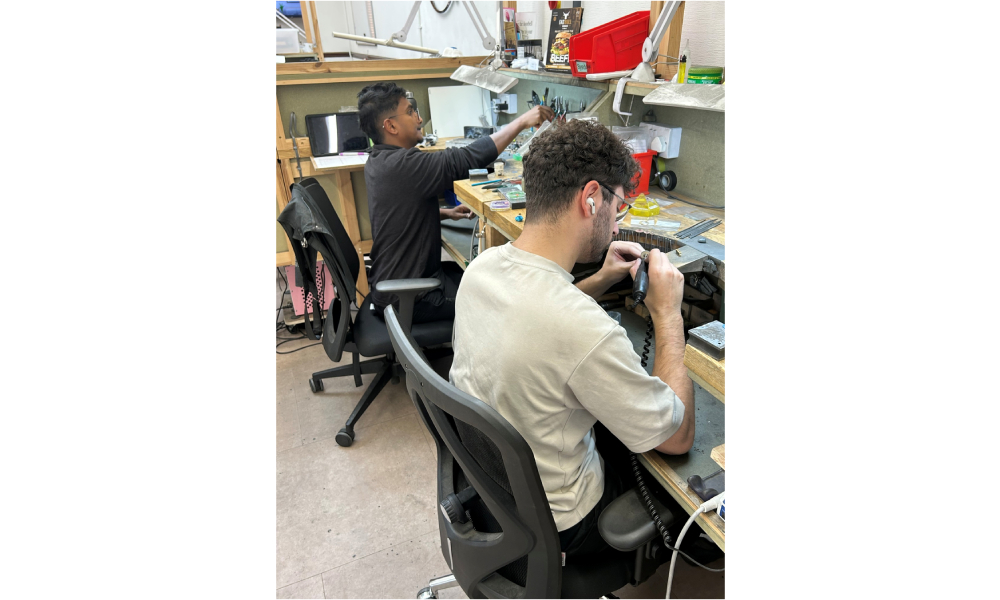
The Quarter has responded to fierce competition from low-cost, mainly Asian jewellery manufacturers by crafting custom-made jewellery for retailers backed by the latest machinery and technologies.
The Jewellery Quarter (JQ) is the long-established home of the UK’s top jewellery manufacturers, such as Weston Beamor, Hockley Mint, Charles Green and JewelCast, as well as companies that serve manufacturers, such as Pala Diamonds which supplies precision cut calibrated diamonds.
The Quarter abounds with medium-sized and smaller businesses including jewellery tool suppliers, craftspeople, wholesalers, independent retail shops and jewellery designers.
The district, characterised by many listed redbrick Victorian buildings, has its own Jewellery Quarter railway station, which brings in workers from residential suburbs in and around Birmingham.
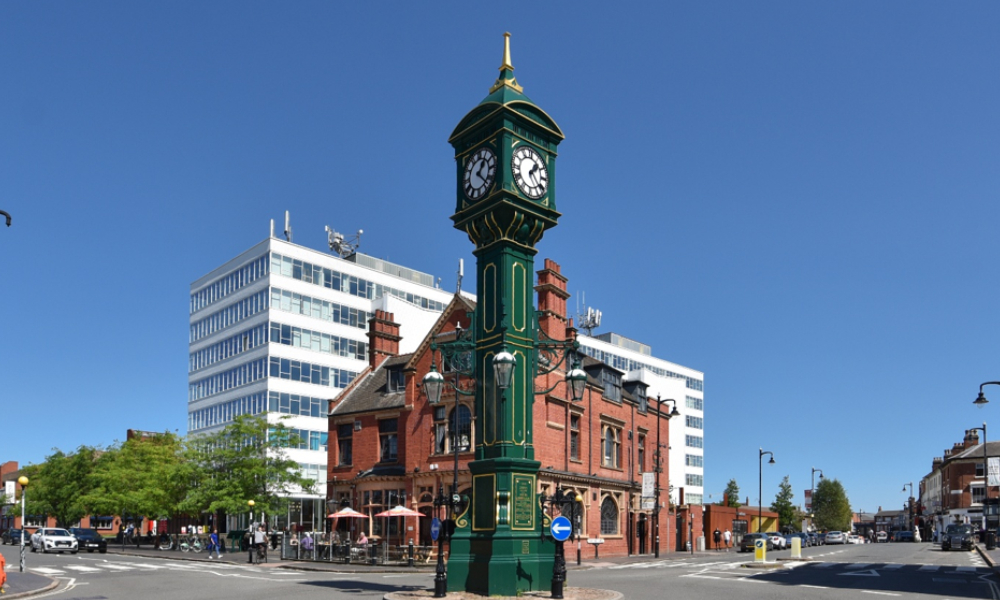
The focal point of the Quarter is the Chamberlain Clock, a landmark Edwardian cast-iron clock tower, erected in 1903, that is scrupulously maintained, standing at the intersection of Vyse Street and Warstone Lane, arteries along which many jewellery suppliers are based.
For Himesh Pala of Pala Diamonds, his RJC-certified company’s location in the Quarter facilitates high quality customer service.
“I can deliver product by hand to nearby clients in the Quarter, have a face-to-face chat and sometimes uncover new business opportunities,” Himesh, a member of the London Diamond Bourse, told Solitaire in one of the many coffee shops of the Quarter.
Along Vyse Street, the Museum of the Jewellery Quarter tells the story of Smith and Pepper, a gold jewellery manufacturing business which closed on the same site in 1981 with all the workshop benches and tools and administrative files left untouched, as well as torn decades-old workshop gowns.
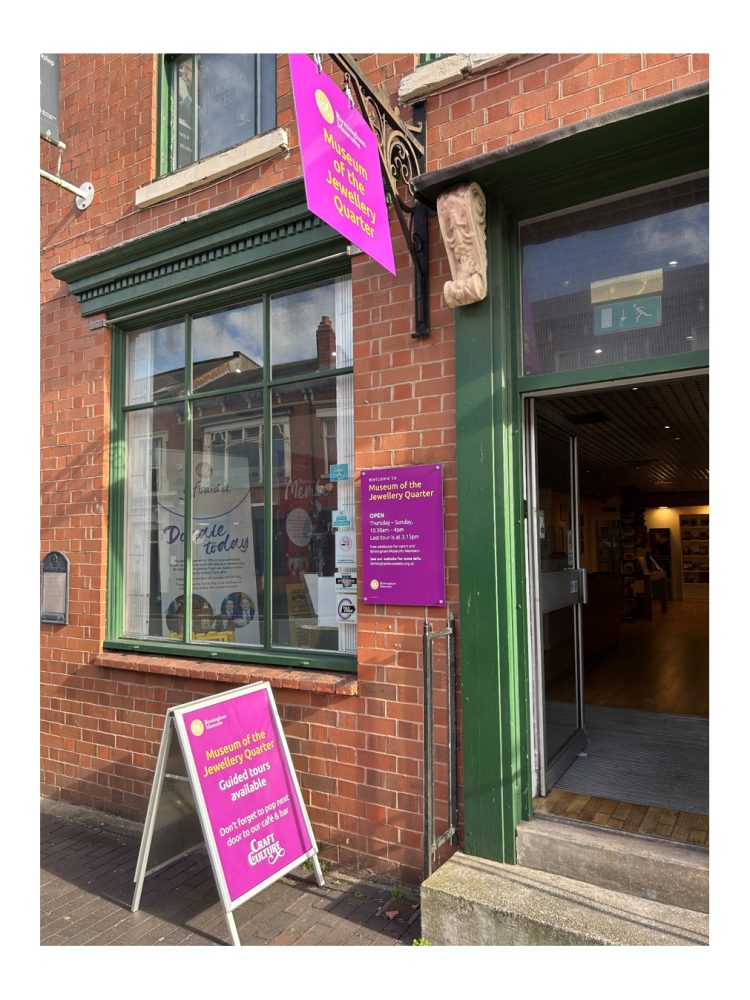
The family-owned business opened in 1899 and manufactured and exported gold jewellery items until it ran into competition from low-cost Asian manufacturers in the late 20th century.
The firm made a wide range of jewellery, notably swallow designs, and Egyptian style snake designs.
Despite the rivalry from more cheaply manufactured finished jewellery imports, the Birmingham Jewellery Quarter is steadily responding.
Today companies such as Bespoke Quarter, which create and deliver handcrafted fine jewellery to retailers, are examples of operations which meet the demand of a fast-changing bespoke retail marketplace, which caters to middle and higher income jewellery customers.
This service remains a small but growing portion of the total of jewellery items supplied to the UK market, much of which comes today from manufacturers in countries such as China, India and Thailand.
Andrew Cowley of Bespoke Quarter says business is growing for his colleagues, a team of expertly trained craftspeople working in an atelier in a historic building in the heart of the Quarter.
The much larger jewellery manufacturers such as Weston Beamor, apply state-of-the-art technologies, including the latest casting machinery, and skilled craftspeople working by hand, to create cutting-edge jewellery designs for retailers in the UK and overseas, many of them bespoke commissions.
At the other end of the supply chain, jewellery designers such as Anson Law of Harle Paris, are based in the Quarter so that they can liaise with local manufacturers to craft their design drawings into well-made items of jewellery for their bespoke clients.
“The Jewellery Quarter makes sense for me, as I can communicate easily with the manufacturers based here,” Anson told Solitaire in her showroom on Warstone Lane, a short walk from the district’s leading manufacturers.