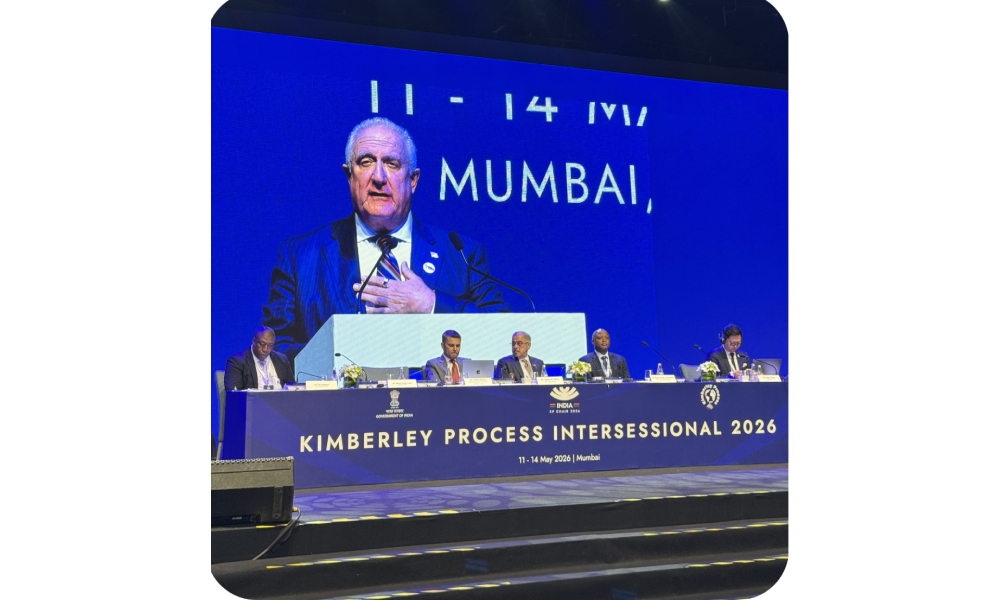
World Diamond Council President Ronnie VanderLinden closed the Kimberley Process Intersessional Meeting in Mumbai with a call for continued unity across the natural diamond trade after participants worked together to address major issues facing the organisation, including a funding challenge at the KP Secretariat.
“What we saw this week was the Kimberley Process at its best,” VanderLinden said in closing remarks delivered at the final Plenary session. “People from every part of this system came together under pressure, worked through difficult issues and found a path forward together. That matters.”
VanderLinden praised representatives from governments, industry and civil society for what he described as a constructive and collaborative week of discussions under India’s chairmanship.
“The Kimberley Process showed this week that when the integrity of this system is at stake, people are willing to step forward, work through differences and find solutions together,” he said.
VanderLinden highlighted the work undertaken to address a serious funding challenge facing the KP Secretariat, praising World Diamond Council Honorary President Feriel Zerouki and participants across the Kimberley Process for helping secure a path forward.
“This is the Kimberley Process in action,” VanderLinden said. “Industry, governments, and civil society working together to beat back challenges, write new policy, and make us stronger together.”
The WDC President also renewed calls for continued progress on reforming the Kimberley Process definition of conflict diamonds.
“We have proven this week that we can move at the speed of necessity,” he said. “Now, let us find the same courage and the same energy to update the very purpose of this body to make sure the definition of conflict reflects the reality of our times.”
VanderLinden praised India’s leadership of the meeting, saying the Chair’s “3Cs” vision of Confidence, Credibility and Compliance had helped shape the tone and direction of discussions throughout the week.
“The future of natural diamonds depends not only on what we produce, or what we trade, but on whether the world continues to believe in what natural diamonds represent,” VanderLinden said. “Let us leave Mumbai and continue our work together.”
The Kimberley Process Intersessional Meeting brought together representatives of governments, industry and civil society from around the world to discuss issues relating to the international trade in natural diamonds and the future direction of the Kimberley Process.
‘What We Saw this Week was the Kimberley Process at its Best,’ says WDC President at Close of Mumbai Intersessional