
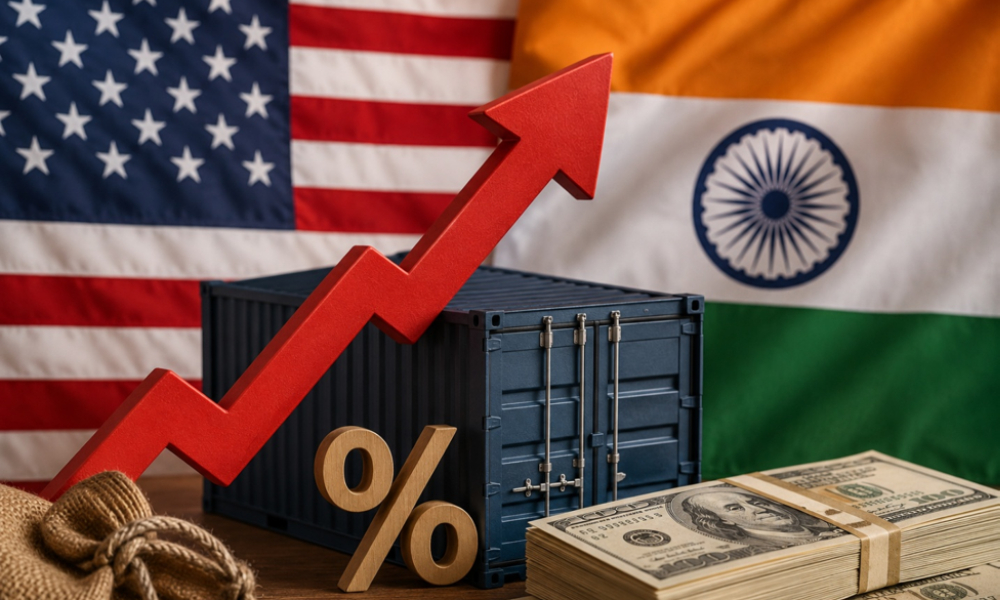
The United States has replaced its temporary Section 122 surcharge with a Section 301 tariff regime with no automatic lapse, maintaining a 10% additional duty on Indian exports, including natural diamonds, lab-grown diamonds, coloured gemstones and jewellery, from 24 July 2026.
The move follows the conclusion of the U.S. Trade Representative’s (USTR) Section 301 investigations into 60 economies over their implementation and enforcement of prohibitions on imports produced with forced labour. President Donald Trump signed a Presidential Memorandum on 23 July directing the new tariff structure, which came into effect at 12:01 a.m. EDT on 24 July.
For India’s gem and jewellery sector, the immediate tariff burden remains unchanged at 10%. However, the legal basis has shifted from the time-limited Section 122 balance-of-payments surcharge to Section 301 of the Trade Act, a measure with no statutory expiry and which may be modified or terminated by the Trade Representative, including under Section 307 of the Trade Act.
Despite this relative advantage, Indian exporters continue to face a significant competitive challenge.
Cut and polished natural diamonds, coloured gemstones and semi-precious stones, which previously entered the U.S. duty-free under MFN rates, will now attract a 10% Section 301 duty. Lab-grown diamonds and synthetic stones also face a 10% tariff. Jewellery exports will continue to attract the existing U.S. MFN duty of 5.5-6%, with the new 10% Section 301 tariff added on top, increasing the effective import duty to around 15.5-16%.
The Council highlighted another competitive disadvantage for Indian exporters. While natural diamonds, pearls and coloured stones classified under HS headings 7101, 7102 and 7103 are exempt from Section 301 duties for imports originating from the European Union (including Belgium), Switzerland and several other economies, India does not receive these exemptions. As a result, identical polished diamonds from the EU or Switzerland can enter the U.S. free of the additional tariff, whereas Indian-origin diamonds attract the full 10% duty. Neither lab-grown diamonds nor jewellery has been exempted for any economy.
Meanwhile, several major diamond-producing countries, including Botswana, Namibia, the Democratic Republic of the Congo, Zimbabwe, Sierra Leone, Liberia, Ghana, Tanzania and Mauritius, fall outside the Section 301 action altogether and are therefore not subject to these tariffs. However, goods that undergo substantial transformation in India are treated as Indian-origin products and continue to attract the 10% duty when exported to the U.S.
The transition from Section 122 to Section 301 has been structured to avoid any interruption or overlap. The Section 122 surcharge expired at exactly the same time the Section 301 tariffs took effect, ensuring there is neither a duty-free gap nor a period during which both measures apply simultaneously. Importers are now required to report Indian-origin goods under HTSUS heading 9903.05.44 instead of the previous Section 122 tariff heading.
The USTR has also provided a limited in-transit exemption for goods loaded onto vessels before the tariff took effect and entered for consumption before 12:01 a.m. EDT on 28 July. However, the exemption applies only to ocean freight. Air cargo, courier shipments and hand-carried consignments, which account for the overwhelming majority of India’s diamond and jewellery exports, do not qualify, limiting its practical benefit for the sector.