
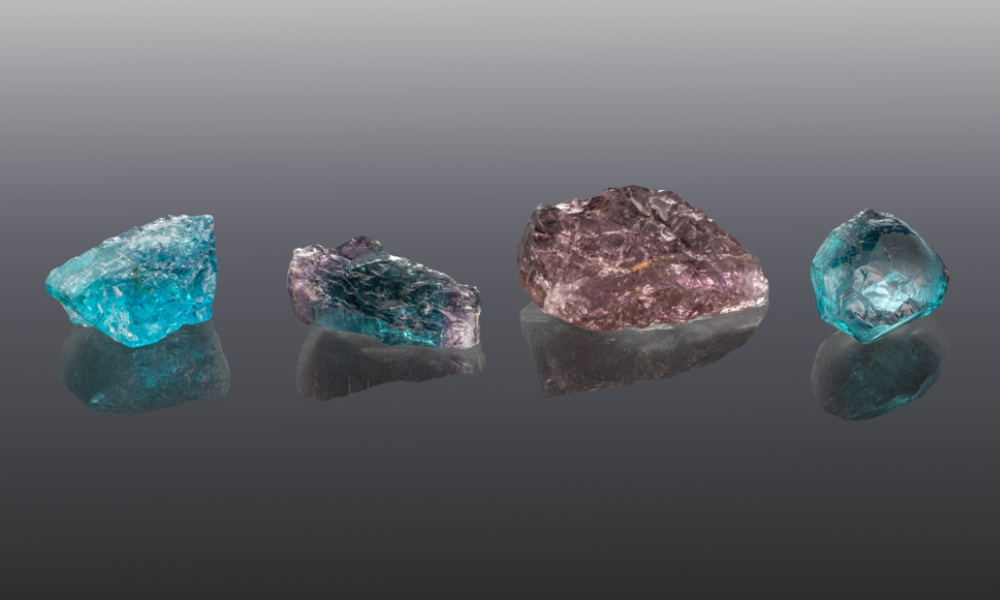
The Gemological Institute of America (GIA) and Gübelin Gem Lab have independently confirmed Ethiopia as a new source of copper-bearing tourmaline that meets the widely accepted definition of paraíba tourmaline.
Both laboratories conducted separate investigations using independently acquired, provenance-supported reference samples. Their findings were consistent, confirming the emergence of a significant new source.
Gübelin first encountered the material in May 2026, when several stones showed a chemical composition unlike its reference data for Brazil, Mozambique and Nigeria. It subsequently assembled about 300 rough and faceted stones from independent sources, including material collected during a gemmologist’s visit to Ethiopia.
“The Ethiopian samples are readily distinguishable from all other origins of paraiba tourmaline, without the need for research-grade analytical methods such as LA-ICP-MS,” said Dr. Peter Tollan, Head of R&D at Gübelin Gem Lab.
GIA began examining Ethiopian material in June. In July, the Ferreira Group provided more than 100 rough and faceted samples to its research department in Carlsbad, California.
“We can confidently identify Ethiopia as an origin on GIA Tourmaline Identification and Origin Reports,” said Dr. Aaron Palke, GIA senior manager of research.
The Ethiopian material is predominantly blue to bluish green, with violet, purple and colourless areas also observed. Pronounced colour zoning is common.
Both laboratories found elevated vanadium concentrations above 60 ppm, along with lead levels of 170-6,000 ppm and gallium concentrations of 280-900 ppm. These characteristics can be measured using ED-XRF and provide useful indicators for distinguishing Ethiopian material from other origins.
The new source adds another origin to the paraíba tourmaline supply chain. GIA and Gübelin said they will continue expanding their reference collections as production develops.
The laboratories will publish separate detailed studies of their findings in an upcoming issue of Gems & Gemology.