
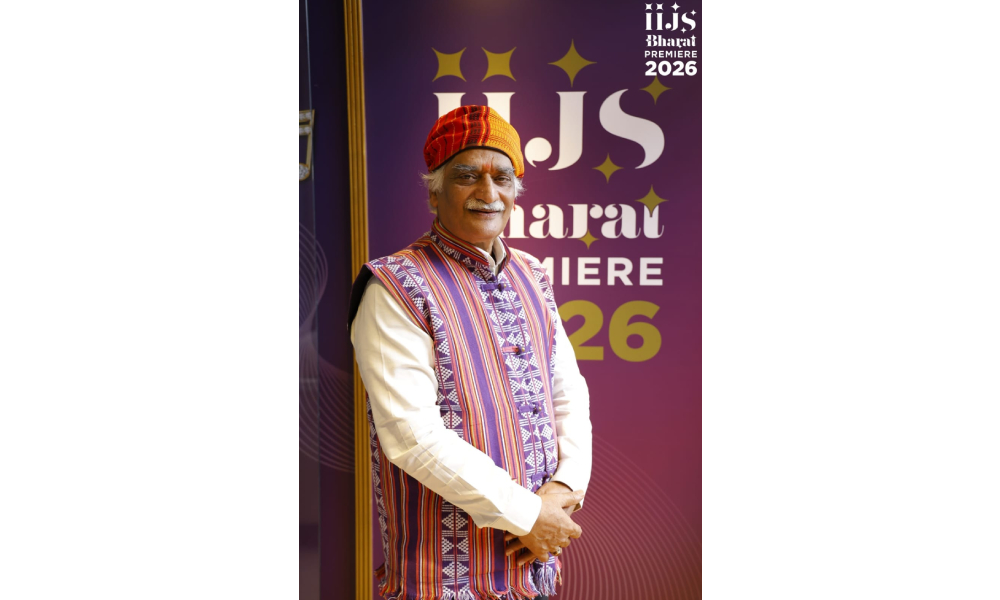
Shri Rajani Kant, a Padma Shri awardee and General Secretary of the Human Welfare Association in Varanasi, is widely known as the “GI Man of India” for his pioneering work in promoting and securing Geographical Indication (GI) recognition for India’s traditional crafts and products. He has been instrumental in facilitating GI recognition for over 200+ products across several states and categories, including handicrafts, textiles, tribal products and jewellery.
His efforts have helped artisans and communities gain legal protection for their distinctive regional traditions while opening up greater opportunities for recognition and market access.
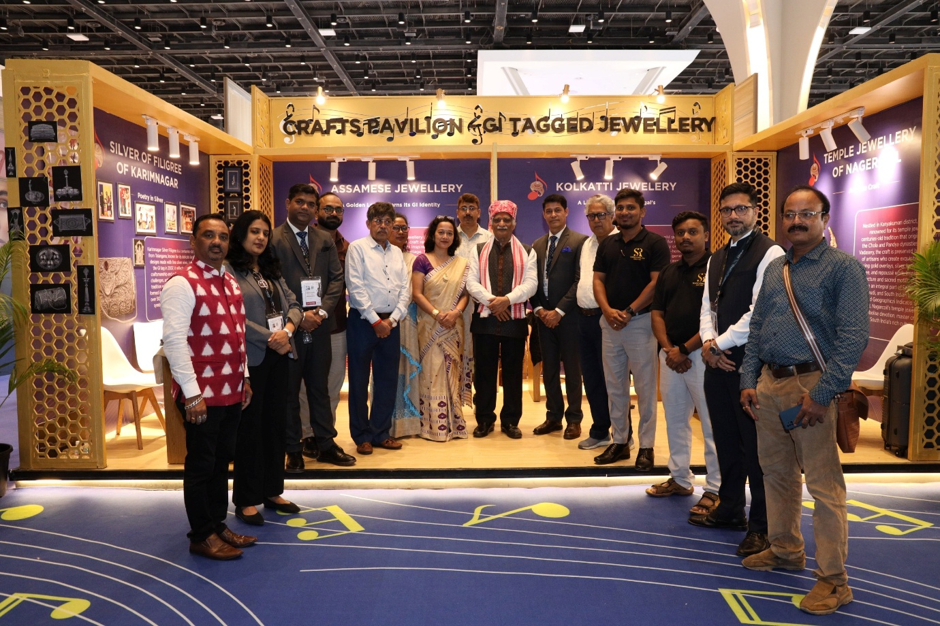
He visited the second edition of the GI-Tagged Jewellery Pavilion at IIJS Bharat Premiere 2026 and interacted with the artisans who possess GI certificate for practising temple jewellery of Nagercoil, Kolkatti Jewellery, and Silver Filigree of Karimnagar.
In an exclusive interview, Kant spoke to Solitaire International about the relevance of the GI tag.
What is Geographical Indication (GI) exactly and what is its significance?
Geographical Indication (GI) is not a scheme of any state government or the Government of India. It is a law and falls under Intellectual Property Rights, alongside patents, trademarks, industrial designs and trade secrets. However, unlike these forms of IPR, which are generally individual property, a GI represents “community property”.
For example, the term Banaras Gulabi Meenakari cannot be used casually for work produced elsewhere. A GI-tagged product can be sold anywhere in the world, but it must actually be made in the geographical region for which the GI has been registered. Producing it in Jaipur and labelling it as Banaras Gulabi Meenakari would amount to infringement, for which the law even provides for imprisonment.
What does GI protect?
GI does not protect merely a design or technique. It protects the product as a combination of its traditional technique, design, motifs and other characteristics.
Importantly, GI protection is not about freezing a craft in time. Artisans can improve finishing and introduce contemporary elements, but the human skill and traditional knowledge must remain at its core.
This human element is particularly important because GI recognition also helps preserve living traditions and their legacy. GI traditions survive because the communities and artisans who practise them continue to exist.
Your thoughts about the dedicated GI-tagged jewellery crafts at IIJS Bharat Premiere.
Exhibitions such as IIJS Bharat should showcase more such crafts, including tribal jewellery, and include live demonstrations. Seeing an artisan create a piece helps visitors understand the skill, time and knowledge behind it—and, in turn, appreciate its true value. You can also consider including tribal jewellery traditions such as those of the Bonda community of Malkangiri and the Riyang community of Tripura as examples of extraordinary jewellery traditions that deserve greater visibility.
You have helped secure 200+ GI tags to products across various categories…what is driving you to do so?
GI is much more than a tag. It is a means of protecting India’s rich cultural heritage and ensuring that traditional knowledge, skills and crafts are not lost. The country’s crafts, cuisine and culture similarly need to be preserved and passed on to future generations.
India possesses an enormous treasure of jewellery traditions—from temple jewellery to the jewellery of tribal communities—and that this heritage can become a source of cultural and economic strength when promoted properly around the world.