
Born into the 175-year-old legacy of Khajanchi Jewels Palace in Bikaner, fifth generation scion Mudit Khajanchi could easily have stepped into the family business.
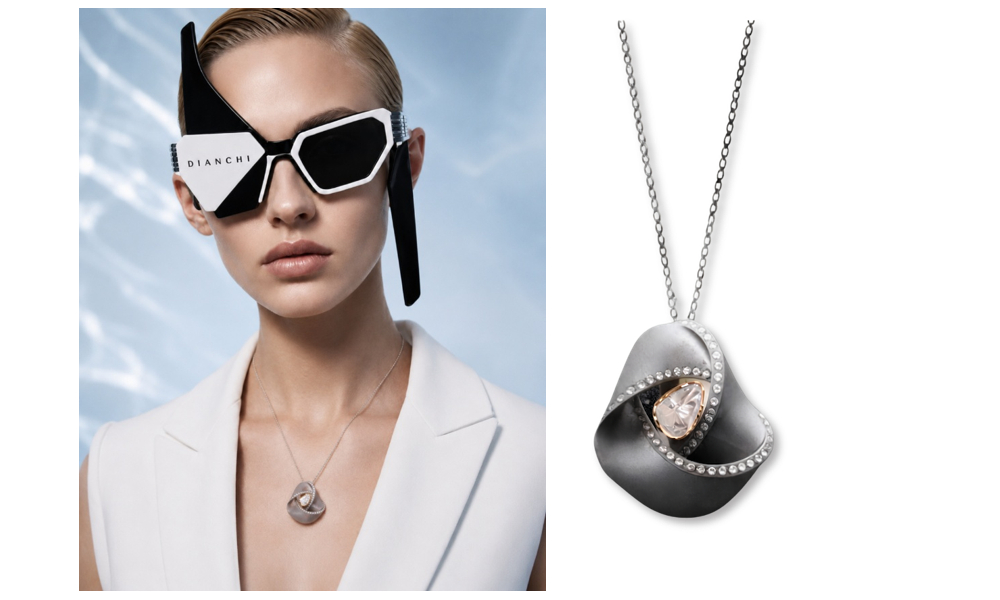
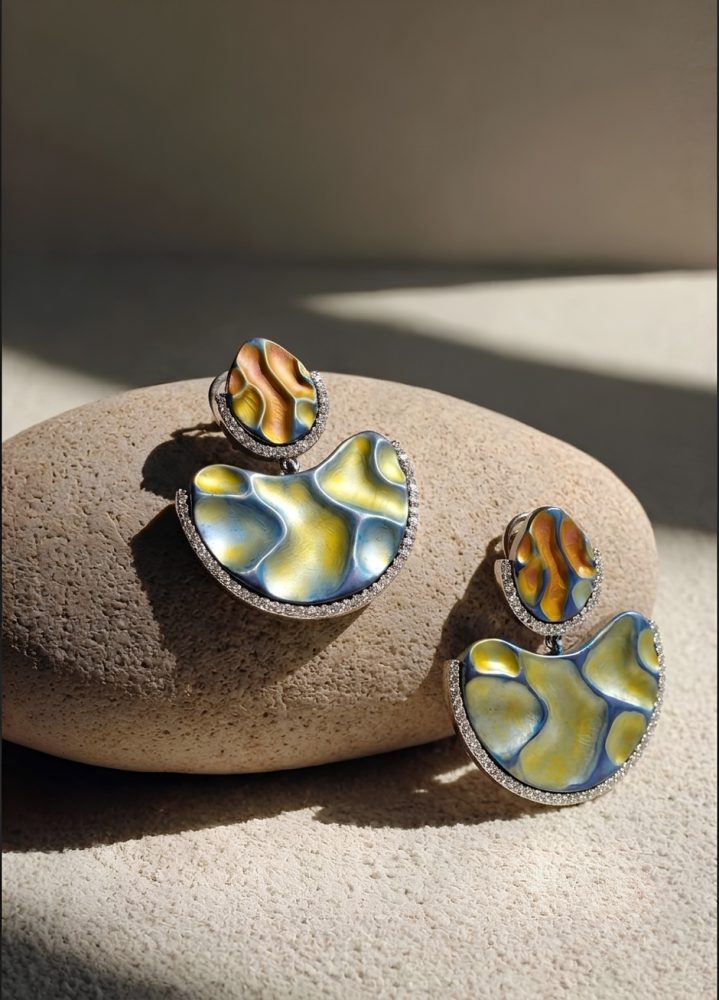
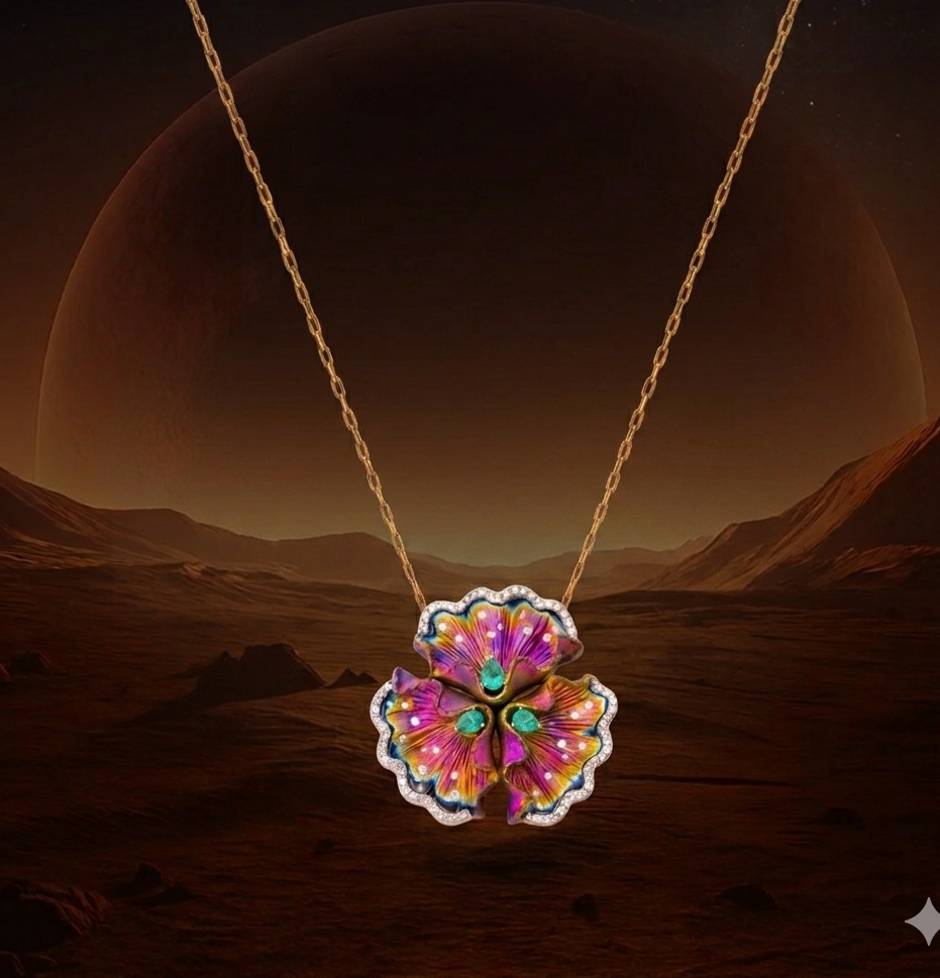
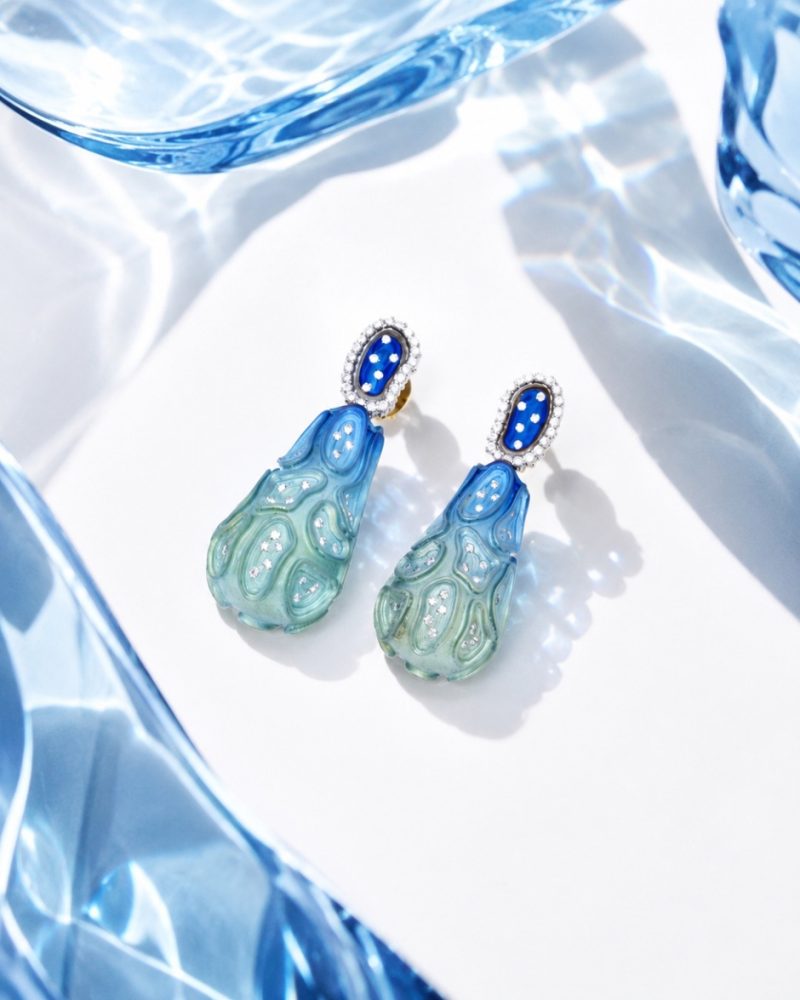
Instead, he followed a different calling. He worked as an assistant director in films before the pull of home brought him back to jewellery. But now, his vision was different – he founded DIANCHI, bringing a cinematic sensibility to luxury jewellery, crafted in titanium, an unexpected material more closely associated with aerospace than high jewellery. Topped with polkis (uncut diamonds), the collections bridged centuries-old craftsmanship with new-age design in ways few have attempted.
The ground-breaking jewellery is refreshingly sophisticated, yet eminently wearable. While remaining connected to his heritage, Mudit has carved a distinct identity of his own, driven by a belief that originality is sacrosanct. The result is jewellery that speaks the language of the future.
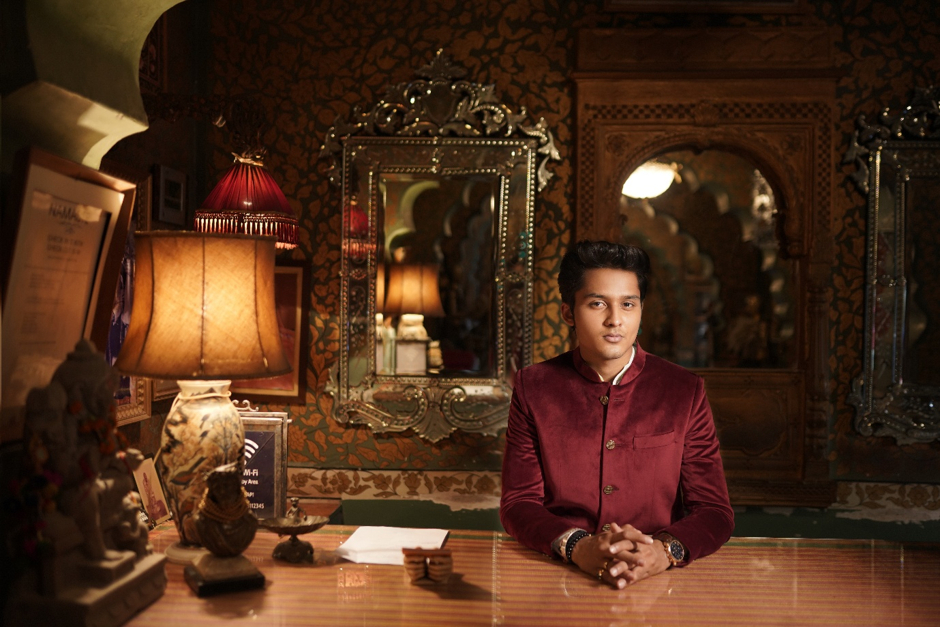
As a fifth-generation jeweller, was the choice to join the family business natural? What attracted you to jewellery itself?
I was born into the Khajanchi family from Bikaner, which has been entrusted with other people’s treasures for generations. The name says it all – Khajanchi means “keeper of the treasury”!
I grew up quite literally surrounded by uncut gemstones, Mughal miniatures, heirlooms that had outlived everyone who first wore them.
But I didn’t walk a straight line into the business. I studied luxury management and business administration in Mumbai, and then, to my family’s surprise, I entered the film industry as an assistant director. That detour taught me how to tell a story, how to create a visually striking world … today, I carry that cinematic instinct into everything I make now.
Joining the family business was a natural choice in one sense — this craft is in my blood — but it was never an obligation. What truly drew me to jewellery wasn’t gold or its intrinsic value. It was the idea that an artful object can hold emotion and memory, and outlast the people who made it. That is the most powerful thing a maker can do.
You come from a 175-year-old legacy rooted in royal patronage and heritage craftsmanship. What gave you the confidence to opt for an unconventional material like titanium — especially in an industry still deeply attached to gold?
Honestly, the legacy is exactly what gave me the confidence — not the opposite. When your house has earned trust for 175 years, you have the credibility to take a risk that a new brand simply couldn’t.
I also looked outside our own industry. The great watchmakers proved that value need not come from the gram — it can come from engineering, design and scarcity. Titanium is the hardest material to work with in fine jewellery, and that difficulty is precisely its distinction.
I wasn’t trying to compete with gold. I wanted to step outside that race entirely and create a one-off category.
DIANCHI sells an ideology of futurism. Do you think the market is ready for jewellery that prioritises innovation over conventional ornamentation?
For me, future luxury is measured by the idea, not the gram. It is rarity over abundance, design over decoration, individuality over the status symbols everyone already owns. A piece that comes to life only once will always mean more than one made a thousand times.
Is the market ready? Not the whole market — and it doesn’t need to be. The Indian consumer is changing faster than people assume. They are younger, well-travelled, design-literate, and unwilling to be told what luxury must look like. DIANCHI isn’t built for everyone. It is built for the few who are already there.
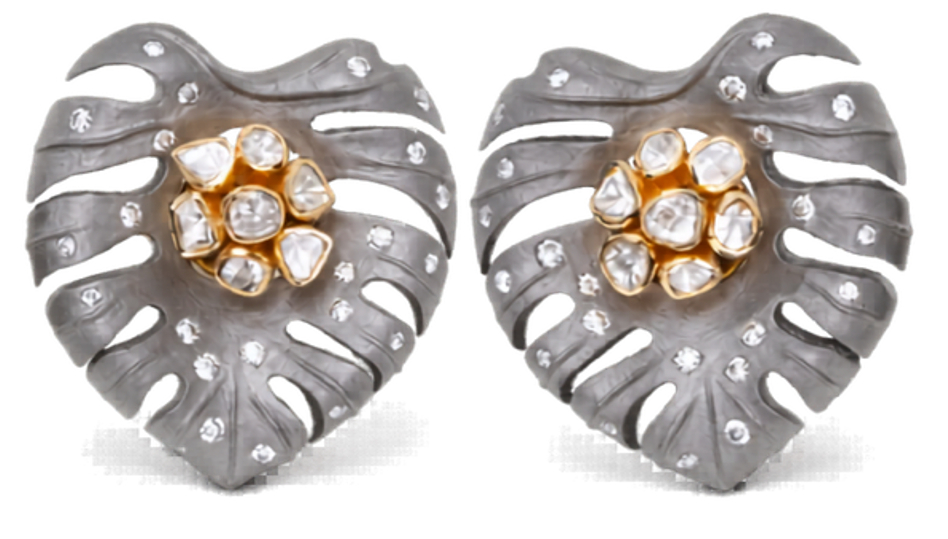
Titanium is mostly associated with aerospace engineering, military precision and extreme durability — not emotion or adornment. What were the biggest technical and psychological barriers you faced while transforming it into a fine jewellery medium? Did you have to retrain artisans, develop new techniques, or rethink craftsmanship itself?
Both barriers were real. Technically, titanium behaves nothing like gold — you cannot melt it and recast it by hand. It has to be machined to the micron, almost like an instrument. Marrying that aerospace precision with the patience of traditional hand-setting — getting uncut polki to sit perfectly in a metal that resists you — took genuine reinvention: new tooling, new sequences, new ways of thinking.
Psychologically, the barrier was perception. People associate titanium with machines, not emotion. So part of the work was proving that this cold, futuristic metal could hold warmth, soul and heritage. We didn’t replace our craftsmen — we asked them to work alongside engineering, and in doing so we redefined what craftsmanship means in our house.
Have you found early adopters — among collectors, younger buyers, or even traditional jewellery clients looking for something radically new?
Yes, more than I expected. There are collectors who already own everything obvious and are hungry for something singular. There are younger buyers who fall in love with the idea, the design before they even ask about the stones.
And there are some of our most traditional clients, quietly curious, who want one radically new thing to sit beside their classics. That mix tells me my instinct was right.
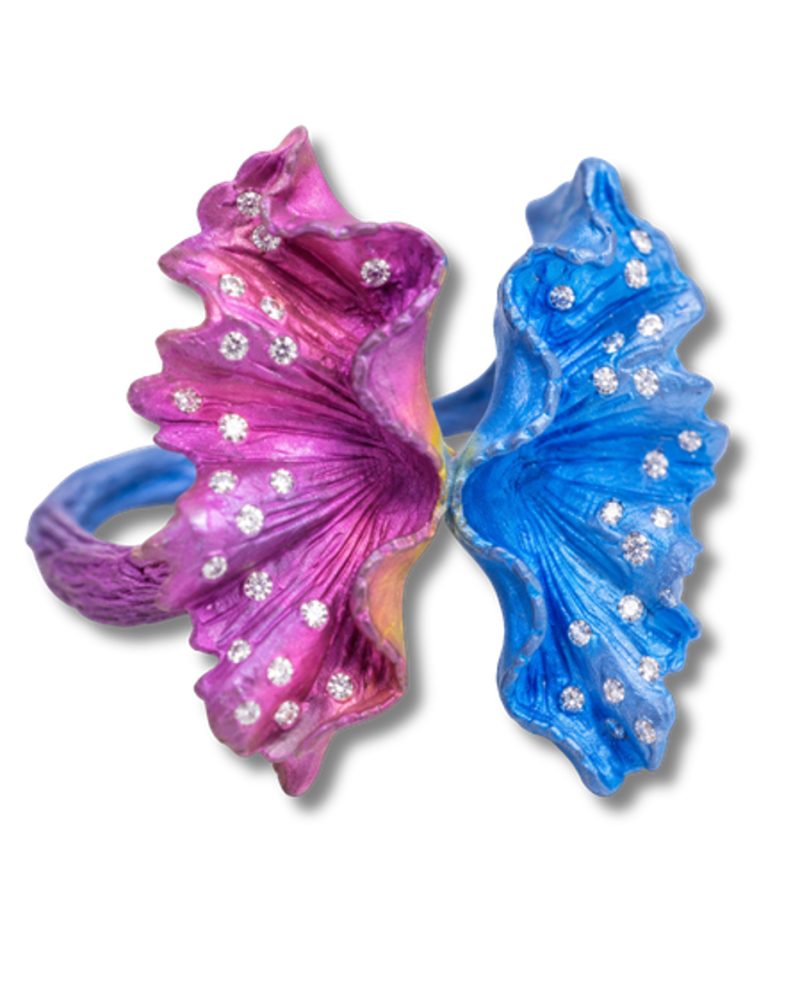
You have brought together two unlikely elements into jewellery – a polki-and-titanium combination. What inspired this blending, and how challenging is it to balance traditional aesthetics with futuristic metal?
It stemmed from a provocative thought: take the oldest expression of Indian luxury — uncut polki, worn in the royal courts for centuries — and set it into the most futuristic metal on earth. Past and future in one single object.
The tension and difficulty were unmistakable. Titanium is unforgiving; polki is delicate and irregular by nature. Balancing them so neither overwhelms the other is the hardest and most rewarding thing we achieved. So, it was a blend of heritage and future at once … quite literally, the hand meeting the machine!
There’s a strong cinematic and mythological spirit running through your collections. How important is storytelling in contemporary luxury jewellery?
It is everything now — especially for younger collectors. They don’t simply buy a material; they buy a meaning, a myth, a reason. My years in film taught me that an object without a story or a strong narrative is just that – an object.
That is why our brand logo has a mythology of its own —the stag, the one-horned deer, a symbol of singularity: one path, one truth. People want to belong to a story, not just own a thing.
You grew up around antique Mughal jewels and heirloom treasures; did you ever feel creatively constrained by the weight of legacy? Or did that history become the very thing that pushed you towards disruption?
I’d be lying if I said the weight was never heavy. When you inherit 175 years of expectation, there is a genuine fear of being only a custodian — of touching nothing in case you break it.
But somewhere along the way, that history stopped feeling like a cage and started feeling like a launchpad. I realised the most genuine way to honour a legacy isn’t to repeat it — it is to carry it somewhere it has never been. The heritage didn’t constrain the disruption. It is the very reason I had the foundation to attempt it.
DIANCHI has challenged the very vocabulary of jewellery. Was this always envisioned as a separate design philosophy rather than an extension of Khajanchi Jewels Palace?
From the very beginning, DIANCHI was conceived with an identity of its own, and not a modern wing of Khajanchi Jewels Palace.
They share the same DNA, come from the same family, are shaped by the same hands, and are guided by the same reverence for craft —but they speak in completely different vocabularies. One is the keeper of heritage; the other sells the future.
I kept them distinct deliberately, because trying to be both at once dilutes both. DIANCHI had to be free to be radical. Straddling those two extremes is only possible because I never asked one to behave like the other.
Where do you see DIANCHI — and Indian luxury jewellery itself — evolving over the next decade?
I believe Indian jewellery is on the edge of a shift from carats and weight to design; from being valued for its gold to being valued for ideas. For too long, India has been the world’s workshop; the next decade is about India becoming a source of original design leadership.
As for DIANCHI, my ambition is clear: to build the first truly global luxury house born of Indian craft and engineering — gender-free, collector-driven, and unmistakably of the future. Wearing tomorrow, today.
Your sign-off thoughts …
DIANCHI is not trying to be the biggest jewellery house. It is trying to make a few objects that could not have existed before — pieces that are uncut, unmatched and unforgettable, and that exist only once. If, years from now, someone sees one of our pieces and feels they are looking at the future of what Indian jewellery can be, then we will have done exactly what we set out to do.