
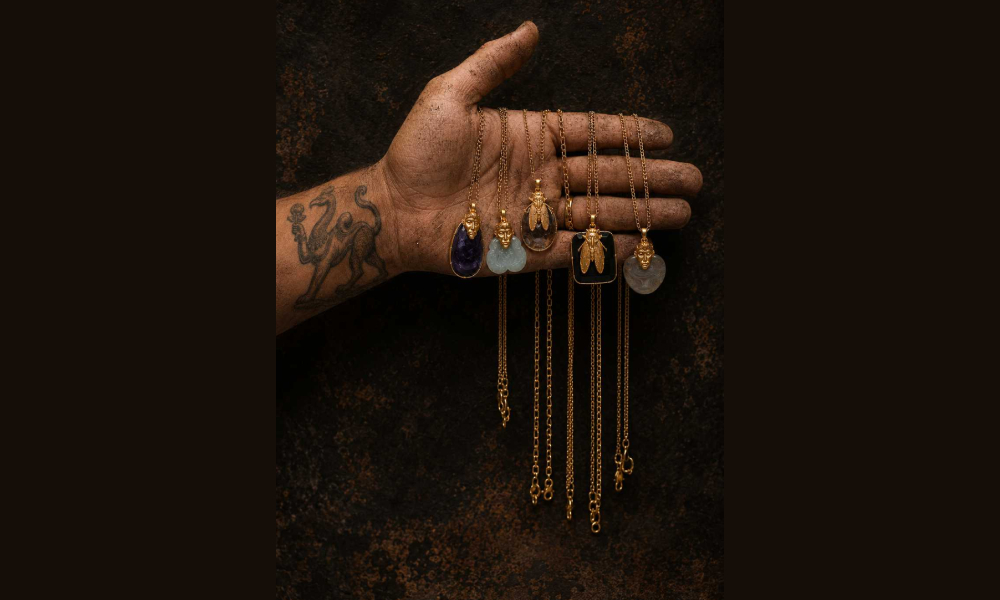
Luxury designer Puneet Gupta, whose work spans wedding invitations, objets d’art, accessories and jewellery, has unveiled a men’s jewellery collection, Found Objects.
Gupta has long been fascinated by objects that carry a strong narrative – from ancient artefacts and geological textures to the imperfections of handmade craft. With his latest venture into men’s jewellery, that fascination takes a wearable form. Drawing on disciplines such as archaeology, anthropology, mineralogy, and India’s rich craft traditions, Gupta transforms fragments of history, culture and nature into contemporary pieces that straddle the worlds of jewellery, art and collectible design. Created for the modern man who values character over convention, Found Objects. celebrates individuality and craftsmanship and the subtle power of objects that have a story to tell.
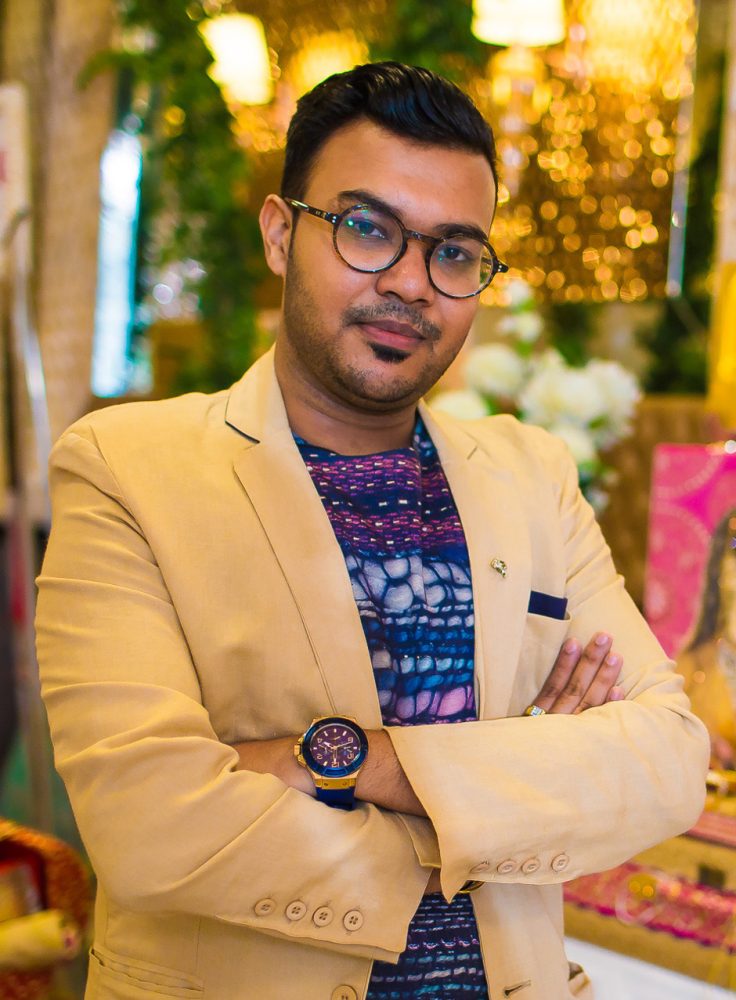
Take us back to the beginning of your journey as a designer. What first sparked your interest in craftsmanship and objects, and how that journey eventually led to Found Objects.?
My relationship with design has always been rooted in objects and the stories they carry. I studied design at NIFT, and very early on I became fascinated by the ability of an object to communicate something without saying a word. That eventually led me to wedding invitations, where I began experimenting with paper, textiles, illustration, craft, and architecture. I gradually started treating an invitation less like stationery and more like an object of art.
Over the years, that curiosity expanded into objets d’art, accessories, and jewellery. I have always been drawn to things with a history — an old artefact, a weathered surface, a piece of jewellery discovered in an antique market, a mineral formed over thousands of years. Found Objects. is an extension of that fascination. It is about taking these fragments of history, culture, and nature and reinterpreting them into objects that belong to the contemporary world.
What does entering men’s jewellery represent in the larger evolution of the Puneet Gupta brand?
For me, it is less about entering another category and more about allowing the design philosophy of the brand to evolve naturally. The brand Puneet Gupta has always been interested in creating objects that sit somewhere between art, craft, and functionality. Found Objects. gives us an opportunity to explore that vocabulary through men’s jewellery. There is a wonderful design challenge in creating something that can have presence without being overtly ornamental.
I see Found Objects. as wearable objects — pieces with character, texture and evoke a sense of discovery rather than jewellery designed simply to signify luxury.
What drew you specifically to men’s jewellery? Was there a gap in the market or a shift in consumer behaviour that prompted you to create Found Objects.?
Certainly, but I don’t think it was simply a commercial gap. I felt that a lot of men’s jewellery was caught between two extremes — either minimal and generic or heavily ornamental and occasion-led. There was room for something with more personality and design intelligence.
The contemporary Indian man is also becoming much more comfortable with jewellery as part of his everyday visual vocabulary. Found Objects. was created for that man — someone who appreciates design and craft, but doesn’t necessarily want something that announces itself as conventional luxury.
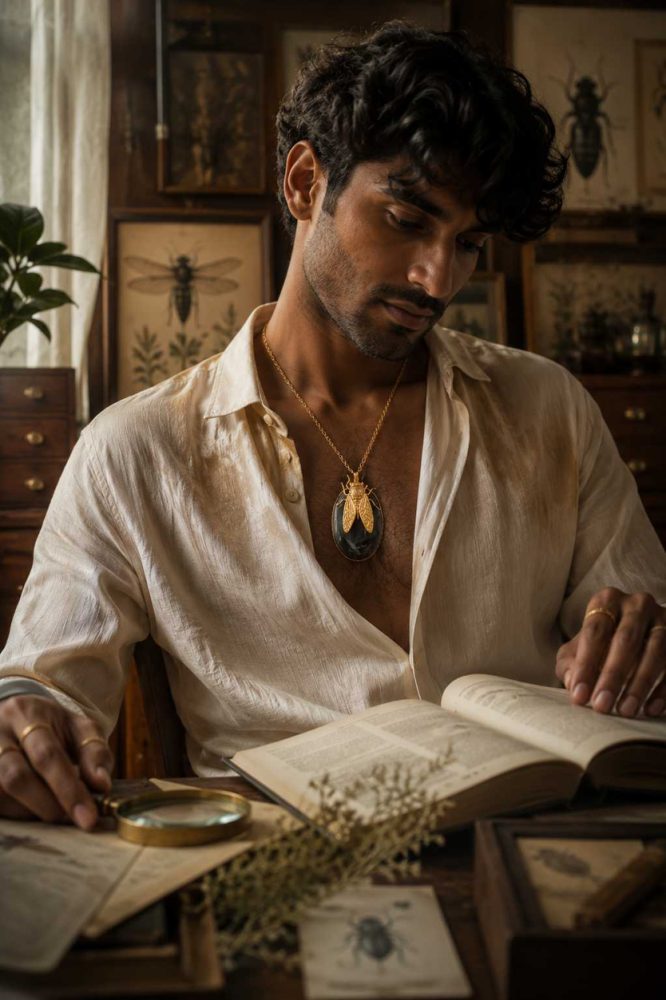
Found Objects. draws inspiration from various disciplines. How did it all come together to shape the collection’s visual language and design philosophy?
I have always found the idea of a found object fascinating — something whose original context may have disappeared, but whose form, texture or material continues to tell a story. Archaeology teaches us about the human instinct to make and adorn; anthropology tells us why objects become culturally significant; mineralogy introduces us to forms that nature creates without human intervention.
I wanted Found Objects. to sit at that intersection. You will find references to ancient forms, primitive markings, geological textures, architectural geometry and Indian craft traditions, but they are deliberately abstracted. Rather than reproducing heritage literally, we have taken its essence — the texture, proportion, symbolism or imperfection — and translated it into a contemporary design language.
Your work is deeply rooted in craftsmanship and Indian artisanal traditions. How did you translate this vocabulary into jewellery for the contemporary man?
The answer lies in editing. Indian craftsmanship is incredibly rich, but you don’t have to use all of its visual vocabulary at once. I wanted to retain the hand of the artisan while reducing the ornament.
We worked with texture, irregularity, sculptural forms and restrained geometry rather than excessive embellishment. There is an intentional tension between something that feels ancient and something that feels modern. A piece may carry the evidence of the hand that made it, but its silhouette remains clean enough to live with contemporary clothing.
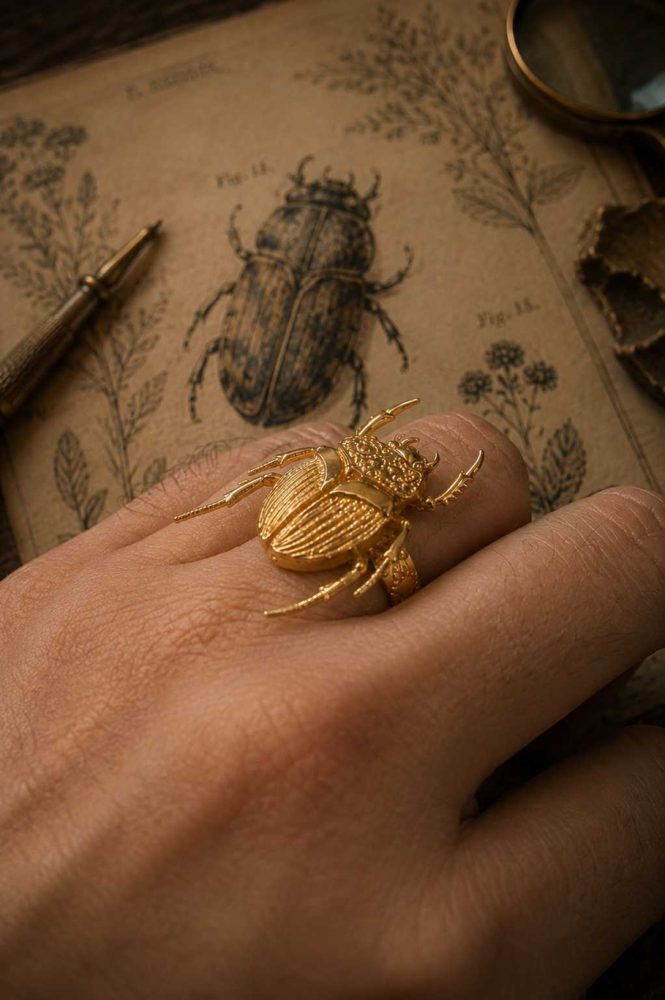
How are you seeing Indian men’s attitudes towards jewellery evolve? Are they increasingly buying pieces as expressions of personal style and identity?
Very much so. Jewellery for men is moving away from being purely ceremonial or symbolic and becoming a form of self-expression. The younger consumer, in particular, is less concerned with whether something has traditionally been categorised as “men’s” or “women’s” jewellery. The customer is interested in whether the object has character. I also think there is a growing appreciation for the imperfect … people want objects that don’t look mass-produced. They want a story, a material, a craft process or an idea behind what they are wearing.
What trends are you seeing in men’s jewellery today, and which of these will have genuine staying power beyond the current fashion cycle?
There is a growing movement towards sculptural jewellery, meaningful symbols, mixed textures and pieces that can be worn every day rather than reserved for occasions. I also see a stronger interest in natural materials and surfaces that retain some evidence of their origin.
I don’t think trends like oversized jewellery or a particular metal finish necessarily have longevity. What will endure is personality, craftsmanship and versatility. Men are increasingly looking for pieces that can become signatures rather than seasonal accessories.
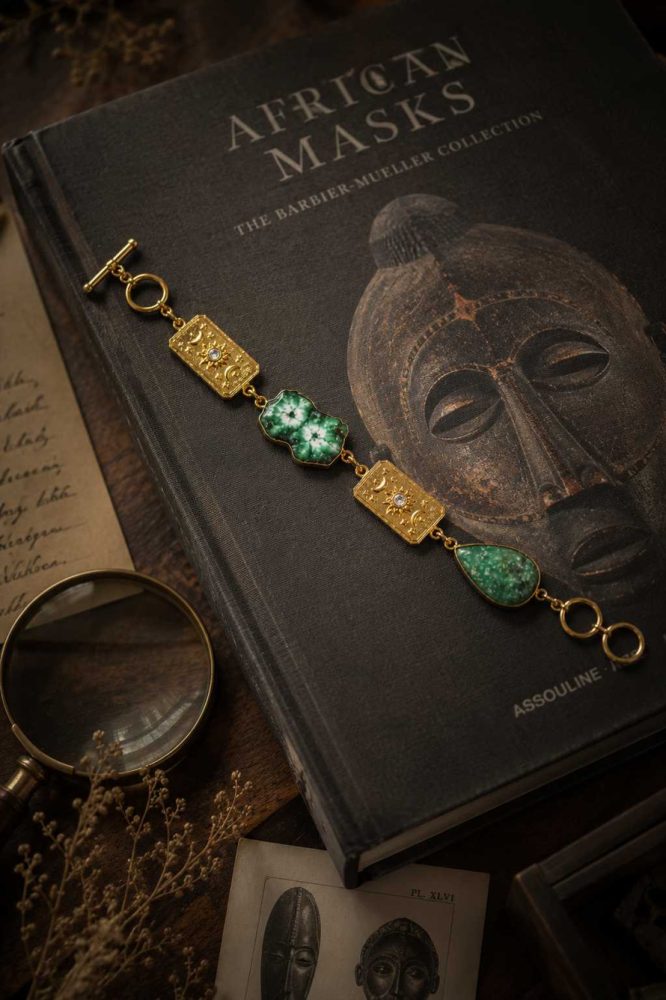
How long did it take to develop Found Objects., from the initial concept to the final pieces?
Found Objects. was not conceived as a quick seasonal exercise. A significant amount of time went into research, developing the visual language, translating references into forms, prototyping and working with artisans to understand what could actually be achieved at scale.
The biggest challenge was perhaps maintaining the rawness and character of the original idea while making the pieces wearable. Jewellery is intimate — it has to sit correctly on the body, have the right weight and balance, and withstand everyday use. Sometimes the most beautiful object is not the most wearable one, so there was a constant dialogue between sculpture and function.
At a price point of ₹12,000–₹19,000, is accessibility an important part of the Found Objects. proposition? Who do you see as the core customer for the collection?
Yes, accessibility is important, but I would define it as accessibility to design rather than simply affordability. I wanted the collection to bring the Puneet Gupta design vocabulary and the world of handcrafted objects to a much wider audience.
The core customer is someone who is design-conscious and appreciates craft, but doesn’t necessarily buy jewellery in the traditional sense. He may be an architect, entrepreneur, creative professional or simply someone who enjoys collecting objects with a point of view.
Found Objects. is designed for someone who wants his accessories to say something about him without having to be loud.
Is Found Objects. positioned as demi-fine jewellery, or is it primarily gold-plated silver or crafted in gold?
Found Objects. sits in the space between jewellery and collectible design objects. The emphasis is on conventional markers of fine jewellery.
We wanted the pieces to retain a sense of tactility. Surfaces are deliberately not overly perfected; texture and subtle variations are part of the aesthetic. The objective is for the wearer to feel the hand and material behind the object rather than something that feels mechanically manufactured.
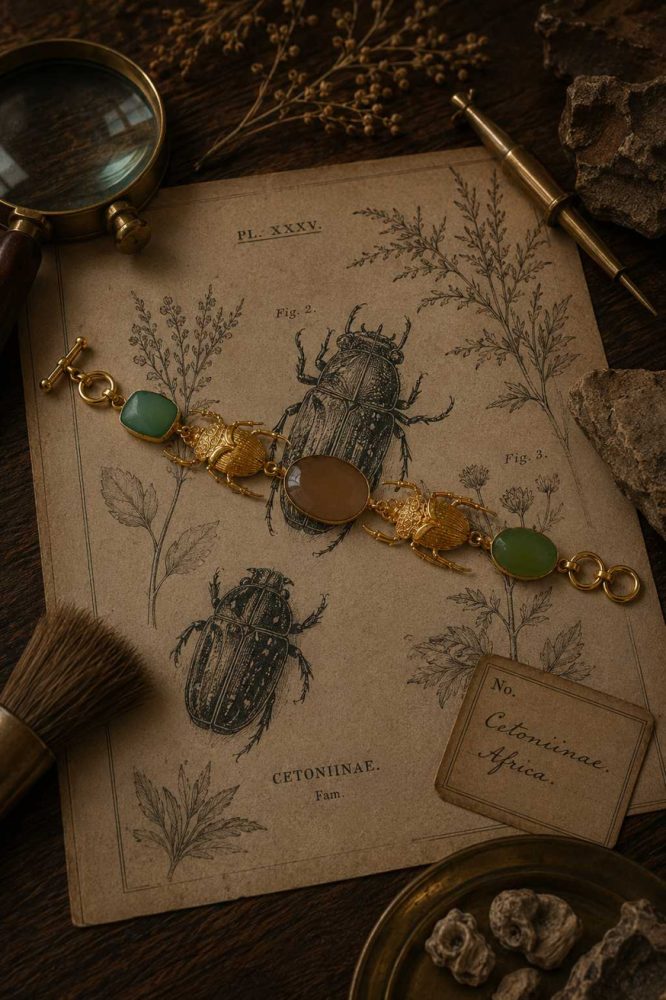
Where can customers currently shop the collection?
Found Objects. is currently available through Puneet Gupta Crafted Fine Goods’ website and Delhi store, and we are looking at carefully expanding its presence. I don’t want it to become a collection that is available everywhere simply for the sake of distribution. The environment in which a design object is discovered is also part of the experience. We are therefore looking at selective retail and curated spaces that understand the philosophy behind the collection.
How large do you believe the opportunity is for men’s jewellery in India? How much of the segment remains untapped, and where do you see the category heading over the next three to five years?
I think the opportunity is significant because the category is still relatively underdeveloped compared to women’s jewellery. But the opportunity isn’t simply to sell more jewellery to men; it is to redefine what jewellery can mean to them.
Over the next three to five years, I expect the category to become more design-led, more gender-fluid and much more connected to personal style. Men will increasingly collect jewellery in the same way they collect watches, art, objects or fashion. We will also see greater appreciation for Indian craftsmanship in contemporary forms.
For me, that is the real opportunity — to move men’s jewellery from an occasional purchase to a personal collection of objects, each carrying a little bit of history, craft and individuality.