
Diamond industry analyst Paul Zimnisky highlights how Titan’s distinct merchandising strategies for natural and laboratory-grown diamonds offer a model for the global jewellery industry.
I have long advocated for the global jewellery industry to carefully and clearly delineate the way that it merchandises natural and laboratory-grown diamonds. I would go as far as arguing that the future of the industry depends on it.
Retailers that actively sell both products side-by-side in a manner that explicitly or implicitly signals to consumers that they are the “same” are effectively lowering the larger diamond category to the least common denominator – the synthetic variety.
It goes without saying that the desire and cachet for man-made diamonds was built upon the natural version’s legacy of being not just the most visually stunning gemstone, but one of the most valuable, meaningful and exclusive luxury products one could personally own.
The luxury industry is built on tying a strong emotion attachment (by leveraging the above attributes) to what is otherwise just a discretionary product. Diamonds have long represented the pinnacle of this playbook.
Natural diamonds elevate the laboratory-grown version – this does not work the other way around. As such, it seems essential that the greater fine jewellery industry protect the natural diamond product.
In my opinion, India’s Titan Company has provided the best industry blueprint for this.
Since the mainstream introduction of LGDs a decade ago, the company never wavered in its policy of strictly selling natural diamonds under all of its brands including its flagship name Tanishq.
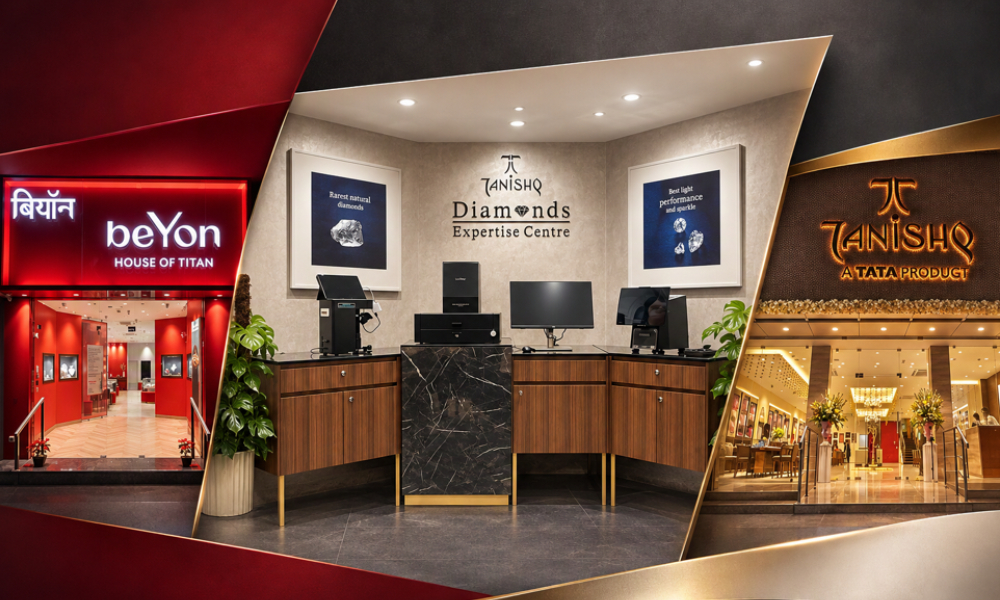
However, unlike the global high-jewellers which have also been firm in exclusively selling natural diamonds, Titan caters to a wider consumer demographic and thus has some customers that want inexpensive man-made stones. However, instead of incorporating LGDs into its existing merchandise mix, Titan strategically opened a new separate dedicated banner under the name beYon. This way the parent company can cater to LGD customers without confusing, misleading or devaluing its legacy natural diamond business.
Further, last year Titan opened “Diamond Expertise Centres” at its domestic Tanishq stores to instil point-of-sale confidence in its natural diamond offering. The idea is to “place professional-grade diamond verification technology directly in the hands of the customer,” according to a company representative. Similar Centres were also added to Tanishq’s UAE footprint in recent months.
Given that natural diamonds can be physically distinguished from the man-made version with certainty, Tanishq feels that this method “marks a decisive shift from certification and expert assurance toward direct, visible, irrefutable proof” for the customer. Importantly, Tanishq offers the service to all customers: purchasing consumers but also those that would like to bring in and test their own diamond jewellery.
Finally, Titan’s Tanishq is also known for being one of the only major jewellers in the world to offer a one-to-one diamond exchange program. Customers can exchange previously purchased diamond jewellery for a credit at the price originally paid to be used to buy another piece.
By providing customers with a fair and convenient market to trade their diamond jewellery they are reinforcing the value concept around natural diamonds. Candidly, Titan management has acknowledged that the service is not a “profit avenue” but “the responsible thing to do” for its customers.
Titan’s comprehensive approach to merchandising diamonds in an ever-evolving market provides the most sustainable path for the larger diamond industry that I have seen. Perhaps other industry participants should take note.
Titan has been the best performing large jeweller in the world with its jewellery sales growing at a compound annual growth rate of 30%-plus over the last five years. Thoughtful merchandising strategies such as the above have presumably contributed to the company’s outperformance. At the same time, the company is doing its part to preserve one of fine jewellery’s most important categories.
Paul Zimnisky, CFA is an independent diamond industry analyst and consultant based in the New York metro area. For regular in-depth analysis and forecasts of the diamond industry please consider subscribing to his State of the Diamond Market, a leading monthly industry report; an index of previous editions can be found here. Also, listen to the Paul Zimnisky Diamond Analytics Podcast on Spotify or Apple Podcasts for exclusive full-length conversations with special guests from the gem and jewellery industry. Paul is a graduate of the University of Maryland’s Robert H. Smith School of Business with a B.S. in finance and he is a CFA charterholder. He can be followed on X @paulzimnisky and on YouTube @paulzimnisky. Disclosure: At the time of writing Paul Zimnisky held a long equity position in Brilliant Earth Group.
