
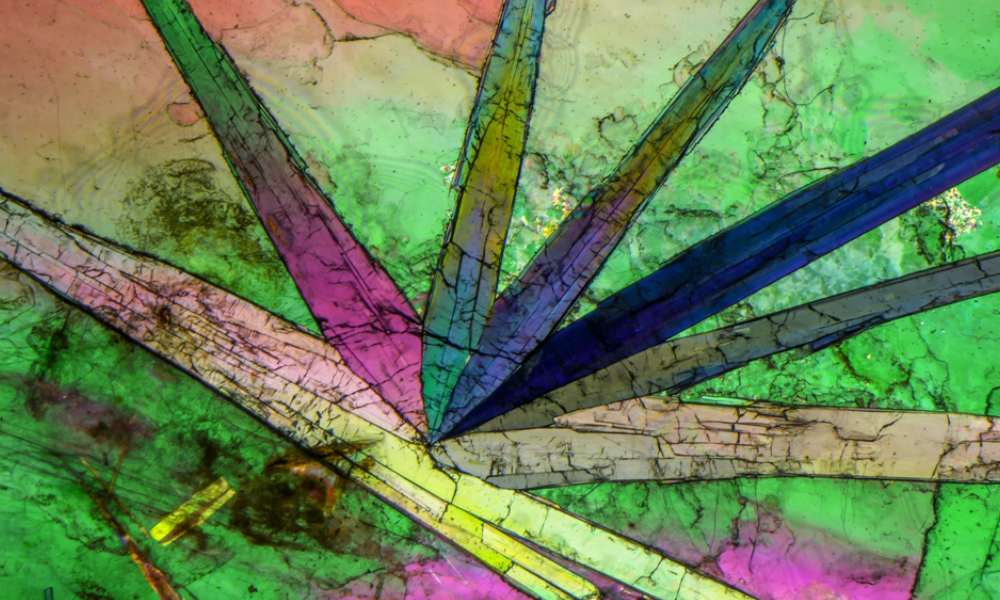
Gemological Institute of America (GIA) has acquired an exceptional collection of 2,665 crystals, gemstones and minerals featuring rare inclusions, marking a significant addition to its gemmological reference resources. Assembled over six decades by GIA Analytical Microscopist John Koivula, the collection documents an extraordinary range of mineral inclusions, trapped fluids and internal structural characteristics.
Widely regarded as one of the world’s foremost authorities on gem inclusions, Koivula has spent more than 60 years identifying, documenting and photographing unusual features within gemstones. The collection includes specimens displaying distinctive formations, from fan-shaped tourmaline inclusions in muscovite mica to fluorescent petroleum trapped within quartz.
The collection’s scientific and educational value lies in the rarity and quality of its specimens. According to Terri Ottaway, curator of the GIA Museum in Carlsbad, California, assembling a comparable collection today would be extremely difficult, given the uniqueness of many pieces and the scarcity of specimens of similar quality. She noted that Koivula often examined hundreds of specimens before selecting a single piece.
Cathryn Ramirez, GIA Senior Vice President and Chief Learning Officer, said preserving the collection at GIA would ensure that future generations of students, gemmologists and scientists benefit from Koivula’s expertise and contributions to the field.
Koivula joined GIA in 1976 and has played an influential role in advancing the study and documentation of gem inclusions. His pioneering work in photomicrography helped expand the use of microscopic imaging in gemmology. He also introduced techniques such as fibre-optic illumination, which has since become widely used in gemmological laboratories worldwide.
Alongside making the collection available for research, education and laboratory applications, Koivula and his colleagues are preparing a large-format book featuring detailed photomicrographs of selected specimens.