
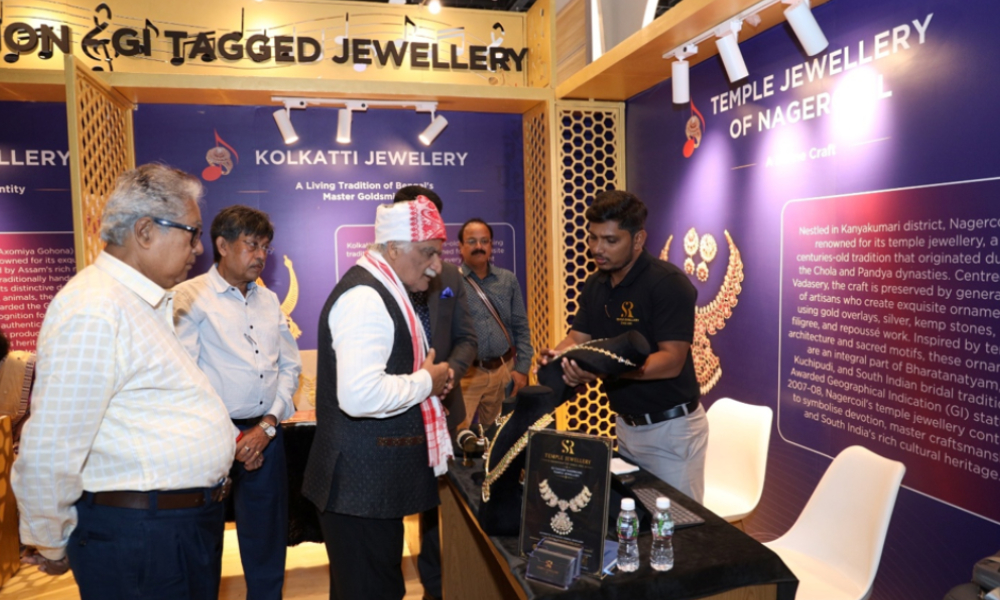
This year’s IIJS Bharat Premiere highlight at JWCC was the GI-tagged Crafts Pavilion, now in its second edition, showcasing the country’s masterful craft traditions and how they continue to shape modern jewellery design. The second craft in our series was Nagercoil temple jewellery.
Nestled in Kanyakumari district at India’s southernmost tip, Nagercoil is synonymous with temple jewellery—ornaments that exemplify exceptional craftsmanship and deep-rooted cultural significance. Temple Jewellery originated during the ancient Chola and Pandya dynasties, when royal goldsmiths crafted ornaments exclusively for temple deities. Over time, these ornaments were worn by Bharatanatyam and Kuchipudi dancers, and later, they became an integral part of South Indian bridal jewellery.
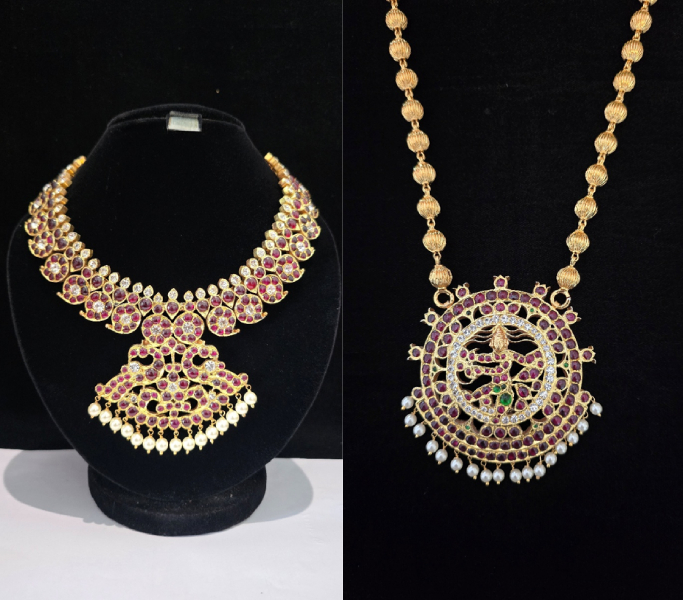
The craft took root in Vadasery, a locality in Nagercoil, where families of skilled artisans continue this legacy today. The town has nearly 80 traditional units and over 300 skilled artisans, many of whom belong to families that have practised the craft for generations in Vadasery and continue to follow age-old techniques.
Silver is carefully shaped into desired forms, while thin sheets of gold are overlaid on the base metal and embellished with traditional red and green kemp stones (kuchu kal) set in arakku (lac). The process involves delicate filigree wirework, repoussé detailing, and hand-setting of every stone, ensuring that no two pieces are exactly alike.
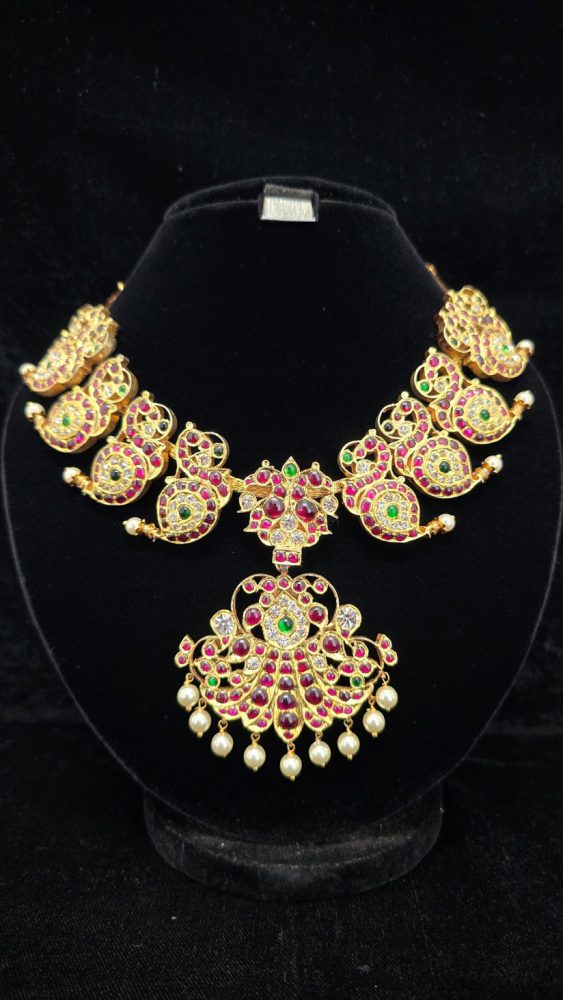
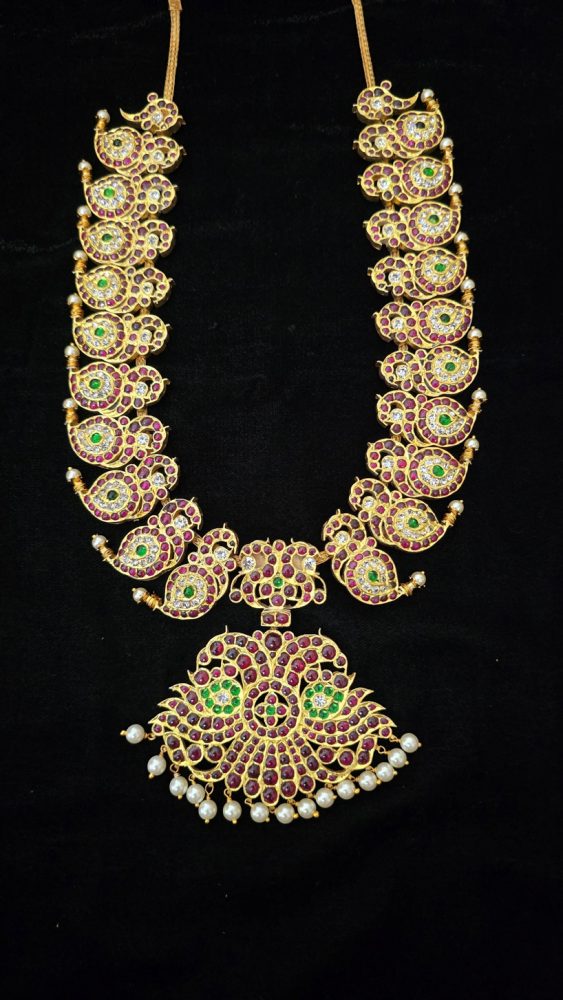
The designs draw inspiration from South Indian temple architecture and sacred iconography. Motifs of Goddess Lakshmi, peacocks, parrots, yalis (divine gatekeepers), lotus blooms, and mango or paisleys patterns prominently, lending each ornament both symbolic meaning and visual grandeur.
Some of the signature pieces include the ottiyanam (waist belt), vanki (armlet), layered harams (necklaces), chokers, jimikki earrings, rakodi (hair bun and braid ornament), nethi chutti (maang tikka) and elaborate head ornaments worn by Bharatanatyam dancers, symbolising the union of art and divinity. For brides, wearing temple jewellery signifies the blessings of Goddess Lakshmi and the continuity of sacred traditions.
The craft received Geographical Indication (GI) status in 2007–08, recognising Nagercoil’s distinctive heritage and helping safeguard the authenticity of its workmanship. Today, while these heirloom-inspired creations continue to grace weddings and classical performances, they have also found admirers among collectors and connoisseurs across the world.
Each handcrafted jewel from Nagercoil reflects devotion, craftsmanship, and the timeless splendour of South Indian tradition. In an era increasingly defined by mechanised production, Nagercoil’s temple jewellery stands apart for its uncompromising craftsmanship, spiritual symbolism and timeless appeal—each piece carrying forward a living tradition that has been passed from one generation of artisans to the next.