
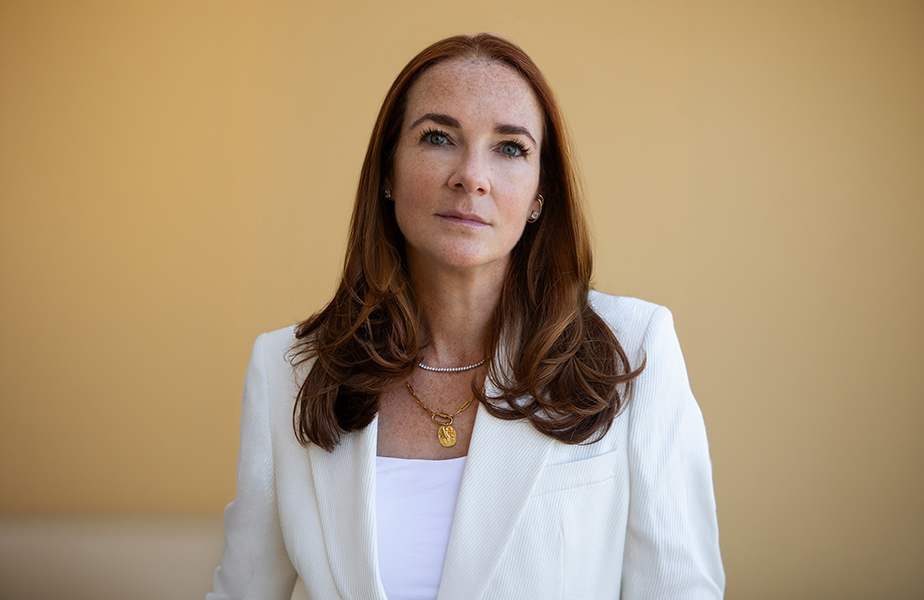
Amber Pepper, CEO of the Natural Diamond Council, the future of natural diamonds lies beyond tradition. She discusses how consumer behaviour, cultural relevance and industry-wide collaboration can inspire a new generation to embrace natural diamonds with renewed purpose and meaning.
Having spent your career building some of the world’s leading luxury brands, you’re now experiencing IIJS Bharat Premiere for the first time. What has surprised you most about India’s jewellery ecosystem, and how has it influenced your thinking on the role India should play in the future of the global natural diamond industry?
What has struck me most about India’s jewellery ecosystem is how naturally it brings together heritage, craftsmanship and innovation. There’s an incredible energy here, and a real confidence about where the industry is headed. India isn’t just a major manufacturing hub or a fast-growing consumer market; it’s helping shape the future of the natural diamond industry. As consumers increasingly value authenticity and lasting quality, India has a unique role to play in leading that conversation.
When you visited Mumbai earlier this year, you said your priority was to secure greater investment for India because the market had been “doing a lot of work with its hands tied behind its back”. Since then, India has strengthened its position as the world’s second-largest natural diamond jewellery market, accounting for 12% of global demand. Can you quantify how much NDC’s investment in India has increased, and what specific initiatives or consumer campaigns will that additional funding support over the next 12 months?
Capturing 12% of global demand isn’t just a statistical milestone, it is proof of the Indian consumer’s deep, evolving connection with natural diamonds. As a council, our role is to make sure our resource allocation reflects where the market is going, not just where it has been. To match this growth, we are increasing our strategic marketing commitment in India backed by landmark industry collaborations like the GJEPC joining the Natural Diamond Council under the Luanda Accord framework.
You described World Diamond Day (WDD) as an initiative that was conceived and executed in just three weeks, with no paid media, yet it generated a 30% increase in global searches for natural diamonds. You also said, “Imagine if we put money behind it” and made it a truly consumer-first platform.
As you prepare for the next edition, how will NDC turn WDD into a major demand engine? Was the search uplift concentrated in markets such as India and the US, or did it translate into broader global consumer engagement and, more importantly, measurable retail sales?
The inaugural World Diamond Day (WDD) demonstrated the power of a unified global platform, driving a 30% increase in global search interest and millions of impressions through industry advocacy alone. Building on this momentum, our focus is to make WDD an annual tentpole by expanding digital storytelling, growing user-generated content, and equipping partners to engage consumers more effectively. While India and the US led the surge, participation was global, reinforcing the universal appeal of natural diamonds. WDD is an open platform that celebrates their emotional value and keeps the category culturally relevant through authentic storytelling.
Where does the Luanda Accord stand today in practical terms? Beyond new signatories and statements of intent, how much capital has been committed or deployed to the Natural Diamond Council, and when should the industry expect to see those funds translate into larger global consumer marketing campaigns?
The Luanda Accord brings together the governments of Angola, Botswana, the Democratic Republic of the Congo and Namibia, alongside GJEPC as a formal member of the Natural Diamond Council, to support sustained investment in global generic marketing for natural diamonds. DMCC has also signed a Letter of Intent to join the NDC, further strengthening a unified, industry-funded approach to protecting and promoting the natural diamond category.
You have repeatedly emphasised that NDC’s role is to create demand rather than simply defend the natural diamond category. As India emerges as one of the industry’s biggest growth engines, what would success look like over the next three years? Are you targeting higher consumer penetration, greater purchase frequency, increased self-purchase among Gen Z and Millennials, or a measurable increase in natural diamond jewellery’s share of the luxury wallet?
Our focus is on creating desirability by making natural diamonds culturally relevant again. Success isn’t just measured by more people buying diamonds, it’s about making natural diamonds part of how a new generation expresses identity, celebrates achievement and marks the moments that matter to them. Gen Z doesn’t want products that simply signal status; they want objects with meaning, authenticity and stories they can connect with.
Over the next three years, we want to see natural diamonds increasingly become part of everyday culture – driving greater self-purchase, more frequent occasions and a larger share of the modern luxury wallet. Ultimately, our ambition is simple: when people think about celebrating themselves or someone they love, natural diamonds should be the instinctive choice.
You have spoken about putting the consumer at the centre of every decision and using data to understand where she discovers, researches and ultimately buys natural diamonds. How is NDC evolving its success metrics? Will future campaigns be judged primarily on awareness and engagement, or are you now working with retailers to measure conversion, sell-through and incremental sales generated by NDC-led marketing?
Impactful marketing starts with understanding the entire consumer journey, not just individual touchpoints. At the Natural Diamond Council, we’re evolving our measurement framework to reflect that. While our primary role is to build long-term category demand by increasing desirability, trust and consideration for natural diamonds, we’re also working more closely with retail partners to understand how that demand translates into commercial outcomes.
Success is no longer measured solely by awareness or engagement, but by a connected set of metrics spanning consumer sentiment, search behaviour, consideration, retailer activation and, where possible, conversion and incremental category growth. The stronger the link between demand creation and retail performance, the greater the value we can demonstrate for the industry.
Industry conversations over the past two years have focused largely on inventory levels, rough prices and lab-grown diamonds. How does one shift the conversation back to demand creation?
Consumers don’t make purchasing decisions based on industry conversations—they buy products that feel relevant, meaningful and desirable. Our role is to ensure natural diamonds remain part of culture by creating emotional connection and modern relevance. Rather than defining ourselves by comparisons with other products, we should focus on what only natural diamonds can offer: rarity, authenticity, provenance and a story that no other product can replicate. The stronger that cultural and emotional connection becomes, the stronger consumer demand will be.
Coming from global luxury brands such as Harrods, Farfetch and Coach, you’ve spoken about making natural diamonds culturally relevant again. If you look ahead to 2030, what do you want consumers to associate with natural diamonds that they don’t necessarily associate with the category today?
By 2030, I want natural diamonds to have reclaimed their place at the centre of culture. The next chapter is about identity, self-expression and modern luxury. I want a 25-year-old to see a natural diamond not as something you wait to receive, but something you choose because it reflects who you are. Just as luxury handbags and watches have become part of everyday style, natural diamonds should become part of everyday aspiration. At the same time, consumers should instinctively associate natural diamonds with authenticity, rarity, positive impact and a story that no synthetic product or algorithm can replicate. That’s the shift we’re building towards – not simply selling more diamonds, but making natural diamonds culturally indispensable once again.